Hello, Gentle Readers!
Sorry I've been MIA, but I've been busy with work, voice acting and playing video games like Mass Effect 2. :)
That's not to say I've given up on my writing. In fact, I think I may have stumbled upon a great idea for my Themistocles novel. Why not start it at the Battle of Marathon? I think that would provide an exciting opening, and allow me to guide the reader through the most interesting parts of Themistocles' life with a few flashbacks to fill in his background. It would tighten up the story and keep the pace fast and furious. I've also found an additional motivation for his climb to the top: Archippe.
Archippe was the real-life wife of Themistocles and the daughter of a noble who may have been related to Aristides (my theory--they were from the same area). Archippe was probably out of reach to Themistocles until he was able to establish a name for himself, especially since he was half foreign and not from a well-known family. I think this gives the novel a bit of romance and fun, and an additional motivation for Themistocles to be the best man in Athens.
What do you guys think? Is starting the novel at Marathon a good idea? What about Archippe? Would that be something you'd be interested in reading about?
Sunday, January 23, 2011

Sunday, January 02, 2011
The Pericles Commission Book Review.
"A dead man fell from the sky, landing at my feet with a thud."
And so begins The Pericles Commission, an exciting, fast-paced and surprisingly humorous political thriller set in Ancient Athens.
Written by the very talented Gary Corby, The Pericles Commission follows the investigation of Nicolaos, (son of Sophroniscus and elder brother of a very young Socrates) who is commisioned by Pericles (yes, THAT Pericles) to find out who killed Ephialtes, the flying dead man from the above passage and leader of Athens' fledgling democracy. Nicolaos' investigation ends up taking him all over Athens as he looks for clues, and even has him making friends as well as enemies in both high and low places. The odds are stacked against Nicolaos from the beginning, but with perseverance and a little help from an unlikely ally or two, Nicolaos is able to navigate the dark underbelly of Athenian politics. What he finds however is a conspiracy larger than he could ever have imagined...
There are three things that I absolutely love about this book. One is the pacing. It's fast-paced and never dull, while still managing to be a robust 322 pages long. Two is the attention to detail. I felt like I was back in Athens and could easily visualize the people and places. Third is the humor sprinkled about the story. It helps lighten the otherwise dark tale of murder, mystery and mayhem (lots of mayhem!). If there is anything to nitpick, it's that a couple of events stretch crudulity. Luckily these events were so entertaining to read that I didn't mind at all. Gary Corby knows how to show the reader a good time.
The Pericles Commission is a fun and educational read, and everyone who loves Ancient Greece should snap up a copy. I myself am looking forward to the next entry in the series, as a certain wily politician that I just happen to like may make an appearence...
And so begins The Pericles Commission, an exciting, fast-paced and surprisingly humorous political thriller set in Ancient Athens.
Written by the very talented Gary Corby, The Pericles Commission follows the investigation of Nicolaos, (son of Sophroniscus and elder brother of a very young Socrates) who is commisioned by Pericles (yes, THAT Pericles) to find out who killed Ephialtes, the flying dead man from the above passage and leader of Athens' fledgling democracy. Nicolaos' investigation ends up taking him all over Athens as he looks for clues, and even has him making friends as well as enemies in both high and low places. The odds are stacked against Nicolaos from the beginning, but with perseverance and a little help from an unlikely ally or two, Nicolaos is able to navigate the dark underbelly of Athenian politics. What he finds however is a conspiracy larger than he could ever have imagined...
There are three things that I absolutely love about this book. One is the pacing. It's fast-paced and never dull, while still managing to be a robust 322 pages long. Two is the attention to detail. I felt like I was back in Athens and could easily visualize the people and places. Third is the humor sprinkled about the story. It helps lighten the otherwise dark tale of murder, mystery and mayhem (lots of mayhem!). If there is anything to nitpick, it's that a couple of events stretch crudulity. Luckily these events were so entertaining to read that I didn't mind at all. Gary Corby knows how to show the reader a good time.
The Pericles Commission is a fun and educational read, and everyone who loves Ancient Greece should snap up a copy. I myself am looking forward to the next entry in the series, as a certain wily politician that I just happen to like may make an appearence...
Monday, December 27, 2010
The Return of Cleomenes.
Happy Holidays, Everyone!
I hope you had a great time with family and friends, or at the very least enjoyed time by yourself and caught up on things like eating yummy food and curling up with a good book.I myself spent a very merry Christmas with my family and even texted friends with my new smart phone (a Samsung Fascinate). I've also done a lot of writing.
Still a bit stuck on my Themistocles novel, I found myself writing a story for a video game based on Heracles instead (more about that on a future blog). I also returned to a murder mystery I had started long ago about the death of King Cleomenes I of Sparta. Who is Cleomenes, you ask? Well...
Cleomenes was a very unusual ruler. Unlike other Spartan kings who were more or less hereditary generals, Cleomenes was an aggressive policy maker as well as a fearsome warrior. He bullied his allies, tried to kill off the fledgling democracy in Athens, bribed the Oracle at Delphi in order to get rid or a rival, burned down a sacred grove near Argos where enemy soldiers had taken refuge, and threw Persian messengers down a well after they demanded tokens of submission. This was a cunning and often unpredictible monarch.
Cleoemenes' death was as unusual as his life. After finally being caught bribing the Pythia at Delphi, he fled Sparta in an attempt to escape prosecution. Somehow the Spartans managed to coax him back into the polis, but by then his sanity had begun to slip, and he started poking passersby with his staff of office. The Spartans claimed they had no choice but to lock him up, leaving a helot (a sort of Spartan slave or serf) to watch over him. According to Herodotus, Cleomenes managed to somehow talk the helot into giving him a knife. Once the weapons was handed over Cleomenes then began to disembowel himself, dying a painful and gruesome death. Why the helot didn't stop him is unclear; perhaps he simply wasn't sorry to see his master go. In any case the Spartans ruled the king's death a suicide, blaming his madness and subsequent end on his excessive drinking habit. Apparently nobody challenged this rather dubious explanation (perhaps because most people outside Sparta simply assumed that his suicide was divine retribution for bribing the Oracle and burning down the sacred grove near Argos), and the matter of the king's death was soon forgotten in the face of an impending invasion by Persian forces.
My story starts after Cleomenes' death, and is told from the point of view of Orthryades, the king's closest companion and the only one willing to investigate the death as a crime. As he questions each suspect Orthryades starts having flashbacks of all of Cleomenes' wrong-doings and how they affected people, allowing the reader to understand how and why Cleomenes ended up with so many enemies.
By the end of the first few chapters the protagonist finds himself with a long list of suspects. There's Prince Leonidas (next in line for the Agiad throne), Prince Cleombrotus (also in line for the Agiad throne) King Demaratus (disposed Eurypontid king and rival to Cleomenes), King Leotychidas (current Eurypontid king who may have wanted to be rid of a difficult partner-in-crime), Prince Euryanax (son of Prince Dorieus, half-brother to Cleomenes who died overseas after an unsuccessful attempt to take the throne from his older sibling)and Dieneces (leader of Sparta's secret police and Demaratus' loyal right-hand man). There are also a lot of witnesses who may know more than they are letting on, including Princess Gorgo (daughter of Cleomenes and wife to Leonidas) and Prince Pausanias (son of Prince Cleombrotus).
At any rate, I'm pretty excited about revisiting this story. I think Cleomenes is one of Sparta's most fascinating kings and a murder mystery surrounding his death makes for a good tale. What do you guys think? Interesting? Boring? Confusing? Let me know in the comments section! (And don't worry, I'm still working on Themistocles' story!)
I hope you had a great time with family and friends, or at the very least enjoyed time by yourself and caught up on things like eating yummy food and curling up with a good book.I myself spent a very merry Christmas with my family and even texted friends with my new smart phone (a Samsung Fascinate). I've also done a lot of writing.
Still a bit stuck on my Themistocles novel, I found myself writing a story for a video game based on Heracles instead (more about that on a future blog). I also returned to a murder mystery I had started long ago about the death of King Cleomenes I of Sparta. Who is Cleomenes, you ask? Well...
Cleomenes was a very unusual ruler. Unlike other Spartan kings who were more or less hereditary generals, Cleomenes was an aggressive policy maker as well as a fearsome warrior. He bullied his allies, tried to kill off the fledgling democracy in Athens, bribed the Oracle at Delphi in order to get rid or a rival, burned down a sacred grove near Argos where enemy soldiers had taken refuge, and threw Persian messengers down a well after they demanded tokens of submission. This was a cunning and often unpredictible monarch.
Cleoemenes' death was as unusual as his life. After finally being caught bribing the Pythia at Delphi, he fled Sparta in an attempt to escape prosecution. Somehow the Spartans managed to coax him back into the polis, but by then his sanity had begun to slip, and he started poking passersby with his staff of office. The Spartans claimed they had no choice but to lock him up, leaving a helot (a sort of Spartan slave or serf) to watch over him. According to Herodotus, Cleomenes managed to somehow talk the helot into giving him a knife. Once the weapons was handed over Cleomenes then began to disembowel himself, dying a painful and gruesome death. Why the helot didn't stop him is unclear; perhaps he simply wasn't sorry to see his master go. In any case the Spartans ruled the king's death a suicide, blaming his madness and subsequent end on his excessive drinking habit. Apparently nobody challenged this rather dubious explanation (perhaps because most people outside Sparta simply assumed that his suicide was divine retribution for bribing the Oracle and burning down the sacred grove near Argos), and the matter of the king's death was soon forgotten in the face of an impending invasion by Persian forces.
My story starts after Cleomenes' death, and is told from the point of view of Orthryades, the king's closest companion and the only one willing to investigate the death as a crime. As he questions each suspect Orthryades starts having flashbacks of all of Cleomenes' wrong-doings and how they affected people, allowing the reader to understand how and why Cleomenes ended up with so many enemies.
By the end of the first few chapters the protagonist finds himself with a long list of suspects. There's Prince Leonidas (next in line for the Agiad throne), Prince Cleombrotus (also in line for the Agiad throne) King Demaratus (disposed Eurypontid king and rival to Cleomenes), King Leotychidas (current Eurypontid king who may have wanted to be rid of a difficult partner-in-crime), Prince Euryanax (son of Prince Dorieus, half-brother to Cleomenes who died overseas after an unsuccessful attempt to take the throne from his older sibling)and Dieneces (leader of Sparta's secret police and Demaratus' loyal right-hand man). There are also a lot of witnesses who may know more than they are letting on, including Princess Gorgo (daughter of Cleomenes and wife to Leonidas) and Prince Pausanias (son of Prince Cleombrotus).
At any rate, I'm pretty excited about revisiting this story. I think Cleomenes is one of Sparta's most fascinating kings and a murder mystery surrounding his death makes for a good tale. What do you guys think? Interesting? Boring? Confusing? Let me know in the comments section! (And don't worry, I'm still working on Themistocles' story!)
Thursday, December 09, 2010
Plot? What Plot?
SMMMMMACK!
Hear that? That's the sound of yours truly hitting the dreaded Writer's Block.
You see, I can't seem to go forward with my Themistocles novel. Why? The pacing is all wrong.
I read once that often people struggle with pacing because they don't have a concrete plot. My plot is about the rise and fall of Ancient Greece's best military strategist. It's a fictional autobiography. The idea is to cover his entire life (which was fascinating from beginning to end). Yet how can I do that when 80% of the story takes place in the MIDDLE of his life? I don't relish the idea of starting the tale during the Persian Wars. It strikes me as disjointed. Any ideas?
Help!
Hear that? That's the sound of yours truly hitting the dreaded Writer's Block.
You see, I can't seem to go forward with my Themistocles novel. Why? The pacing is all wrong.
I read once that often people struggle with pacing because they don't have a concrete plot. My plot is about the rise and fall of Ancient Greece's best military strategist. It's a fictional autobiography. The idea is to cover his entire life (which was fascinating from beginning to end). Yet how can I do that when 80% of the story takes place in the MIDDLE of his life? I don't relish the idea of starting the tale during the Persian Wars. It strikes me as disjointed. Any ideas?
Help!
Wednesday, December 01, 2010
Nano Fail.
Well, I pretty much failed NanoWriMo (poor Artemisia) but I'm still happy I tried. If nothing else this was good writing practice and inspired me to go back and take a look at another story I started but never finished (a murder mystery involving the uber-insane King Cleomenes I of Sparta). I've also had sufficient enough time away from my Themistocles novel to go back and see it with fresh eyes. So it looks like I have three novels I need to finish: I, Themistocles, Cleomenes and Queen of The Wine Dark Sea.
Next blog up is my review of The Pericles Commission. Here's a big hint: it's GOOD.
Next blog up is my review of The Pericles Commission. Here's a big hint: it's GOOD.
Thursday, November 18, 2010
NanoWriMo Report
Yes, I'm still writing my "Artemisia novel" for NanWriMo. It's not the most epic writing ever, but the idea is to get to the 50,000 word mark by November 30th. Truth be told, I may not make it. It's harder than you think to write an average of 1500 words or so a day. I can't seem to get past 500 and some days I'm too tired or unmotivated to put anything down. But I'm still working at it. At the very least this will give me enough time away from my Themistocles novel to go back and look at it with fresh eyes.
Speaking of novels on Ancient Greece, I've also finally gotten around to ordering The Pericles Commission off of Amazon! I and am super excited to read it because very few fiction writers write about Ancient Greece with a touch of humor. Not only that, but I've read reviews that exclaim how great Gary Colby is at making readers feel like they're actually in Ancient Athens. Good times!
And finally at some point I have to get around to playing Ghost of Sparta. I'm a huge God of War fan and IGN has given it a very positive review. Nice!
Speaking of novels on Ancient Greece, I've also finally gotten around to ordering The Pericles Commission off of Amazon! I and am super excited to read it because very few fiction writers write about Ancient Greece with a touch of humor. Not only that, but I've read reviews that exclaim how great Gary Colby is at making readers feel like they're actually in Ancient Athens. Good times!
And finally at some point I have to get around to playing Ghost of Sparta. I'm a huge God of War fan and IGN has given it a very positive review. Nice!
Thursday, November 11, 2010
Want To Win A Trip To Greece? Click Here!
Want to win a trip to Greece? Of course you do!
All you have to do is take the God of War Quiz on IGN and you'll be entered for a chance to win a vacation for two to Athens. You don't even have to get every answer right, so if you're not well-versed in Kratos lore you can still play to win. Go take the quiz. Now!
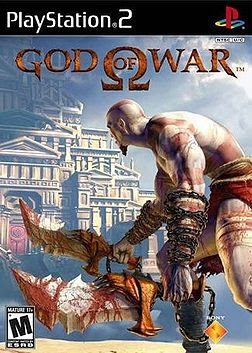
THIS. IS. KRATOS!
*In case you're wondering why I'm not entering I can't. I'm an employee of the company. But I'd love for someone who reads my blog to win and take lots of pictures for me! :D
All you have to do is take the God of War Quiz on IGN and you'll be entered for a chance to win a vacation for two to Athens. You don't even have to get every answer right, so if you're not well-versed in Kratos lore you can still play to win. Go take the quiz. Now!

THIS. IS. KRATOS!
*In case you're wondering why I'm not entering I can't. I'm an employee of the company. But I'd love for someone who reads my blog to win and take lots of pictures for me! :D
Friday, October 29, 2010
Entering Into The World of NaNoWriMo.
November is National Novel Writing Month, and I decided to join in on the fun in the hopes it will motivate me to write more and edit less. If you don't know what it is, here's a blurb from the website:
"National Novel Writing Month is a fun, seat-of-your-pants approach to novel writing. Participants begin writing November 1. The goal is to write a 175-page (50,000-word) novel by midnight, November 30.
Valuing enthusiasm and perseverance over painstaking craft, NaNoWriMo is a novel-writing program for everyone who has thought fleetingly about writing a novel but has been scared away by the time and effort involved.
Because of the limited writing window, the ONLY thing that matters in NaNoWriMo is output. It's all about quantity, not quality. The kamikaze approach forces you to lower your expectations, take risks, and write on the fly.
Make no mistake: You will be writing a lot of crap. And that's a good thing. By forcing yourself to write so intensely, you are giving yourself permission to make mistakes. To forgo the endless tweaking and editing and just create. To build without tearing down."
This year I've decided to focus on a novella involving Queen Artemisia of Halicarnassus, the first female naval commander in history. It's part historical fiction, part romance. I'll be updating the project both here and on the site, so look for that soon.

An idea of what Artemisia looks like to me.
In the meantime, I'm still working on my Themistocles novel, though it's going slower than I'd like. Themistocles needs more personal conflict in the beginning, which is hard because he's so young. Hopefully something will inspire me by participating in the above contest.
Speaking of which, I encourage you to join as well. It's a fun way to learn and a good way to meet people (though DON'T believe anyone who says they're an editor or agent looking to buy your book, especially if they ask for fees up front). You can access the site by clicking on the link above. :)
"National Novel Writing Month is a fun, seat-of-your-pants approach to novel writing. Participants begin writing November 1. The goal is to write a 175-page (50,000-word) novel by midnight, November 30.
Valuing enthusiasm and perseverance over painstaking craft, NaNoWriMo is a novel-writing program for everyone who has thought fleetingly about writing a novel but has been scared away by the time and effort involved.
Because of the limited writing window, the ONLY thing that matters in NaNoWriMo is output. It's all about quantity, not quality. The kamikaze approach forces you to lower your expectations, take risks, and write on the fly.
Make no mistake: You will be writing a lot of crap. And that's a good thing. By forcing yourself to write so intensely, you are giving yourself permission to make mistakes. To forgo the endless tweaking and editing and just create. To build without tearing down."
This year I've decided to focus on a novella involving Queen Artemisia of Halicarnassus, the first female naval commander in history. It's part historical fiction, part romance. I'll be updating the project both here and on the site, so look for that soon.

An idea of what Artemisia looks like to me.
In the meantime, I'm still working on my Themistocles novel, though it's going slower than I'd like. Themistocles needs more personal conflict in the beginning, which is hard because he's so young. Hopefully something will inspire me by participating in the above contest.
Speaking of which, I encourage you to join as well. It's a fun way to learn and a good way to meet people (though DON'T believe anyone who says they're an editor or agent looking to buy your book, especially if they ask for fees up front). You can access the site by clicking on the link above. :)
Monday, October 25, 2010
Blog Revisions
If you glance slightly to your right, you'll notice I'm making a few changes to my blog's format. See? -------------->
I thought it would be fun to organize my posts by labeling them more clearly. From now on, you can view my take on everything from Ancient Greece in movies to Ancient Greece in video games, as well as read book reviews or even pieces of my upcoming Themistocles novel. It's all still a bit messy of course, but at least I've labled most of my blog posts and added a couple of neat gadgets for people to look at.
Let me know what you think and what suggestions you might have!
I thought it would be fun to organize my posts by labeling them more clearly. From now on, you can view my take on everything from Ancient Greece in movies to Ancient Greece in video games, as well as read book reviews or even pieces of my upcoming Themistocles novel. It's all still a bit messy of course, but at least I've labled most of my blog posts and added a couple of neat gadgets for people to look at.
Let me know what you think and what suggestions you might have!
Sunday, October 10, 2010
More Buried Treasure.
Last week I told you how I stumbled upon a gem of a book I found at a used bookstore. This week I went back to said bookstore and found yet ANOTHER gem. This one is called Voyages in Classical Mythology, and I snatched it up for only $15.

Voyages in Classical Mythology is an encyclopedia that chronicles the voyages and adventures of 44 heroes and deities from Greek and Roman mythology. Besides recounting the tales of famous heroes like Herakles and Achilles, author Mary Snodgrass also covers the travels of lesser-known characters like Nauplius and Palinurus. Although this book doesn't directly help me with my Themistocles novel, it does sometimes explain the origins of certain place names in and around Attica/Athens which I find useful. For example, history tells us that Themistocles lived in an area of Athens called Melite. As it turns out, Melite was the name of a queen of Athens whom King Aegeus divorced because she bore him no children. It's the kind of fun fact I like to slip into my stories.
Each hero's story is broken down into four parts: genealogy and background, journey, alternate versions of the story and the symbolism behind the tale. This makes reading the book much easier to digest and allows the reader to keep everything straight in their head. There are even bullet points for heroes like Herakles who not only went everywhere but did everything.
It would have been nice if the book had focused on maybe ten heroes and really done an in-depth analysis of their travels around Greece and their influence on Ancient Greek culture, but this book is really meant as a basic encyclopedia of Ancient Greek and Roman deities and heroes and to be enjoyed by anyone of any age. At only $15 and full of interesting stories fun facts, Voyages in Classical Mythology is a good book to own.

Voyages in Classical Mythology is an encyclopedia that chronicles the voyages and adventures of 44 heroes and deities from Greek and Roman mythology. Besides recounting the tales of famous heroes like Herakles and Achilles, author Mary Snodgrass also covers the travels of lesser-known characters like Nauplius and Palinurus. Although this book doesn't directly help me with my Themistocles novel, it does sometimes explain the origins of certain place names in and around Attica/Athens which I find useful. For example, history tells us that Themistocles lived in an area of Athens called Melite. As it turns out, Melite was the name of a queen of Athens whom King Aegeus divorced because she bore him no children. It's the kind of fun fact I like to slip into my stories.
Each hero's story is broken down into four parts: genealogy and background, journey, alternate versions of the story and the symbolism behind the tale. This makes reading the book much easier to digest and allows the reader to keep everything straight in their head. There are even bullet points for heroes like Herakles who not only went everywhere but did everything.
It would have been nice if the book had focused on maybe ten heroes and really done an in-depth analysis of their travels around Greece and their influence on Ancient Greek culture, but this book is really meant as a basic encyclopedia of Ancient Greek and Roman deities and heroes and to be enjoyed by anyone of any age. At only $15 and full of interesting stories fun facts, Voyages in Classical Mythology is a good book to own.
Monday, October 04, 2010
Finding Buried Treasure.
These days it's very hard for me to find a book on Ancient Greece I don't already have. Every week I poke around Borders looking for something new on the subject, and every month I do a search on Amazon's massive website to see if I missed anything. Lately it seems the only books I don't have on Ancient Greece are ones I can't afford (some textbooks cost well over a hundred dollars). So imagine my surprise when I nonchalantly glided into a used book store the other day and found (gasp!) a book on Ancient Greece I'd never seen...for only seven bucks!
A History of The Greek City States 700-338 B.C. by Raphael Sealey is a great find. Published in 1976, this book gives a basic account of...well, the Greek city-states between 700-338 BCE. But what makes it stand out is the level of detail. The author dives into not only what happened but WHY. Take a look at this paragraph from Appendix A, which tries to explain some oddities in Cleisthenes' division of the trittyes, demes and tribes:
"Usually each trittys held a connected parcel of territory, but [D.M.] Lewis draws attention to some anomalies. Two of these are especially revealing. The first concerns the costal trittys of the tribe Pandionis. Most of this trittys lay in a block south of Brauron; but the deme Probalinthos, just south of Marathon, belonged to the same trittys, although seperated from it by the coastal trittys of the tribe Aegeis. This anomaly can be explained.
There was a much older unit, the Tetrapolis, consisting of the adjacent villages of Marathon, Oenoe, Trikorythos and Probalinthos; this continued to perform religious functions; indeed as late as the first century B.C., on occasion when the Athenian state sent the sacred deputation called the Pythias to Delphi, the Marathonian Tetrapolis sent its own seperate envoys. Cleisthenes detached Probalinthos from the old Tetrapolis and allocated it to the more distant trittys of the tribe Pandionis. The district of Marathon had Peisistratid connections; the anomaly surely reveals a desire to prevent the old Tetrapolis from retaining political significance."
Super detailed, right? Although all this convoluted stuff might explain why I'm one of the few people crazy enough to take on this time period in Athenian history. There's a LOT going on!
In short, A History of The Greek City States 700-338 B.C. is full of maps, illustrations, notes and interesting ideas. If you can find it or order it online, it's a good one to have in your collection (at least if you love ridiculous amounts of detail like me).
A History of The Greek City States 700-338 B.C. by Raphael Sealey is a great find. Published in 1976, this book gives a basic account of...well, the Greek city-states between 700-338 BCE. But what makes it stand out is the level of detail. The author dives into not only what happened but WHY. Take a look at this paragraph from Appendix A, which tries to explain some oddities in Cleisthenes' division of the trittyes, demes and tribes:
"Usually each trittys held a connected parcel of territory, but [D.M.] Lewis draws attention to some anomalies. Two of these are especially revealing. The first concerns the costal trittys of the tribe Pandionis. Most of this trittys lay in a block south of Brauron; but the deme Probalinthos, just south of Marathon, belonged to the same trittys, although seperated from it by the coastal trittys of the tribe Aegeis. This anomaly can be explained.
There was a much older unit, the Tetrapolis, consisting of the adjacent villages of Marathon, Oenoe, Trikorythos and Probalinthos; this continued to perform religious functions; indeed as late as the first century B.C., on occasion when the Athenian state sent the sacred deputation called the Pythias to Delphi, the Marathonian Tetrapolis sent its own seperate envoys. Cleisthenes detached Probalinthos from the old Tetrapolis and allocated it to the more distant trittys of the tribe Pandionis. The district of Marathon had Peisistratid connections; the anomaly surely reveals a desire to prevent the old Tetrapolis from retaining political significance."
Super detailed, right? Although all this convoluted stuff might explain why I'm one of the few people crazy enough to take on this time period in Athenian history. There's a LOT going on!
In short, A History of The Greek City States 700-338 B.C. is full of maps, illustrations, notes and interesting ideas. If you can find it or order it online, it's a good one to have in your collection (at least if you love ridiculous amounts of detail like me).
Thursday, September 30, 2010
The Lightning Thief (Full Review)
Percy Jackson & The Olympians is not really for adults. It's a tween adventure series meant to be read by 6th graders just starting to learn about Ancient Greece and Rome. Still, that didn't stop me from picking the first book up at Borders yesterday, and I have to say that I found The Lightning Thief to be a quick and entertaining read.
The basic premise of the story is this: Percy Jackson is an somewhat ordinary if troubled kid from New York who finds himself in the middle of a war between the gods. It turns out that Percy (Perseus) is the son of Poseidon and is suspected of stealing Zeus' master lightning bolt, which allows any god that posseses it to rule over all of Olympus. Of course the poor kid has no idea what's going on (or even who his father is) until every imaginable monster from Greek mythology comes after him and he's forced to go on a quest to clear his name. Tagging along for the ride is Annabeth, daugher of Athena, and a satyr named Grover. They have only until the summer solstice to find the missing bolt and return it to Zeus, otherwise a war between the gods will commence, and the world will be destroyed.
What I really love about this series is the idea that the Greek Pantheon not only existed in ancient times but still exists today; as long as Western Civilization lives on, so do The Olympians. Author Rick Riordan doesn't just have them sitting around Olympus wearing chitons and togas either; the Olympians are active around different cities in America and have modernized themselves: Dionysus wears a Hawaiian shirt, Ares rides a motorcycle, Charon likes Italian suits and Medusa owns a shop that (naturally) sells stone statues. This unique twist makes for some great reading, and the action is fast and furious as various monsters pop up (always in interesting disguises) in an attempt to prevent Percy from completing his quest.
I only have a couple of complaints about this book. One is that Annabeth is said to be the daughter of Athena. Anyone worth their weight in Greek mythology knows that Athena is a virgin (along with Hestia and Artemis). Another is that the kids can't seem to learn their lessons fast enough when it comes to monsters. They keep ignoring their instincts and doing things that get them into trouble. I'm aware that it's a plot device, but sometimes I have to shake my head at the lack of common sense these kids sometimes show.
Speaking of learning lessons, I DO like how Rick Riordan explains learning disabilities like dyslexia and ADHD, both of which Percy has. Rather than them being something that kids should be ashamed of, they are something magical. For Percy, dyslexia is a result of his brain being hard-wired for Ancient Greek instead of English, and his ADHD is explained as a battlefield reflex, one that will save him in his fight against powerful monsters. I think that sends a really positive message to children: ADHD and dyslexia are not disabilities that you should be ashamed of. They do NOT make you stupid in any way, shape or form.
The Lightning Thief is not a long read; it's 375 pages of big print and short chapters, each full of adventure and starring a likable young hero who is able to overcome all manner of adversity in order to save the world. I managed to get through the entire book in a day, and am thinking about getting the next book in the series soon. So if you like Greek history and mythology, I highly recommend The Lightning Thief. :)
The basic premise of the story is this: Percy Jackson is an somewhat ordinary if troubled kid from New York who finds himself in the middle of a war between the gods. It turns out that Percy (Perseus) is the son of Poseidon and is suspected of stealing Zeus' master lightning bolt, which allows any god that posseses it to rule over all of Olympus. Of course the poor kid has no idea what's going on (or even who his father is) until every imaginable monster from Greek mythology comes after him and he's forced to go on a quest to clear his name. Tagging along for the ride is Annabeth, daugher of Athena, and a satyr named Grover. They have only until the summer solstice to find the missing bolt and return it to Zeus, otherwise a war between the gods will commence, and the world will be destroyed.
What I really love about this series is the idea that the Greek Pantheon not only existed in ancient times but still exists today; as long as Western Civilization lives on, so do The Olympians. Author Rick Riordan doesn't just have them sitting around Olympus wearing chitons and togas either; the Olympians are active around different cities in America and have modernized themselves: Dionysus wears a Hawaiian shirt, Ares rides a motorcycle, Charon likes Italian suits and Medusa owns a shop that (naturally) sells stone statues. This unique twist makes for some great reading, and the action is fast and furious as various monsters pop up (always in interesting disguises) in an attempt to prevent Percy from completing his quest.
I only have a couple of complaints about this book. One is that Annabeth is said to be the daughter of Athena. Anyone worth their weight in Greek mythology knows that Athena is a virgin (along with Hestia and Artemis). Another is that the kids can't seem to learn their lessons fast enough when it comes to monsters. They keep ignoring their instincts and doing things that get them into trouble. I'm aware that it's a plot device, but sometimes I have to shake my head at the lack of common sense these kids sometimes show.
Speaking of learning lessons, I DO like how Rick Riordan explains learning disabilities like dyslexia and ADHD, both of which Percy has. Rather than them being something that kids should be ashamed of, they are something magical. For Percy, dyslexia is a result of his brain being hard-wired for Ancient Greek instead of English, and his ADHD is explained as a battlefield reflex, one that will save him in his fight against powerful monsters. I think that sends a really positive message to children: ADHD and dyslexia are not disabilities that you should be ashamed of. They do NOT make you stupid in any way, shape or form.
The Lightning Thief is not a long read; it's 375 pages of big print and short chapters, each full of adventure and starring a likable young hero who is able to overcome all manner of adversity in order to save the world. I managed to get through the entire book in a day, and am thinking about getting the next book in the series soon. So if you like Greek history and mythology, I highly recommend The Lightning Thief. :)
Monday, September 20, 2010
Themistocles Update.
Last night I managed to type out over 3,000 words for my novel. I'm proud of this accomplishment because it's been so long since I've been hit by the Muses like this. The chapter involves a sneaky Themistocles, a clever Mnesiphilus and a very crafty Cleisthenes. At some point I might post this one. We'll see!
Tuesday, September 07, 2010
Greekless in Seattle
First, I have to apologize for not updating my blog in awhile. I've been busy with my job, as well as some other stuff. Still, that doesn't mean I haven't been working on my Themistocles novel. In fact, I've started to carefully reconstruct it using an Excel worksheet, and I have to say this method of outlining has been really successful so far! I'll be sure to blog about it later.
In the meantime, my job took me to Seattle for a gaming even called PAX, where I was a speaker at the IGN Girlfight panel. If you don't know what it is, Girlfight is the name of a podcast on IGN featuring me and four other women talking about video games and any relevant topic pertaining to them. It's a far cry from Ancient Greece (well, unless you count games like God of War and Kid Icarus), and I didn't expect to see anything that would inspire ideas for my novel. How wrong I was!
I arrived in Seattle Friday afternoon, and was welcomed not by blustering winds and showering rain, but by a flawless blue sky that arched elegantly above lush green boulevards and the most pristine city streets I’ve ever seen. So, I decided to take advantage of the great weather and play tourist, visiting everything from the Space Needle to the famous Pike Street Fish Market. I even saw the original Starbucks...I think. The chain is so ubiquitous that I couldn't even tell which coffee shop was the original--there are two old-school stores right down the street from each other!
But what really surprised me was the Seattle Art Museum. It's home to mostly modern art, which to be honest doesn't appeal to me. I mean, I too can paint a canvas blue and call it something exotic, like Tears of a Whale or Mermaid Eyes. Luckily the museum also features wings dedicated to more traditional art pieces, including artifacts from Ancient Greece, Persia and Egypt. Naturally since I'm a lover of history, I took in every detail of every vile, vase and votive offering with relish. I was especially surprised to see a small portion of the palace wall from Persapolis, featuring a servant carrying a wine skin to King Darius. And as always I was amazed at how well intact all the Greek pottery was, despite being thousands of years old.
So, Greekless in Seattle? I expected to be, considering I was attending a video game event. But happily I was able to see some rare pieces from Ancient Greece, and that has inspired me to get going on my novel!
In the meantime, my job took me to Seattle for a gaming even called PAX, where I was a speaker at the IGN Girlfight panel. If you don't know what it is, Girlfight is the name of a podcast on IGN featuring me and four other women talking about video games and any relevant topic pertaining to them. It's a far cry from Ancient Greece (well, unless you count games like God of War and Kid Icarus), and I didn't expect to see anything that would inspire ideas for my novel. How wrong I was!
I arrived in Seattle Friday afternoon, and was welcomed not by blustering winds and showering rain, but by a flawless blue sky that arched elegantly above lush green boulevards and the most pristine city streets I’ve ever seen. So, I decided to take advantage of the great weather and play tourist, visiting everything from the Space Needle to the famous Pike Street Fish Market. I even saw the original Starbucks...I think. The chain is so ubiquitous that I couldn't even tell which coffee shop was the original--there are two old-school stores right down the street from each other!
But what really surprised me was the Seattle Art Museum. It's home to mostly modern art, which to be honest doesn't appeal to me. I mean, I too can paint a canvas blue and call it something exotic, like Tears of a Whale or Mermaid Eyes. Luckily the museum also features wings dedicated to more traditional art pieces, including artifacts from Ancient Greece, Persia and Egypt. Naturally since I'm a lover of history, I took in every detail of every vile, vase and votive offering with relish. I was especially surprised to see a small portion of the palace wall from Persapolis, featuring a servant carrying a wine skin to King Darius. And as always I was amazed at how well intact all the Greek pottery was, despite being thousands of years old.
So, Greekless in Seattle? I expected to be, considering I was attending a video game event. But happily I was able to see some rare pieces from Ancient Greece, and that has inspired me to get going on my novel!
Monday, August 23, 2010
Marathon: "Nike" (Just Do It)
Close to 2500 years ago, a small army of Athenian Greeks and their plucky Plataian allies took a bold stand against an invading army. It was at a place called Marathon that the outnumbered Hellenes achieved total victory against the might Persian Empire. This victory is still known today by almost everyone, thanks to a young runner named Philippides who practically flew the 26 mile distance between Marathon and Athens to report the stunning win. Once he arrived in the city, Philippides used the last of his strength to shout "NIKE!" (victory) and immediately dropped dead. The modern Marathon race is in his honor.
Writing a book about the Battle of Marathon is an excellent idea, and Professor Richard A. Billows is smart to release this book on the eve of the battle's 2500th anniversary. Unfortunately, Marathon: How One Battle Changed Western Civilization wasn't quite what I was hoping for. Rather than a detailed account of the battle with an array of new theories to offer, the entire first half of the book is simply a broad overview of Archaic Greece. That's great for those just starting to dip their toes into the world of ancient history, but for those of us who are a bit more advanced, it's kind of a let down.
To be fair, the author has some imaginative insights. He stresses what it was like to actually be there. The sights, the sounds (or lack there of), the smells; even the feel of what it must have been like to be a phalanx hoplite. When trying to capture a sense of the ancient experience for a modern audience, Billows smartly compares phalanx warfare not to modern warfare, but that "...It is rather the experience of being in a huge crowd that gives way to commotion: a demonstration crowd, perhaps, confronting a formation of police and surging to and fro under police baton charges, or the water canon, or charges mounted police." Professor Billows also offers a strong case for which route the Athenians took to return to Athens after the battle (some think a mountain pass and some think the main road; according to the author, it was probably both). Yet even with this insight I was disappointed there wasn't more.
Like many battles in history, most of the time spent at Marathon was a waiting game. The Greeks and Persians waited for days before anyone actually made a move. This gave the Athenians a lot of time to think. Not just about the Persians, but about their surroundings. What did the Ancient Greeks think when they saw the eerie marsh lights flickering above the swampy marshland that surrounded Marathon? What did the local sanctuary dedicated to Herakles possibly look like? Would the Greeks have made sacrifices at this sanctuary along with any other local shrines in the hopes of being granted victory in battle? What would it have been like to cut down local trees and use them as a barrier against a cavalry charge? Didn't the Persians SEE this happening? How long would it have taken? How many men could the Greeks afford to spare from patrol duties in order to finish the project? I would love answers to these types of questions.
That said, it's pretty apparent that this book isn't really aimed at more advanced students of Ancient Greek history. It's really a guide for those who might be curious about why a modern Olympic even is named after a long forgotten battle. Thus, I can't object to any book that teaches people history. :)
3.5/5 Stars
Writing a book about the Battle of Marathon is an excellent idea, and Professor Richard A. Billows is smart to release this book on the eve of the battle's 2500th anniversary. Unfortunately, Marathon: How One Battle Changed Western Civilization wasn't quite what I was hoping for. Rather than a detailed account of the battle with an array of new theories to offer, the entire first half of the book is simply a broad overview of Archaic Greece. That's great for those just starting to dip their toes into the world of ancient history, but for those of us who are a bit more advanced, it's kind of a let down.
To be fair, the author has some imaginative insights. He stresses what it was like to actually be there. The sights, the sounds (or lack there of), the smells; even the feel of what it must have been like to be a phalanx hoplite. When trying to capture a sense of the ancient experience for a modern audience, Billows smartly compares phalanx warfare not to modern warfare, but that "...It is rather the experience of being in a huge crowd that gives way to commotion: a demonstration crowd, perhaps, confronting a formation of police and surging to and fro under police baton charges, or the water canon, or charges mounted police." Professor Billows also offers a strong case for which route the Athenians took to return to Athens after the battle (some think a mountain pass and some think the main road; according to the author, it was probably both). Yet even with this insight I was disappointed there wasn't more.
Like many battles in history, most of the time spent at Marathon was a waiting game. The Greeks and Persians waited for days before anyone actually made a move. This gave the Athenians a lot of time to think. Not just about the Persians, but about their surroundings. What did the Ancient Greeks think when they saw the eerie marsh lights flickering above the swampy marshland that surrounded Marathon? What did the local sanctuary dedicated to Herakles possibly look like? Would the Greeks have made sacrifices at this sanctuary along with any other local shrines in the hopes of being granted victory in battle? What would it have been like to cut down local trees and use them as a barrier against a cavalry charge? Didn't the Persians SEE this happening? How long would it have taken? How many men could the Greeks afford to spare from patrol duties in order to finish the project? I would love answers to these types of questions.
That said, it's pretty apparent that this book isn't really aimed at more advanced students of Ancient Greek history. It's really a guide for those who might be curious about why a modern Olympic even is named after a long forgotten battle. Thus, I can't object to any book that teaches people history. :)
3.5/5 Stars
Tuesday, August 17, 2010
Chrono Trigger: Good or Bad Historical Fiction?
I'm almost finished with the Marathon book, and hope to have a review up by the weekend, but in the meantime...
I love history. And I love historical fiction. AND I know that my Themistocles story is important to tell. I've felt that ever since I came across Berry Strauss' The Battle of Salamis five years ago. I've always wanted to read a book that really dove into the historical figure who made that battle happen. More to the point, I've always wanted to BE that person. Yet I keep getting stuck. Over and over and over again. Events happen quickly in Herodotus, and sometimes it's hard to get a handle on WHEN they happen. It makes my ficitonal autobiography all the harder to write. Yet I know that Themistocle is like Churchill: he would want to tell the tale himself, and he would want to tell the WHOLE story.
I've decided that in order to do just that, I'm going to have to go outside the box. Things are going to have to happen sooner. A LOT sooner. And sometimes out of historical sequence. The historian in me kicks and screams against this, but the author in me realizes that this is not only an easier way to write Themistocles' "autobiography", but it may also prove to be easier and more entertaining for the reader.
What say you, Gentle Readers? If Cleomenes' attack on Argos happened BEFORE Aristagoras arrived in Athens, would you be offended? If the events of the first Persian War took place in LESS than ten years, would you balk? Let me know in the comments section below!*
* Also 1,000 HP to the reader who gets the title reference. :)
I love history. And I love historical fiction. AND I know that my Themistocles story is important to tell. I've felt that ever since I came across Berry Strauss' The Battle of Salamis five years ago. I've always wanted to read a book that really dove into the historical figure who made that battle happen. More to the point, I've always wanted to BE that person. Yet I keep getting stuck. Over and over and over again. Events happen quickly in Herodotus, and sometimes it's hard to get a handle on WHEN they happen. It makes my ficitonal autobiography all the harder to write. Yet I know that Themistocle is like Churchill: he would want to tell the tale himself, and he would want to tell the WHOLE story.
I've decided that in order to do just that, I'm going to have to go outside the box. Things are going to have to happen sooner. A LOT sooner. And sometimes out of historical sequence. The historian in me kicks and screams against this, but the author in me realizes that this is not only an easier way to write Themistocles' "autobiography", but it may also prove to be easier and more entertaining for the reader.
What say you, Gentle Readers? If Cleomenes' attack on Argos happened BEFORE Aristagoras arrived in Athens, would you be offended? If the events of the first Persian War took place in LESS than ten years, would you balk? Let me know in the comments section below!*
* Also 1,000 HP to the reader who gets the title reference. :)
Monday, August 09, 2010
My Birthday Party with Miltiades.
Today is my birthday, and although I spent most of the day recovering from a cold, I still think it's been a pretty cool start to this birthday year. On Friday I went out with my co-workers for an early b-day party, Saturday I got my hair done and then yesterday I went out with my family to one of my favorite SF restaurants before we headed to the bookstore. What books did I get for my birthday? History books, of course!
The first book is Richard A. Billows' Marathon: How One Battle Changed Western Civilization, and the other is Lost to The West by Lars Brown Worth. I'll hold off on my review of Marathon for now, but I will say that I'm really enjoying Lost to The West. I've never paid much attention to the Byzantine Empire, but it's actually quite an interesting subject. Lars Brownworth is a solid writer, and takes pains to make the convoluted history of the empire easy to understand. So if you've always wondered about the Eastern half of the Roman Empire, pick this book up. It's great!
Oh, and don't worry, Themistocles fans. I'll have another piece of my story up for you to read soon! :)
The first book is Richard A. Billows' Marathon: How One Battle Changed Western Civilization, and the other is Lost to The West by Lars Brown Worth. I'll hold off on my review of Marathon for now, but I will say that I'm really enjoying Lost to The West. I've never paid much attention to the Byzantine Empire, but it's actually quite an interesting subject. Lars Brownworth is a solid writer, and takes pains to make the convoluted history of the empire easy to understand. So if you've always wondered about the Eastern half of the Roman Empire, pick this book up. It's great!
Oh, and don't worry, Themistocles fans. I'll have another piece of my story up for you to read soon! :)
Monday, July 19, 2010
Xerxes: The Comic Book!

If you're a fan of 300 (the comic or the movie), you might be interested to know that Frank Miller is making another graphic novel, this time based on King Xerxes.
The new comic, which will come out in six installments starting next year, is based on the movie's fictional portrayal of Xerxes, played by Rodrigo Santaro. It will start ten years before the Battle of Thermopylae, opening with the Battle of Marathon (woot!) and following Xerxes' meteroic rise to power and his search for godhood. But what REALLY interests me is the news that one of the main characters will be none other than...THEMISTOCLES!
According to Frank Miller, Themistocles is..."[A] character who is the dead opposite of Leonidas in that Themistocles is a conniving, brilliant heroic figure. He was nicknamed the 'Subtle Serpant' and he always manages to do the exact right things that will resault in him benefiting greatly."
I'm stoked because my entire novel is told by Themistocles, who is out to prove his metis, that combination of quick thought and bold action. I feel like the more people who acknoledge his cleverness the better told his story will be.
Speaking of stories, I enjoyed both the comic book and the movie 300, and I am certainly lookning forward to this prequel. Maybe I should aim to have my book published by next year as a companion source? ;)
Friday, July 16, 2010
Writers In Pain.
Looks like I'm in good company:
What Took You So Long?
The thing is, I don't WANT to give up. Themistocles needs his story told. And I want to tell it. I just worry I'm not good enough...
What Took You So Long?
The thing is, I don't WANT to give up. Themistocles needs his story told. And I want to tell it. I just worry I'm not good enough...
Wednesday, June 23, 2010
Archaic Athens: The Bluebeard Temple.

The Bluebeards of Bluebeard Temple.
When most people think of the Athenian Acropolis, they think of the Parthenon with its massive columns or the Erechtheum with its famous porch. But in Themistocles' time, these structures didn't exist. In fact, most of the structures you see on the Acropolis today are from the Periclean Age. This of course makes writing about Archaic Athens a bit tricky, but also fun. In some ways I feel like a fantasy author, introducing the reader to a whole new world they've never been to. One of the things I would like to introduce my readers to today is an ancient structure known as the Bluebeard Temple.
This temple was built in the Archaic period (800 BCE to 480 BCE) and was sacred to Athena Polieas, (Protectress of the City). It is refered to as the Bluebeard Temple because of the pedimental three-bodied man-serpant sculpture whose beards were painted a dark blue (other pediments of the temple may also have included snakes, lions and even a Gorgan) . It is not entirely certain exactly where the temple stood; the building was dismantled in the early 5th century BCE. None the less, there is enough evidence to signify that it played a significant part in Athenian religious and civil life.
In my novel, old, aristocratic families are known derisively as "Bluebeards." They resent change and look upon anyone outside of their elite group as upstarts. The "Bluebeards" especially resent younger, richer and more powerful families, namely the Peisistratid, the Alcmaeonid, and the Kiomoneioi. These three families will prove to be both beneficial and detrimental to the people of Athens during the early 5th century BCE, even after the tyranny of the Peisistratid is toppled. Beneficial because they create new laws and freedoms for the average citizens of Attica, detrimental because many in these families consider democracy temporary and no more than a means to an end. It will be up to Themistocles to ensure that Athens' fledgling democracy is not crushed under the boot of a new tyranny. It will prove to be a difficult battle, one Themistocles must win before the mighty Persian empire reaches the gates of the city...
Subscribe to:
Comments (Atom)