Let me start off by saying that God of War III is an impressive feat. The scale is huge, the music is epic, the graphics are amazing (with a few oddball exceptions), Kratos is as amoral (or rather as immoral) as ever, and the action is fast and furious.
God of War III doesn't change the series' winning formula so much as it tweaks it to make it an even more solid experience. Now the jump and roll commands are actually valuable. In fact, jumping and rolling were the two things that saved me in many a boss fight. I also liked the ability to utilize enemies as weapons. This added another element of strategy that kept things fresh and interesting.
If there is any weak spot in God of War III, it might belong to the story. It's pretty clear that the developers were trying to tie loose ends as fast as they could and ran out of time before they could really smooth out the details. That's not to say it's terrible. In fact some parts of the story are fantastic. It just feels a little rushed. I'm also scratching my head over the inconsistency in graphics. The character designs for this game are all over the place. Kratos looks amazing, as do Hephaestus and Hercules, but for some reason the character designs for Helios and Hermes are really lacking. The same thing goes for environments: some levels are breathtaking in scale and beauty, while others are bland and elementary looking. It's nothing too awful, but it is a bit jarring.
At any rate, despite a few issues, God of War III is a solid effort. If you had fun playing the other three GOW games, (and love Greek mythology as much as I do) there's no doubt you'll enjoy the final chapter in Kratos' story.
Saturday, March 27, 2010

Tuesday, March 23, 2010
Themistocles Lesson #4.0 -- The Daric vs The Drachma

Money in the ancient world was still relatively new when Themistocles was born. Invented by the Lydians only 100 years previous, coins were made of gold, silver, a mix of gold and silver (electrum), and so forth. As money began to replace the bartering system in Greece, city-states began minting their own coins.
Each city-state had its own unique stamp. The Athenians minted coins with owls, the Aeginetans turtles, the Argives horses, and so forth. Only the Spartans stubbornly refused to use coins; they thought money invited greed and corruption. Thus the government forced the populace into austerity by only allowing them to exchange iron bars dipped in vinegar (the vinegar was added so the bars could not be melted down and made into something more valuable). The Ancient Greeks weren't the only ones with coins however...
The Persian Daric was one of the most valuable coins in the ancient world. It was issued by King Darius in the late 6th century BCE as a way to help stabilize his empire's monetary system. Darics were made of gold and were stamped with an archer king, perhaps originally a portrait of the Darius himself.
Below is a part of my novel will probably not make the final cut since it's not crucial to the story. It is however an interesting read for those of us who love ridiculous amounts of detail. :p ...


Below is a part of my novel will probably not make the final cut since it's not crucial to the story. It is however an interesting read for those of us who love ridiculous amounts of detail. :p ...
To the left of was a stall flanked by two unsmiling guards with pale skin and strangely curved swords. Beneath the purple-dyed canopy a merchant with dusky skin and flowing robes was waiting patiently for a customer. Curious I went over. The merchant gave me an indulgent smile when I asked where he was from. “Phoenicia,” he answered in a bright, chirping accent. I didn't know where that was. "A place far to the east," he explained when I asked him.
"Are your guards from there too?"
"No, they are from Scythia, which is far to the north."
"How did you find them then?"
"That is what it means to be a merchant, young Athenian. I travel all over the world and meet many people." I frowned at his empty stall front.
“If you're a merchant, then where are your things? What do you sell?”
“Money, actually."
"How can you sell money? ” He laughed.
“Ah, a good question. You see, every country uses different coin. What you can buy with Owls in Athens you can only buy in Eretria with Squids. Here. Let me show you.”
My attention was directed to a large cedar box. Inside, a cloth cradled a variety of shiny coins, each a slightly different size and color. The merchant picked up each one as he spoke. “Here is the winged horse Pegasus, the symbol of the hero Bellerophon and the pride of Argos. And this one has a turtle, the symbol of Aegina. This coin here is stamped with the Theban Shield--”
I pointed to a small, shimmering coin, slightly separated from the others. “What’s that one?”
“Ah. The Royal Archer! You have a good eye, my young friend. I believe you Hellenes call it a Daric.”
“Why is it nicer than the others?”
“Because it is of pure gold, a symbol of the Persian empire’s wealth and prosperity.”
“Could that coin me get to Ithaca?” I had no interest in Persia or Scythia or Phoenicia or any other strange place for that matter. I only wanted to see the home of Odysseus. The merchant gave another laugh. “The Royal Archer can pay your way to Hyperbole if you like!” I didn't know where that was, but I decided it had to be much farther than Ithaca.
"Are your guards from there too?"
"No, they are from Scythia, which is far to the north."
"How did you find them then?"
"That is what it means to be a merchant, young Athenian. I travel all over the world and meet many people." I frowned at his empty stall front.
“If you're a merchant, then where are your things? What do you sell?”
“Money, actually."
"How can you sell money? ” He laughed.
“Ah, a good question. You see, every country uses different coin. What you can buy with Owls in Athens you can only buy in Eretria with Squids. Here. Let me show you.”
My attention was directed to a large cedar box. Inside, a cloth cradled a variety of shiny coins, each a slightly different size and color. The merchant picked up each one as he spoke. “Here is the winged horse Pegasus, the symbol of the hero Bellerophon and the pride of Argos. And this one has a turtle, the symbol of Aegina. This coin here is stamped with the Theban Shield--”
I pointed to a small, shimmering coin, slightly separated from the others. “What’s that one?”
“Ah. The Royal Archer! You have a good eye, my young friend. I believe you Hellenes call it a Daric.”
“Why is it nicer than the others?”
“Because it is of pure gold, a symbol of the Persian empire’s wealth and prosperity.”
“Could that coin me get to Ithaca?” I had no interest in Persia or Scythia or Phoenicia or any other strange place for that matter. I only wanted to see the home of Odysseus. The merchant gave another laugh. “The Royal Archer can pay your way to Hyperbole if you like!” I didn't know where that was, but I decided it had to be much farther than Ithaca.
“I’ll take it,” I declared, putting the obals my father gave me for food on the table. I figured he wouldn't get too mad. The Phoenician's smile turned apologetic.
“Sorry, my young friend. That is not enough. You would have to exchange many, many coins for just one Daric. But why not keep these wonderful coins?” He held up one and pretended to inspect it carefully. “Ah. You see? An owl. A symbol of great wisdom. A wiseman would be wise indeed not to let his money fly away. Take your owls and keep them caged to let free for something very important.” He stacked my coins neatly and gave them back with a pat on my head. “May Fortune smile upon you.”
I sulked as I moved away, wondering if I would ever get to Ithaca...
“Sorry, my young friend. That is not enough. You would have to exchange many, many coins for just one Daric. But why not keep these wonderful coins?” He held up one and pretended to inspect it carefully. “Ah. You see? An owl. A symbol of great wisdom. A wiseman would be wise indeed not to let his money fly away. Take your owls and keep them caged to let free for something very important.” He stacked my coins neatly and gave them back with a pat on my head. “May Fortune smile upon you.”
I sulked as I moved away, wondering if I would ever get to Ithaca...
*I apologize for the weird formatting. I tried to change some of it and I keep going in circles (?)
Saturday, March 20, 2010
Reminders of Greece
Currently I'm in Santa Barbara for a housewarming party/vacation. The weather's been great, and I just discovered that despite hardly ever touching a racket, I'm pretty firece at tennis!
What I really enjoy about Santa Barbara though is the beautiful mountains on one side and the ocean on the other. It reminds me of Greece, with its combination of soft sands and jagged ridges.
It's been nearly two years now since I went to Themistocles' homeland. I've thought about returning but this doesn't seem like the right time to go, especially with all the troubles they've been having there. Still, I would love to return and re-aquaint myself with the Acropolis of Athens, the powerful presence at Delphi and the majestic ruins of Olympia.
In the meantime I'll just have to make do by emersing myself in my novel. I've still got a lot of editing ahead of me, and I want to make sure the book gets done before summer.
What I really enjoy about Santa Barbara though is the beautiful mountains on one side and the ocean on the other. It reminds me of Greece, with its combination of soft sands and jagged ridges.
It's been nearly two years now since I went to Themistocles' homeland. I've thought about returning but this doesn't seem like the right time to go, especially with all the troubles they've been having there. Still, I would love to return and re-aquaint myself with the Acropolis of Athens, the powerful presence at Delphi and the majestic ruins of Olympia.
In the meantime I'll just have to make do by emersing myself in my novel. I've still got a lot of editing ahead of me, and I want to make sure the book gets done before summer.
Tuesday, March 09, 2010
If Ancient Greece had Facebook...
The above title is inspired by this HILARIOUS post found on Susan Higgin's blog:
http://susandhigginbotham.blogspot.com/2010/03/wars-of-roses-on-facebook-part-2.html
I encourage historical authors to do something like this for their work just for fun. I know I'm going to!
Wednesday, March 03, 2010
Themistocles Lesson #3: Meet the brother!
According to Plutarch*, Themistocles had at least one brother. Supposedly his name was Agesilaos and he was a scout sent by the Athenians to spy on the Persians.
While it's difficult to imagine that Themistocles was an only child, many ancient authors put a lot of stress on his foreign blood. It may be that any siblings he had were not actually full kin. They were either related by blood through his father, or not related at all (step-siblings).
In my novel Themistocles does indeed have a step-brother, and a wicked one to boot! Here's a small sample from my novel introducing the Bully of Phrearrhioi.
The Bully of Phrearrhioi
The morning dawned warm and fragrant, as it always did in summer. But it was not the heavy scent of thyme wafting down the slopes of Mt. Hymettus that stole me from Sleep's embrace. It was a fierce kick directed at my face.
"Wake up, foreigner! Neocles wants to leave for the festival before it gets too hot." Rubbing my temple, I shrugged off my wool blanket and sat up. "Good morning, Sir Piggy," I yawned. That earned me another kick, harder this time and better aimed. For a moment I saw stars. "I told you. Don't call me that! I'm better than you are. I'm a citizen of Athens and you're just some stupid butter-eater! So you show me some respect." "I called you Sir**," I pointed out, making sure to put the bed between us as I climbed out of it. My step-brother glared at me through small, squinty eyes half-hidden in folds of fat. I was not family to him. I was merely some Thracian's get that he had to put up with because my father had married his mother.
"I don't know why you're going. Foreigners shouldn't be allowed to attend the Panathenaea. But then, maybe your father finally decided to sell you to a slaver in the Agora!" He squealed a laugh. I addressed him levelly as I attempted to smooth out the wrinkles from my favorite tunic, a square of faded green cloth with a blue border. I wore it everywhere, even to bed. "If my Da wanted to be rid of me he would have put me in a pot and left me out on the street like all the other babies nobody wants. Your parents tried that but you were too fat to fit." Agesilaos turned pink, only making him look more the pig. "I'll beat your ugly face in!" he hollered, shaking a hammy fist at me.
"Is everything all right, young Master?" Agesilaos' paidagogos appeared in the doorway, a look of concern on his face. At 80, Xenos was thin as a reed, as blind as the Fates and as old as Chronos. Agesialos speared him with a look. "Mind your business, you old fool! And where are my things? I told you to lay out my best cloak and sandals! My mother says I must look my best today. Oh. And get something for the butter-eater to wear, too. I don't want him embarrassing me with that UGLY tunic." "Alright, Ages. I shall do so as soon as I can." "Do it now!" Sir Piggy crossed the room and gave him a vicious swat. The old man yelped and scurried away. Agesilaos laughed. I glared at his back, dreaming of the day when I could smash his ugly snout in. That that was far away, though. I was seven to his twelve, and could not hope to best him in a contest of strength. And so I endured...
* Plutarch, Moralia.
** The word "sir" may strike readers as anachronistic, but there was indeed a sort of class system in Ancient Athens. Nobles were the top tier, the knights came next, then the middle class and finally the poor. Themistocles would have been ranked as middle class, and his step-brother --through his mother's side-- from the knights or noble class.
While it's difficult to imagine that Themistocles was an only child, many ancient authors put a lot of stress on his foreign blood. It may be that any siblings he had were not actually full kin. They were either related by blood through his father, or not related at all (step-siblings).
In my novel Themistocles does indeed have a step-brother, and a wicked one to boot! Here's a small sample from my novel introducing the Bully of Phrearrhioi.
The Bully of Phrearrhioi
The morning dawned warm and fragrant, as it always did in summer. But it was not the heavy scent of thyme wafting down the slopes of Mt. Hymettus that stole me from Sleep's embrace. It was a fierce kick directed at my face.
"Wake up, foreigner! Neocles wants to leave for the festival before it gets too hot." Rubbing my temple, I shrugged off my wool blanket and sat up. "Good morning, Sir Piggy," I yawned. That earned me another kick, harder this time and better aimed. For a moment I saw stars. "I told you. Don't call me that! I'm better than you are. I'm a citizen of Athens and you're just some stupid butter-eater! So you show me some respect." "I called you Sir**," I pointed out, making sure to put the bed between us as I climbed out of it. My step-brother glared at me through small, squinty eyes half-hidden in folds of fat. I was not family to him. I was merely some Thracian's get that he had to put up with because my father had married his mother.
"I don't know why you're going. Foreigners shouldn't be allowed to attend the Panathenaea. But then, maybe your father finally decided to sell you to a slaver in the Agora!" He squealed a laugh. I addressed him levelly as I attempted to smooth out the wrinkles from my favorite tunic, a square of faded green cloth with a blue border. I wore it everywhere, even to bed. "If my Da wanted to be rid of me he would have put me in a pot and left me out on the street like all the other babies nobody wants. Your parents tried that but you were too fat to fit." Agesilaos turned pink, only making him look more the pig. "I'll beat your ugly face in!" he hollered, shaking a hammy fist at me.
"Is everything all right, young Master?" Agesilaos' paidagogos appeared in the doorway, a look of concern on his face. At 80, Xenos was thin as a reed, as blind as the Fates and as old as Chronos. Agesialos speared him with a look. "Mind your business, you old fool! And where are my things? I told you to lay out my best cloak and sandals! My mother says I must look my best today. Oh. And get something for the butter-eater to wear, too. I don't want him embarrassing me with that UGLY tunic." "Alright, Ages. I shall do so as soon as I can." "Do it now!" Sir Piggy crossed the room and gave him a vicious swat. The old man yelped and scurried away. Agesilaos laughed. I glared at his back, dreaming of the day when I could smash his ugly snout in. That that was far away, though. I was seven to his twelve, and could not hope to best him in a contest of strength. And so I endured...
* Plutarch, Moralia.
** The word "sir" may strike readers as anachronistic, but there was indeed a sort of class system in Ancient Athens. Nobles were the top tier, the knights came next, then the middle class and finally the poor. Themistocles would have been ranked as middle class, and his step-brother --through his mother's side-- from the knights or noble class.
Saturday, February 27, 2010
Themistocles Lesson #2 -- What's in a name?
Themistocles means "Glory of the Law." It's a fantastic name! It's also a rare one, and it makes me wonder why his father gave it to him. The answer might be found by looking at Neocles' own name.*
Neocles
Neocles means "New Man." New to what? We can only speculate, but perhaps it has something to do with the period in which he was born.
If Themistocles was born around 525 BCE, then his father (assuming he got married and had children between 20 and 30) was born around 550 BCE. It was at this time that many poor Atticans were forced into a form of indentured servitude. A family struggling on a farm could not mortgatge their property for a loan. Instead, the farmer would have to offer himself and his family as security, providing some form of labor in lieu of repayment. If he failed to meet his obligations, he and his family could be sold into slavery.
This went on for a number of years, until a noble named Solon recognized the injustice of the sytem and wrote a series of reforms known as Seisachtheia that made it illegal for indebted families to be sold into slavery. If Neocles' parents were affected by these reforms, it is possible that they wanted to name their son "New Man" to symbolize a new and better era.
Yet despite his family's hopes, Neocles would still struggle under the nobility's yoke. The higher classes barred all but the top men of Athens from holding the most prestigious offices, and ignored the lower classes in the Asssembly. Neocles probably chaffed under these invisible shackles, and may have named his son Themistocles in the belief that would one day the child would bring justice to the people.
Themistocles
Themis was the Greek goddess of divine law and justice, representing the natural order of things. She was one of Uranus and Gaia's children and is one of the few Titans venerated by the Greeks. Anyone who had Themis in their name would be expected to fight for what was right. Themstocles would do just that, but his methods were more shrewd than fair. Perhaps Neocles would have been better off naming his son Metistocles instead.
Metis was the goddess of "magical cunning", and anyone who was of "bold thought and bold action" possessed her attributes. Themistocles was nothing but cunning. He would lie, cheat, steal bribe and bully his way to the top of Athen's fiercely competative political game, using his metis to get ahead. Although this would prove to be a good thing in the long run, the Athenians did not appreciate Themistocles' daring genius and would eventually ostrasize him after he helped them win the Persian Wars.
*Of course this is all highly speculative on my part. There is no way to know the reasons why Neocles and Themistocles had such unusual names.
Neocles
Neocles means "New Man." New to what? We can only speculate, but perhaps it has something to do with the period in which he was born.
If Themistocles was born around 525 BCE, then his father (assuming he got married and had children between 20 and 30) was born around 550 BCE. It was at this time that many poor Atticans were forced into a form of indentured servitude. A family struggling on a farm could not mortgatge their property for a loan. Instead, the farmer would have to offer himself and his family as security, providing some form of labor in lieu of repayment. If he failed to meet his obligations, he and his family could be sold into slavery.
This went on for a number of years, until a noble named Solon recognized the injustice of the sytem and wrote a series of reforms known as Seisachtheia that made it illegal for indebted families to be sold into slavery. If Neocles' parents were affected by these reforms, it is possible that they wanted to name their son "New Man" to symbolize a new and better era.
Yet despite his family's hopes, Neocles would still struggle under the nobility's yoke. The higher classes barred all but the top men of Athens from holding the most prestigious offices, and ignored the lower classes in the Asssembly. Neocles probably chaffed under these invisible shackles, and may have named his son Themistocles in the belief that would one day the child would bring justice to the people.
Themistocles
Themis was the Greek goddess of divine law and justice, representing the natural order of things. She was one of Uranus and Gaia's children and is one of the few Titans venerated by the Greeks. Anyone who had Themis in their name would be expected to fight for what was right. Themstocles would do just that, but his methods were more shrewd than fair. Perhaps Neocles would have been better off naming his son Metistocles instead.
Metis was the goddess of "magical cunning", and anyone who was of "bold thought and bold action" possessed her attributes. Themistocles was nothing but cunning. He would lie, cheat, steal bribe and bully his way to the top of Athen's fiercely competative political game, using his metis to get ahead. Although this would prove to be a good thing in the long run, the Athenians did not appreciate Themistocles' daring genius and would eventually ostrasize him after he helped them win the Persian Wars.
*Of course this is all highly speculative on my part. There is no way to know the reasons why Neocles and Themistocles had such unusual names.
Thursday, February 25, 2010
Meghan's first writing samples!
After assurances by a few different people that I will not close any doors to publication should I show off bits and pieces of my writing online, I have decided to take the plunge and share a tiny bit of my novel with you. Enjoy!
When the world's largest empire threatens to invade his city-state, it is up to Themistocles to unite the factious people of Athens and save its fledgling democracy. To do so he will have to lie, cheat, steal, bribe and bully his way to the top of Athen's fiercly competative and fatal political game. Based on the real-life naval commander who led the Greeks to victory over the Persians 2,500 years ago, I, Themistocles recounts the life of this extraordinary man through his own words.
Prologue

They say poison makes for a good death.
Oh, not the kind that leaves you clawing at your throat like hemlock, or the kind that leaves you with that...Sardonic smile. No. A good poison should be something quick and painless. That is why Bull's Blood is perfect.
Why poison? To escape the trap my enemies have set for me. To go to a place where they cannot follow. It is my last act of defiance against them, one more clever ruse to ensure my place in the pantheon of heroes. And what better way to do so than to die a hero's death? After all, poison is what took the lives of Heracles, Achilles, and Odysseus.
Yet it would be a shame for me to leave this world without recording the events of my life. Doesn't a hero deserve to have his tale sung to eager ears? I cannot rely on the goodwill of my enemies to do so, of course. It is up to me to tell the tale. And so before I cross the river Styx, here it is, the story of Themistocles, as remembered by the hero himself.
When the world's largest empire threatens to invade his city-state, it is up to Themistocles to unite the factious people of Athens and save its fledgling democracy. To do so he will have to lie, cheat, steal, bribe and bully his way to the top of Athen's fiercly competative and fatal political game. Based on the real-life naval commander who led the Greeks to victory over the Persians 2,500 years ago, I, Themistocles recounts the life of this extraordinary man through his own words.
Prologue

They say poison makes for a good death.
Oh, not the kind that leaves you clawing at your throat like hemlock, or the kind that leaves you with that...Sardonic smile. No. A good poison should be something quick and painless. That is why Bull's Blood is perfect.
Why poison? To escape the trap my enemies have set for me. To go to a place where they cannot follow. It is my last act of defiance against them, one more clever ruse to ensure my place in the pantheon of heroes. And what better way to do so than to die a hero's death? After all, poison is what took the lives of Heracles, Achilles, and Odysseus.
Yet it would be a shame for me to leave this world without recording the events of my life. Doesn't a hero deserve to have his tale sung to eager ears? I cannot rely on the goodwill of my enemies to do so, of course. It is up to me to tell the tale. And so before I cross the river Styx, here it is, the story of Themistocles, as remembered by the hero himself.
Sunday, February 21, 2010
Themistocles Lesson #2 -- What's in a name?
Themistocles means "Glory of the Law." It's a fantastic name! It's also a rare one, and it makes me wonder why his father gave it to him. The answer may lie with Neocles himself.*
Neocles
Neocles means "New Man." New to what? We can only speculate, but perhaps it has something to do with the period in which he was born.
If Themistocles was born around 525 BCE, then his father (assuming he got married and had children between 20 and 30) was born around 550 BCE. It was at this time that many poor Atticans were forced into a form of indentured servitude. A family struggling on a farm could not mortgatge their property for a loan. Instead, the farmer would have to offer himself and his family as security, providing some form of labor in lieu of repayment. If he failed to meet his obligations, he and his family could be sold into slavery.
This went on for a number of years, until a noble named Solon recognized the injustice of the sytem and wrote a series of reforms known as Seisachtheia that made it illegal for indebted families to be sold into slavery. If Neocles' parents were affected by these reforms, it is possible that they wanted to name their son "New Man" to symbolize a new and better era.
Yet despite his family's high hopes, Neocles would still struggle under the nobility's yoke. The higher classes barred all but the top men of Athens from holding the most prestigious offices, and ignored the lower classes in the Asssembly. Neocles probably chaffed under these invisible shackles, and perhaps named his son Themistocles in the hopes that would one day the child might bring justice to the people.
Themistocles
Themis was the Greek goddess of divine law and justice, representing the natural order of things. She was one of Uranus and Gaia's children and is one of the few Titans venerated by the Greeks. Anyone who had Themis in their name would be expected to fight for what was right. Themstocles would do just that, but his methods for this were more shrewd than just or fair. Perhaps Neocles would have been better off naming his son Metistocles instead.
Metis was the goddess of "magical cunning", and anyone who was of "bold thought and bold action" possessed her attributes. Themistocles was nothing but cunning. He would lie, cheat, steal bribe and bully his way to the top of Athen's fiercely competative political game, using his metis to get ahead. Although this would prove to be a good thing in the long run, the Athenians did not appreciate Themistocles' daring genius and would eventually ostrasize him after he helped them win the Persian Wars.
*Of course this is all highly speculative on my part. There is no way to know the reasons why Neocles and Themistocles had such unusual names.
Neocles
Neocles means "New Man." New to what? We can only speculate, but perhaps it has something to do with the period in which he was born.
If Themistocles was born around 525 BCE, then his father (assuming he got married and had children between 20 and 30) was born around 550 BCE. It was at this time that many poor Atticans were forced into a form of indentured servitude. A family struggling on a farm could not mortgatge their property for a loan. Instead, the farmer would have to offer himself and his family as security, providing some form of labor in lieu of repayment. If he failed to meet his obligations, he and his family could be sold into slavery.
This went on for a number of years, until a noble named Solon recognized the injustice of the sytem and wrote a series of reforms known as Seisachtheia that made it illegal for indebted families to be sold into slavery. If Neocles' parents were affected by these reforms, it is possible that they wanted to name their son "New Man" to symbolize a new and better era.
Yet despite his family's high hopes, Neocles would still struggle under the nobility's yoke. The higher classes barred all but the top men of Athens from holding the most prestigious offices, and ignored the lower classes in the Asssembly. Neocles probably chaffed under these invisible shackles, and perhaps named his son Themistocles in the hopes that would one day the child might bring justice to the people.
Themistocles
Themis was the Greek goddess of divine law and justice, representing the natural order of things. She was one of Uranus and Gaia's children and is one of the few Titans venerated by the Greeks. Anyone who had Themis in their name would be expected to fight for what was right. Themstocles would do just that, but his methods for this were more shrewd than just or fair. Perhaps Neocles would have been better off naming his son Metistocles instead.
Metis was the goddess of "magical cunning", and anyone who was of "bold thought and bold action" possessed her attributes. Themistocles was nothing but cunning. He would lie, cheat, steal bribe and bully his way to the top of Athen's fiercely competative political game, using his metis to get ahead. Although this would prove to be a good thing in the long run, the Athenians did not appreciate Themistocles' daring genius and would eventually ostrasize him after he helped them win the Persian Wars.
*Of course this is all highly speculative on my part. There is no way to know the reasons why Neocles and Themistocles had such unusual names.
Friday, February 19, 2010
Themistocles Lesson #1.2 Meet the Parents!
Ancient authors could not agree on where Themistocles' mother was from. Some say the wilds of Thrace. Others the cosmopolitan Halicarnassus. Still others say the western lands of Acarnania. Yet all agree she was a foreigner.
Euterpe of Halicarnassus

If Themistocles' mother was from Halicarnassus, she would have been raised in a very cultured and sophisticated city. The harbor town is located in modern day Bodrum, a charming and magical place that casts a spell on any who enter it. There, Euterpe would been caught up in the swirling tides of East and West. Oriental spices and fragrent herbs would be added to lamb and olives. The quays of the harbor would have been full crawfish and eel, a variety of fish, and even exotic sea creatures. She would have been exposed to a variety of cultures and classes. There were Persian soldiers and Phonecian sailors along the water's edge, Lydian merchants calling out their wares in the streets, and Cappadocian serving women swaying through the alleyways with water jugs and richly dyed robes for the mistresses. Euterpe would have struck Neocles as a rare gem, beautiful and irrisistable. He might have met her while on a trip to the city, or perhaps saw her gliding through the streets of Athens and vowed then and there to make her his bride.
Abrotonon of Thrace

The people of Thrace were exotic and dangerous to the Ancient Greeks. They were known for their startling red hair, fox-skinned caps and knee-high boots. They were also known to be excellent archers, able to shoot arrows from the back of a horse. Perhaps Abrotonon learned to do these things at her father's side. Or maybe she learned to weave the thick Thracian cloaks that granted protection against the icy winters. Did Neocles meet this exotic beauty while on campaign around the Black Sea? Was he enraptured by her firey hair and equally fiery temper? Or was she was servant in his household, sweet and innocent and with nobody to depend upon but him? In either case, she must have been very special.
??? of Acarnania

Acarnania is located in the mysterious wilds of Western Greece. Due to its strategic location and proximity to Italy, the cities of Acarnania were constantly entangled in wars. It is possible that this mysterious girl was a refugee, her family fleeing to Athens in the hopes of starting a new life, away from the constant battles. Neocles may have seen the fragile beauty in the countryside one day and offered her love and security, as well as a place to call home.
No matter where she was from, Themistocles' mother would have stood out. She probably spoke with a thick accent and was unfamiliar with the customs of Attica. She would have had to rely on her husband to teach her about local festivals (there were dozens) the beliefs and customs of his people and the land's history and politics.
In my story Themistocles knows very little about his mother. She dies in child birth and his father refuses to talk about her.
Euterpe of Halicarnassus

If Themistocles' mother was from Halicarnassus, she would have been raised in a very cultured and sophisticated city. The harbor town is located in modern day Bodrum, a charming and magical place that casts a spell on any who enter it. There, Euterpe would been caught up in the swirling tides of East and West. Oriental spices and fragrent herbs would be added to lamb and olives. The quays of the harbor would have been full crawfish and eel, a variety of fish, and even exotic sea creatures. She would have been exposed to a variety of cultures and classes. There were Persian soldiers and Phonecian sailors along the water's edge, Lydian merchants calling out their wares in the streets, and Cappadocian serving women swaying through the alleyways with water jugs and richly dyed robes for the mistresses. Euterpe would have struck Neocles as a rare gem, beautiful and irrisistable. He might have met her while on a trip to the city, or perhaps saw her gliding through the streets of Athens and vowed then and there to make her his bride.
Abrotonon of Thrace

The people of Thrace were exotic and dangerous to the Ancient Greeks. They were known for their startling red hair, fox-skinned caps and knee-high boots. They were also known to be excellent archers, able to shoot arrows from the back of a horse. Perhaps Abrotonon learned to do these things at her father's side. Or maybe she learned to weave the thick Thracian cloaks that granted protection against the icy winters. Did Neocles meet this exotic beauty while on campaign around the Black Sea? Was he enraptured by her firey hair and equally fiery temper? Or was she was servant in his household, sweet and innocent and with nobody to depend upon but him? In either case, she must have been very special.
??? of Acarnania

Acarnania is located in the mysterious wilds of Western Greece. Due to its strategic location and proximity to Italy, the cities of Acarnania were constantly entangled in wars. It is possible that this mysterious girl was a refugee, her family fleeing to Athens in the hopes of starting a new life, away from the constant battles. Neocles may have seen the fragile beauty in the countryside one day and offered her love and security, as well as a place to call home.
No matter where she was from, Themistocles' mother would have stood out. She probably spoke with a thick accent and was unfamiliar with the customs of Attica. She would have had to rely on her husband to teach her about local festivals (there were dozens) the beliefs and customs of his people and the land's history and politics.
In my story Themistocles knows very little about his mother. She dies in child birth and his father refuses to talk about her.
Themistocles Lesson #1.1 Meet the Parents!
Neocles

Very little is known about Themistocles' father. We do know that his name was actually Neocles, because archaeologists have unearthed dozens of ostrica bearing his name. He was probably born sometime around 550 BCE. Plutarch states that his family was part of the Leontis tribe, but that may have been after Cleisthenes' social reforms, which took place around 508 BCE. Neocles may also have been connected to the Lycomidae, because his son would later rebuild a temple of theirs after the Persians burned it down in 480 BCE.

Neocles and his parents probably belonged to the Attican middle class, known as the zeugitai. They were rich enough to participate in battles as foot soldiers(hoplite), but not enough to be part of the knights(hippeis). Growing up, Neocles was aware that he would have little say in the Athenian assembly. Only the pentacosiomedimni (nobles) and hippeis were allowed to hold the highest offices of the land. Instead he was expected to live out his days tilling the dry, stubborn soil on his tiny farm in the deme of Phrearrioi, far south of Athens. Sometimes he would march in the phalanx against Attica's pushy neighbors Megara and Thebes. He might have even had a say in local politics. But that was all.
As part of the middle class, Neocles was expected to marry a woman in his social bracket. It would be a deal between himself and his future father-in-law, a formal arrangement with little if nothing to do with love. It is romantic to think that Neocles balked at social convention and married a foreigner from either Caria or Thrace while on campaign or in the city. But it is also possible that Themistocles' mother may have been a servant in Neocles' household. Most Greeks had at least two or three slaves, and almost all were from outside of Greece.
Whether father and son were close is not clear. Some ancient authors claim that Neocles disinherited his unruly son at a young age. Others write that Themistocles named a son after his father, suggesting a strong bond. In either case, if Neocles was alive at the time of Salamis, he was most likely very proud of his son.
In my story Neocles is a handsome but somewhat dour character. He is stubborn but not ambitious. He has no love for intrigue and politics and would rather stay on his farm than make the long journey to Athens to have his voice heard on the Pynx. Dark-haired with olive skin, he is slight of build and small in stature. He loves his son but has a hard time connecting with him; Themistocles' outgoing personality baffles him.
Tuesday, February 16, 2010
New Site!
One of the things I learned at the conference this weekend is that it's important to have an engaging blog to keep people interested in you and your work. I've mostly used this blog as a way to sort out my thoughts and feelings about being a writer. That's going to change.
I'm shy about sharing my novel online for fear of losing rights to it. So instead I may start writing super short pieces about Ancient Greece exclusively for this blog. I'm also going to do more blogs about Themistocles himself. I'll answer questions like who is he, who are the people in his life and why he's so important.
I'm also thinking of starting a site dedicated to short stories based on historical fiction. There's virtually nothing out there for it and I think it would be a neat idea. I've brought this up before but never really knew enough people to get that started. As my network expands, I think it might be possible!
Obviously I've got a lot of plans. My blog is just the first step. Look for more exciting stuff in the future!
I'm shy about sharing my novel online for fear of losing rights to it. So instead I may start writing super short pieces about Ancient Greece exclusively for this blog. I'm also going to do more blogs about Themistocles himself. I'll answer questions like who is he, who are the people in his life and why he's so important.
I'm also thinking of starting a site dedicated to short stories based on historical fiction. There's virtually nothing out there for it and I think it would be a neat idea. I've brought this up before but never really knew enough people to get that started. As my network expands, I think it might be possible!
Obviously I've got a lot of plans. My blog is just the first step. Look for more exciting stuff in the future!
Sunday, February 14, 2010
I Love Themistocles.
I wrote a love note to Themistocles. I wanted to share it with the world. So I pitched my book to five different agents. Only two seemed mildly interested. Nobody wants to read historical fiction from a male perspective.
I'm crushed. I was told more than once the pitch was good and the story sounded interesting, but agents are there to sell books. What's hot right now is vampires and romance and over-the-top thrillers.
I don't want to write about vampires. I don't want to write romance. I don't want to write an over-the-top thriller. I want to write about Themistocles. Without Themistocles we would have no democracy. Without Themistocles Western civilization would not exist.
Here is my pitch. I hope my readers enjoy it.
When the world's largest empire threatens to invade his city-state, it is up to Themistocles to unite the factious people of Athens and save its fledgling democracy. To do so, Themistocles must lie, cheat, steal, bribe and bully his way to the top of Athen's fiercly competitive and fatal political game.
Based on the real-life naval commander who led the Greeks to victory over the Persian empire 2,500 years ago, I, Themistocles recounts the life of this extraordinary man through his own words.
Cheers to you, hero of Salamis. I love you and will fight to make your story heard.
I'm crushed. I was told more than once the pitch was good and the story sounded interesting, but agents are there to sell books. What's hot right now is vampires and romance and over-the-top thrillers.
I don't want to write about vampires. I don't want to write romance. I don't want to write an over-the-top thriller. I want to write about Themistocles. Without Themistocles we would have no democracy. Without Themistocles Western civilization would not exist.
Here is my pitch. I hope my readers enjoy it.
When the world's largest empire threatens to invade his city-state, it is up to Themistocles to unite the factious people of Athens and save its fledgling democracy. To do so, Themistocles must lie, cheat, steal, bribe and bully his way to the top of Athen's fiercly competitive and fatal political game.
Based on the real-life naval commander who led the Greeks to victory over the Persian empire 2,500 years ago, I, Themistocles recounts the life of this extraordinary man through his own words.
Cheers to you, hero of Salamis. I love you and will fight to make your story heard.
Friday, February 12, 2010
San Francisco Writer's Conference: Day 1
I am so tired I can barely stay awake.
It's strange. I've been sitting in a room all day taking notes on how to be a better writer, not running a marathon, yet I still feel completely drained. And there's two more days to go!
Day 1 has proven to be a mostly positive experience. I'm suprised how friendly and open everyone is. Not just the writers, but the authors and agents too. And I certainly got some great tips out of the seminars. Granted, some were better than others, but I suppose that's to be expected. If I have any real complaints, it's that the food is bad and the conference seems a bit disorganized. Other than that though, I'm having a blast!
Tommorow I will be meeting with a free-lance editor for a 5 minute Q&A session and will hopefully get some feedback on the start of my novel. Wish me luck!
It's strange. I've been sitting in a room all day taking notes on how to be a better writer, not running a marathon, yet I still feel completely drained. And there's two more days to go!
Day 1 has proven to be a mostly positive experience. I'm suprised how friendly and open everyone is. Not just the writers, but the authors and agents too. And I certainly got some great tips out of the seminars. Granted, some were better than others, but I suppose that's to be expected. If I have any real complaints, it's that the food is bad and the conference seems a bit disorganized. Other than that though, I'm having a blast!
Tommorow I will be meeting with a free-lance editor for a 5 minute Q&A session and will hopefully get some feedback on the start of my novel. Wish me luck!
Thursday, February 11, 2010
SF Writer's Conference....Start!
Tommorow is my very first writing conference...and it's right here in San Francisco! I'm excited, but also nervous. Especially about the whole "Speed Dating an Editor" thing on Sunday. I feel like its an amazing opportunity and I should bring my A game. But I've never done this before and don't want them to snub my book. I've GOT to be prepared!
At any rate, I'll update you on a day-by-day basis and let you know how things are going. Wish me luck!
At any rate, I'll update you on a day-by-day basis and let you know how things are going. Wish me luck!
Thursday, February 04, 2010
And now...for something completely different!
While editing my novel in the hopes of having at least part of it presentable for next week's writing conference, I've taken time out to play Dragon Age: Origins.
Like Scott Oden I love fantasy and RPG stuff and so of course I had to get my hands on a copy of this game. I got a console version of the game, which means there's MASSIVE loading time everytime I enter or exit an area, but other than that...well, read on!
Despite the sometimes eye-rolling similarities to Lord of the Rings, I'm actually enjoying this game. I chose a female humanoid as my protagonist since humans are the most well-rounded race, and made her a warrior since I tend to bulldoze my way through battles. Yuna's a good girl, polite to most but wary and suspicious of others, and since I've turned her into a tank she can cleave through enemies fairly easily in order to get to the next plot point faster. I haven't had much social interaction with side characters as of yet, but I am looking forward to seeing how my party members react to my decisions on the field.
So far the action is good, the acting is solid and the battles are well-spaced. I admit I'm overwhelmed by the depth of the features list and the amount of sidequests, but in an RPG that's a good thing. What's not a good thing is the constant tearing and flickering in the PS3 version. It strikes me as sloppy and it's distracting; at one point a character briefly disappeared right in the middle of a speech! I'm not usually one to be turned off by a few bugs and glitches, but this can be downright annoying at times. Still, as long as the story and action moves apace I'm willing to overlook it.
Sorry to geek out on all of you. Don't worry, I'll Greek out again soon (see what I did there???)
Like Scott Oden I love fantasy and RPG stuff and so of course I had to get my hands on a copy of this game. I got a console version of the game, which means there's MASSIVE loading time everytime I enter or exit an area, but other than that...well, read on!
Despite the sometimes eye-rolling similarities to Lord of the Rings, I'm actually enjoying this game. I chose a female humanoid as my protagonist since humans are the most well-rounded race, and made her a warrior since I tend to bulldoze my way through battles. Yuna's a good girl, polite to most but wary and suspicious of others, and since I've turned her into a tank she can cleave through enemies fairly easily in order to get to the next plot point faster. I haven't had much social interaction with side characters as of yet, but I am looking forward to seeing how my party members react to my decisions on the field.
So far the action is good, the acting is solid and the battles are well-spaced. I admit I'm overwhelmed by the depth of the features list and the amount of sidequests, but in an RPG that's a good thing. What's not a good thing is the constant tearing and flickering in the PS3 version. It strikes me as sloppy and it's distracting; at one point a character briefly disappeared right in the middle of a speech! I'm not usually one to be turned off by a few bugs and glitches, but this can be downright annoying at times. Still, as long as the story and action moves apace I'm willing to overlook it.
Sorry to geek out on all of you. Don't worry, I'll Greek out again soon (see what I did there???)
Thursday, January 28, 2010
Ten movies about Ancient Greece
Since I already did a list of ten video games based on Ancient Greece a few weeks ago, I thought it would be fun to follow up with a list of movies as well. Enjoy!
1) The Giant of Marathon (1960)

Starring Steeve Reeves, The Giant of Marathon is supposed to be based on the famous messenger Pheidippides/Philippides, who ran 26 miles from Marathon to Athens to announce the Greek victory over the Persians. I say supposed to, because there is NOTHING realistic about this movie. It mostly revolves around Pheidippides' love life; the Persian invasion is an after-thought. This movie is so bad it will make you want to face palm yourself. If you want a good laugh though, I recommend checking out the MST3000 commentary track for the movie on Hulu.
1) The 300 Spartans (1962)

Before Zack Snyder's 300 there was The 300 Spartans (AKA Lion of Sparta), starring Richard Egan, David Farrar and Ralph Richardson. I have to admit that I own the movie but rarely watch it since it's so dated and the script is cheesy at best. I will say that it IS far more accurate than 300, but that's not saying a whole lot. Still, it has its moments and is a good one to rent.
7) The Trojan Women (1971)

If you're familiar with the play then you know that The Trojan Women isn't exactly an upbeat story. The movie stars Katharine Hepburn and Vanessa Redgrave among others, and while it's pretty slow it also has its moments where you're engrossed in the acting. I especially like the back and forth between Vanessa and Katherine--there's a lot of tension and emotion. Another good one to rent.
2) Clash of the Titans (1981)

This is still my favorite movie about Ancient Greece. It's got everything: dated claymation, Sir Laurence Olivier as Zeus, Maggie Smith as Thetis, and the sexy Harry Hamlin as Perseus. There's adventure and love and comedy in this movie. I admit the scenes with Medusa near the end scared me as a little girl, but for the most part this is something you can watch and enjoy with the whole family. So don't just rent it---OWN it!
10) Disney's Hercules (1997)

I LOVE this movie. It's so cute and uplifting! I love how Hercules starts off as an akward teenager in the beginning and turns into a true hero by the end. Of course the movie is made brilliant by the acting of James Woods as the smarmy Hades, Danny DeVito as the hard-nosed Satyr, Susan Egan as the cocky Megara, Paul Shaffer as the hip Hermes, and Bobcat Goldthwait as the dull-witted Pain. Not everything is accurate in terms of Greek Mythology (Hera is a loving mother to Hercules!?) but there's enough references to his 12 labors and a warm happy ending (also not exactly accurate) to make up for any faults.
9) Alexander (2004)

Ugh. This movie is NOT good. The acting is bad, the script is lame and parts of it are confusing at best. Still, I DID enjoy the climactic battle between Greece and Persia, (and Raz Degan is HOT as King Darius, am I right?) I admit there aren't enough movies about Ancient Greece so I should be happy with anything that comes out about it, but here's to hoping a better version of Alexander will be released in the future.
4) Troy (2004)

I'm not going to lie: Brad Pitt is about the LAST person I'd imagine to play the legendary hero Achilles. I wince a bit whenever he's on screen. Luckily there's a huge cast of great actors to make up for that. First and foremost is Peter O'Tool as Priam. He pretty much out-acts EVERYONE in this movie. You can feel Priam's denial as the Greeks are outside his walls. You can feel his pain as he is forced to watch his son's body be dragged behind the chariot of Achilles. You sympathize when he goes to beg for his son's body. And then there's Brian Cox as the ambitious and ever-scheming Agamemnon, and Brendan Gleeson as the jilted Menelaus. And of course the talented Eric Bana is always pleasing to the eye. This movie isn't exactly accurate in terms of story, but I was impressed with the research they did for the sets and costumes.
3) 300 (2006)

This silly, over-the-top and highly entertaining movie is based on a silly, over-the-top and highly entertaining comic book by Frank Miller. 300 is named of course for the 300 Spartans who famously defended the pass at Thermopylae against the Persian invaders. I enjoy this movie not for its authenticity (there's virtually NONE) but for its special effects and silly one liners (THIS. IS. SPARTAAAAA!) If you're looking for a movie that will educate you on the battle of Thermopylae look elsewhere. If you want to be endlessly entertained however, this is the movie for you.
8) Percy Jackson and the Lightning Thief (2010)
I actually listened to part of this as an audio book and I like the fusion of Greek Mythology and a gritty 21st century setting. I also like the main character Percy Jackson, who has a big heart and an old soul. I never read or watched anything Harry Potter, but I get the feeling I'll end up seeing this movie for both the interesting plot (Percy is the son of Poseidon charged with getting back Zeus' stolen lightning) and the awsome special effects.
5) Clash of the Titans (2010)

Is it me, or is Sam Worthington and his crew cut out of place in this movie? And where is Bobo? I'm not sure how I feel about the special effects in this (they look very expensive though) but I'll guess I'll have to see this to find out. Will it be as good as its 1981 predecessor? I'm going to say no, but here's to hoping...
1) The Giant of Marathon (1960)
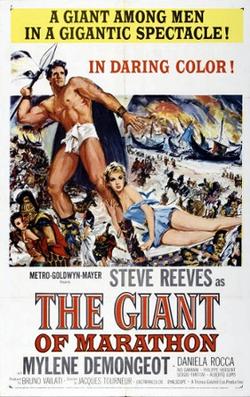
Starring Steeve Reeves, The Giant of Marathon is supposed to be based on the famous messenger Pheidippides/Philippides, who ran 26 miles from Marathon to Athens to announce the Greek victory over the Persians. I say supposed to, because there is NOTHING realistic about this movie. It mostly revolves around Pheidippides' love life; the Persian invasion is an after-thought. This movie is so bad it will make you want to face palm yourself. If you want a good laugh though, I recommend checking out the MST3000 commentary track for the movie on Hulu.
1) The 300 Spartans (1962)
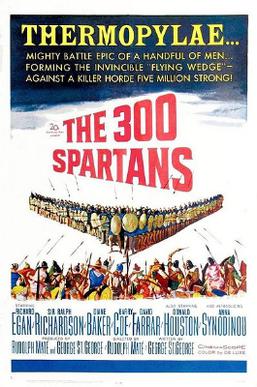
Before Zack Snyder's 300 there was The 300 Spartans (AKA Lion of Sparta), starring Richard Egan, David Farrar and Ralph Richardson. I have to admit that I own the movie but rarely watch it since it's so dated and the script is cheesy at best. I will say that it IS far more accurate than 300, but that's not saying a whole lot. Still, it has its moments and is a good one to rent.
7) The Trojan Women (1971)

If you're familiar with the play then you know that The Trojan Women isn't exactly an upbeat story. The movie stars Katharine Hepburn and Vanessa Redgrave among others, and while it's pretty slow it also has its moments where you're engrossed in the acting. I especially like the back and forth between Vanessa and Katherine--there's a lot of tension and emotion. Another good one to rent.
2) Clash of the Titans (1981)

This is still my favorite movie about Ancient Greece. It's got everything: dated claymation, Sir Laurence Olivier as Zeus, Maggie Smith as Thetis, and the sexy Harry Hamlin as Perseus. There's adventure and love and comedy in this movie. I admit the scenes with Medusa near the end scared me as a little girl, but for the most part this is something you can watch and enjoy with the whole family. So don't just rent it---OWN it!
10) Disney's Hercules (1997)

I LOVE this movie. It's so cute and uplifting! I love how Hercules starts off as an akward teenager in the beginning and turns into a true hero by the end. Of course the movie is made brilliant by the acting of James Woods as the smarmy Hades, Danny DeVito as the hard-nosed Satyr, Susan Egan as the cocky Megara, Paul Shaffer as the hip Hermes, and Bobcat Goldthwait as the dull-witted Pain. Not everything is accurate in terms of Greek Mythology (Hera is a loving mother to Hercules!?) but there's enough references to his 12 labors and a warm happy ending (also not exactly accurate) to make up for any faults.
9) Alexander (2004)
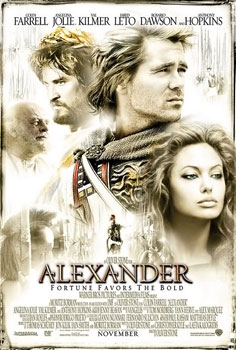
Ugh. This movie is NOT good. The acting is bad, the script is lame and parts of it are confusing at best. Still, I DID enjoy the climactic battle between Greece and Persia, (and Raz Degan is HOT as King Darius, am I right?) I admit there aren't enough movies about Ancient Greece so I should be happy with anything that comes out about it, but here's to hoping a better version of Alexander will be released in the future.
4) Troy (2004)

I'm not going to lie: Brad Pitt is about the LAST person I'd imagine to play the legendary hero Achilles. I wince a bit whenever he's on screen. Luckily there's a huge cast of great actors to make up for that. First and foremost is Peter O'Tool as Priam. He pretty much out-acts EVERYONE in this movie. You can feel Priam's denial as the Greeks are outside his walls. You can feel his pain as he is forced to watch his son's body be dragged behind the chariot of Achilles. You sympathize when he goes to beg for his son's body. And then there's Brian Cox as the ambitious and ever-scheming Agamemnon, and Brendan Gleeson as the jilted Menelaus. And of course the talented Eric Bana is always pleasing to the eye. This movie isn't exactly accurate in terms of story, but I was impressed with the research they did for the sets and costumes.
3) 300 (2006)

This silly, over-the-top and highly entertaining movie is based on a silly, over-the-top and highly entertaining comic book by Frank Miller. 300 is named of course for the 300 Spartans who famously defended the pass at Thermopylae against the Persian invaders. I enjoy this movie not for its authenticity (there's virtually NONE) but for its special effects and silly one liners (THIS. IS. SPARTAAAAA!) If you're looking for a movie that will educate you on the battle of Thermopylae look elsewhere. If you want to be endlessly entertained however, this is the movie for you.
8) Percy Jackson and the Lightning Thief (2010)
I actually listened to part of this as an audio book and I like the fusion of Greek Mythology and a gritty 21st century setting. I also like the main character Percy Jackson, who has a big heart and an old soul. I never read or watched anything Harry Potter, but I get the feeling I'll end up seeing this movie for both the interesting plot (Percy is the son of Poseidon charged with getting back Zeus' stolen lightning) and the awsome special effects.
5) Clash of the Titans (2010)

Is it me, or is Sam Worthington and his crew cut out of place in this movie? And where is Bobo? I'm not sure how I feel about the special effects in this (they look very expensive though) but I'll guess I'll have to see this to find out. Will it be as good as its 1981 predecessor? I'm going to say no, but here's to hoping...
Saturday, January 23, 2010
Athens, Attica and the Megarid.
Guess what, Gentle Readers? It's time for another (short) book report!
Athens, Attica and the Megarid: an Archaeological Guide is the result of intensive research on the part of Hans Rupprect Goette, who leaves no stone unturned (literally) in his detailed account of the Attican countryside.
The work is divided into seven sections: Athens and Piraeus, Sounion and the Mesogeia, Marathon and north-east Attica, the areas around the Thriasian plain, the Megarid, the islands of the Saronic Gulf, and finally the Appendices which include information on things like architecture, geography, flora and fauna. The divisions are wonderfully comprehensible, and Goette includes maps and sketches every few pages to give the reader an idea of the area he is covering.
To say the least this book is VERY detailed. It's over 350 pages of small print that's packed with information on every ancient shrine, palace, farmstead, cave, temple, fort, boundry stone, statue, monument, quarry, theatre, cemetery and wall ever built in Attica. There are fabulous details on rarely visited places like the forts at Eleutherai and Oinoe and the harbors at Lavrion and Porto Raphti. The author also takes the time to acknowledge the little things that are huge in importance: a boundry stone that seperated a coastal tritty from an inland one, an ancient quarrry road, a goatpen with architecutral furnishings for milking animals, a gaurd post in a small mountain pass. It's clear from reading this guide that Goette took on a Herculean task, but luckily for readers he manages to succeed and succeed very well.
Athens, Attica and the Megarid is not cheap. The book is $108 on Amazon. Yet such is the price for extensive research. If you are interested in the ruins of Attica, then this book is for you.
Athens, Attica and the Megarid: an Archaeological Guide is the result of intensive research on the part of Hans Rupprect Goette, who leaves no stone unturned (literally) in his detailed account of the Attican countryside.
The work is divided into seven sections: Athens and Piraeus, Sounion and the Mesogeia, Marathon and north-east Attica, the areas around the Thriasian plain, the Megarid, the islands of the Saronic Gulf, and finally the Appendices which include information on things like architecture, geography, flora and fauna. The divisions are wonderfully comprehensible, and Goette includes maps and sketches every few pages to give the reader an idea of the area he is covering.
To say the least this book is VERY detailed. It's over 350 pages of small print that's packed with information on every ancient shrine, palace, farmstead, cave, temple, fort, boundry stone, statue, monument, quarry, theatre, cemetery and wall ever built in Attica. There are fabulous details on rarely visited places like the forts at Eleutherai and Oinoe and the harbors at Lavrion and Porto Raphti. The author also takes the time to acknowledge the little things that are huge in importance: a boundry stone that seperated a coastal tritty from an inland one, an ancient quarrry road, a goatpen with architecutral furnishings for milking animals, a gaurd post in a small mountain pass. It's clear from reading this guide that Goette took on a Herculean task, but luckily for readers he manages to succeed and succeed very well.
Athens, Attica and the Megarid is not cheap. The book is $108 on Amazon. Yet such is the price for extensive research. If you are interested in the ruins of Attica, then this book is for you.
Thursday, January 21, 2010
Spartacus: Blood & Sand & Bleh
I poked my head out of my archeological dig on Anceient Greece long enough to watch a free episode of the new Spartacus series. Wish I hadn't.
This series has no redeeming qualities. Where Rome was over-the-top and gritty (with a solid cast of actors), this is just AWFUL. The script is terrible, the acting is flinch-inducing, the costumes are ridiculous and the green-screen is annoying. The latter worked in 300 because the movie was based on the comic book, which in and off itself is very stylized. This...this is just stupid.
I guess it's unfair of me to expect anything glamorous from the makers of Xena: Warrior Princess, but seriously...
This series has no redeeming qualities. Where Rome was over-the-top and gritty (with a solid cast of actors), this is just AWFUL. The script is terrible, the acting is flinch-inducing, the costumes are ridiculous and the green-screen is annoying. The latter worked in 300 because the movie was based on the comic book, which in and off itself is very stylized. This...this is just stupid.
I guess it's unfair of me to expect anything glamorous from the makers of Xena: Warrior Princess, but seriously...
Friday, January 08, 2010
Another Awesome Writing Contest!!
Once again the talented Jason Evans is having short fiction contest, and there's still time to enter! Go here for all the details, or just to read the fantastic stories. Below is my entry (notice I snuck in a couple of references to Ancient Greece). Enjoy!
The Crow and the Raven
"A crow. How funny."
"I don’t think that was a crow."
"Do you know the story of the White Crow, Phoenix?" Robin's black eyes were small and beady and full of anger.
"There are white crows?"
"A snow-white crow was left by the god Apollo to watch over his love, Coronis. But she cheated on him. Betrayed him. He could never forgive her. Never! So you know what he did? He turned the crow black."
"What did the crow have to do with it?"
"Did you know that a flock of crows is called a murder?" She laughed hoarsely, then reached into her purse. Out came a .44. Where had she gotten that?
"Crows are the spirits of revenge," she hissed at me as she pointed the gun at my forehead. It shook in her hand, the metal softly pulsing in the sun's dying rays. I did the obligatory reach for the sky, and tried to keep my voice reasonable. Calm.
"Robin, it wasn't a crow. Really."
"It doesn't matter, does it? You'll just come back. That's what the Phoenix does, right? It rises from the ashes.”
"You’re not threatening to burn me, you're threatening to shoot me."
"It doesn’t matter. When you come back, we can start again."
An explosion followed, so violent it knocked me on my back. My sight started to fade.
It wasn't a crow, was my last thought. It was a raven.
The Crow and the Raven
"A crow. How funny."
"I don’t think that was a crow."
"Do you know the story of the White Crow, Phoenix?" Robin's black eyes were small and beady and full of anger.
"There are white crows?"
"A snow-white crow was left by the god Apollo to watch over his love, Coronis. But she cheated on him. Betrayed him. He could never forgive her. Never! So you know what he did? He turned the crow black."
"What did the crow have to do with it?"
"Did you know that a flock of crows is called a murder?" She laughed hoarsely, then reached into her purse. Out came a .44. Where had she gotten that?
"Crows are the spirits of revenge," she hissed at me as she pointed the gun at my forehead. It shook in her hand, the metal softly pulsing in the sun's dying rays. I did the obligatory reach for the sky, and tried to keep my voice reasonable. Calm.
"Robin, it wasn't a crow. Really."
"It doesn't matter, does it? You'll just come back. That's what the Phoenix does, right? It rises from the ashes.”
"You’re not threatening to burn me, you're threatening to shoot me."
"It doesn’t matter. When you come back, we can start again."
An explosion followed, so violent it knocked me on my back. My sight started to fade.
It wasn't a crow, was my last thought. It was a raven.
Monday, January 04, 2010
Is Thucydides a Spin Doctor?
I stumbled upon this article on Thucydides while searching for archeological news on Ancient Greece and thought it might be of interest to my readers:
Was Ancient Historian One Of The First Spin Doctors?
Normally it's Herodotus who takes a brutal beating for spinning tales and composing stories (Thucydides himself once lead the charge), but Yale professor Dr. Donald Kagan dares to suggest that the pragmatic historian may have done some spinning of his own. His book Thucydides: The Reinvention of History tries to prove this point.
I haven't read the book (though I plan to), but it made me think: is history really always written by the winners? Is there any such thing as an un-biased historian? Can history really be re-invented? Or is it simply erased, glossed over by those who don't want the truth to come out?
Was Ancient Historian One Of The First Spin Doctors?
Normally it's Herodotus who takes a brutal beating for spinning tales and composing stories (Thucydides himself once lead the charge), but Yale professor Dr. Donald Kagan dares to suggest that the pragmatic historian may have done some spinning of his own. His book Thucydides: The Reinvention of History tries to prove this point.
I haven't read the book (though I plan to), but it made me think: is history really always written by the winners? Is there any such thing as an un-biased historian? Can history really be re-invented? Or is it simply erased, glossed over by those who don't want the truth to come out?
Subscribe to:
Posts (Atom)