According to Plutarch*, Themistocles had at least one brother. Supposedly his name was Agesilaos and he was a scout sent by the Athenians to spy on the Persians.
While it's difficult to imagine that Themistocles was an only child, many ancient authors put a lot of stress on his foreign blood. It may be that any siblings he had were not actually full kin. They were either related by blood through his father, or not related at all (step-siblings).
In my novel Themistocles does indeed have a step-brother, and a wicked one to boot! Here's a small sample from my novel introducing the Bully of Phrearrhioi.
The Bully of Phrearrhioi
The morning dawned warm and fragrant, as it always did in summer. But it was not the heavy scent of thyme wafting down the slopes of Mt. Hymettus that stole me from Sleep's embrace. It was a fierce kick directed at my face.
"Wake up, foreigner! Neocles wants to leave for the festival before it gets too hot." Rubbing my temple, I shrugged off my wool blanket and sat up. "Good morning, Sir Piggy," I yawned. That earned me another kick, harder this time and better aimed. For a moment I saw stars. "I told you. Don't call me that! I'm better than you are. I'm a citizen of Athens and you're just some stupid butter-eater! So you show me some respect." "I called you Sir**," I pointed out, making sure to put the bed between us as I climbed out of it. My step-brother glared at me through small, squinty eyes half-hidden in folds of fat. I was not family to him. I was merely some Thracian's get that he had to put up with because my father had married his mother.
"I don't know why you're going. Foreigners shouldn't be allowed to attend the Panathenaea. But then, maybe your father finally decided to sell you to a slaver in the Agora!" He squealed a laugh. I addressed him levelly as I attempted to smooth out the wrinkles from my favorite tunic, a square of faded green cloth with a blue border. I wore it everywhere, even to bed. "If my Da wanted to be rid of me he would have put me in a pot and left me out on the street like all the other babies nobody wants. Your parents tried that but you were too fat to fit." Agesilaos turned pink, only making him look more the pig. "I'll beat your ugly face in!" he hollered, shaking a hammy fist at me.
"Is everything all right, young Master?" Agesilaos' paidagogos appeared in the doorway, a look of concern on his face. At 80, Xenos was thin as a reed, as blind as the Fates and as old as Chronos. Agesialos speared him with a look. "Mind your business, you old fool! And where are my things? I told you to lay out my best cloak and sandals! My mother says I must look my best today. Oh. And get something for the butter-eater to wear, too. I don't want him embarrassing me with that UGLY tunic." "Alright, Ages. I shall do so as soon as I can." "Do it now!" Sir Piggy crossed the room and gave him a vicious swat. The old man yelped and scurried away. Agesilaos laughed. I glared at his back, dreaming of the day when I could smash his ugly snout in. That that was far away, though. I was seven to his twelve, and could not hope to best him in a contest of strength. And so I endured...
* Plutarch, Moralia.
** The word "sir" may strike readers as anachronistic, but there was indeed a sort of class system in Ancient Athens. Nobles were the top tier, the knights came next, then the middle class and finally the poor. Themistocles would have been ranked as middle class, and his step-brother --through his mother's side-- from the knights or noble class.
Wednesday, March 03, 2010

Saturday, February 27, 2010
Themistocles Lesson #2 -- What's in a name?
Themistocles means "Glory of the Law." It's a fantastic name! It's also a rare one, and it makes me wonder why his father gave it to him. The answer might be found by looking at Neocles' own name.*
Neocles
Neocles means "New Man." New to what? We can only speculate, but perhaps it has something to do with the period in which he was born.
If Themistocles was born around 525 BCE, then his father (assuming he got married and had children between 20 and 30) was born around 550 BCE. It was at this time that many poor Atticans were forced into a form of indentured servitude. A family struggling on a farm could not mortgatge their property for a loan. Instead, the farmer would have to offer himself and his family as security, providing some form of labor in lieu of repayment. If he failed to meet his obligations, he and his family could be sold into slavery.
This went on for a number of years, until a noble named Solon recognized the injustice of the sytem and wrote a series of reforms known as Seisachtheia that made it illegal for indebted families to be sold into slavery. If Neocles' parents were affected by these reforms, it is possible that they wanted to name their son "New Man" to symbolize a new and better era.
Yet despite his family's hopes, Neocles would still struggle under the nobility's yoke. The higher classes barred all but the top men of Athens from holding the most prestigious offices, and ignored the lower classes in the Asssembly. Neocles probably chaffed under these invisible shackles, and may have named his son Themistocles in the belief that would one day the child would bring justice to the people.
Themistocles
Themis was the Greek goddess of divine law and justice, representing the natural order of things. She was one of Uranus and Gaia's children and is one of the few Titans venerated by the Greeks. Anyone who had Themis in their name would be expected to fight for what was right. Themstocles would do just that, but his methods were more shrewd than fair. Perhaps Neocles would have been better off naming his son Metistocles instead.
Metis was the goddess of "magical cunning", and anyone who was of "bold thought and bold action" possessed her attributes. Themistocles was nothing but cunning. He would lie, cheat, steal bribe and bully his way to the top of Athen's fiercely competative political game, using his metis to get ahead. Although this would prove to be a good thing in the long run, the Athenians did not appreciate Themistocles' daring genius and would eventually ostrasize him after he helped them win the Persian Wars.
*Of course this is all highly speculative on my part. There is no way to know the reasons why Neocles and Themistocles had such unusual names.
Neocles
Neocles means "New Man." New to what? We can only speculate, but perhaps it has something to do with the period in which he was born.
If Themistocles was born around 525 BCE, then his father (assuming he got married and had children between 20 and 30) was born around 550 BCE. It was at this time that many poor Atticans were forced into a form of indentured servitude. A family struggling on a farm could not mortgatge their property for a loan. Instead, the farmer would have to offer himself and his family as security, providing some form of labor in lieu of repayment. If he failed to meet his obligations, he and his family could be sold into slavery.
This went on for a number of years, until a noble named Solon recognized the injustice of the sytem and wrote a series of reforms known as Seisachtheia that made it illegal for indebted families to be sold into slavery. If Neocles' parents were affected by these reforms, it is possible that they wanted to name their son "New Man" to symbolize a new and better era.
Yet despite his family's hopes, Neocles would still struggle under the nobility's yoke. The higher classes barred all but the top men of Athens from holding the most prestigious offices, and ignored the lower classes in the Asssembly. Neocles probably chaffed under these invisible shackles, and may have named his son Themistocles in the belief that would one day the child would bring justice to the people.
Themistocles
Themis was the Greek goddess of divine law and justice, representing the natural order of things. She was one of Uranus and Gaia's children and is one of the few Titans venerated by the Greeks. Anyone who had Themis in their name would be expected to fight for what was right. Themstocles would do just that, but his methods were more shrewd than fair. Perhaps Neocles would have been better off naming his son Metistocles instead.
Metis was the goddess of "magical cunning", and anyone who was of "bold thought and bold action" possessed her attributes. Themistocles was nothing but cunning. He would lie, cheat, steal bribe and bully his way to the top of Athen's fiercely competative political game, using his metis to get ahead. Although this would prove to be a good thing in the long run, the Athenians did not appreciate Themistocles' daring genius and would eventually ostrasize him after he helped them win the Persian Wars.
*Of course this is all highly speculative on my part. There is no way to know the reasons why Neocles and Themistocles had such unusual names.
Thursday, February 25, 2010
Meghan's first writing samples!
After assurances by a few different people that I will not close any doors to publication should I show off bits and pieces of my writing online, I have decided to take the plunge and share a tiny bit of my novel with you. Enjoy!
When the world's largest empire threatens to invade his city-state, it is up to Themistocles to unite the factious people of Athens and save its fledgling democracy. To do so he will have to lie, cheat, steal, bribe and bully his way to the top of Athen's fiercly competative and fatal political game. Based on the real-life naval commander who led the Greeks to victory over the Persians 2,500 years ago, I, Themistocles recounts the life of this extraordinary man through his own words.
Prologue

They say poison makes for a good death.
Oh, not the kind that leaves you clawing at your throat like hemlock, or the kind that leaves you with that...Sardonic smile. No. A good poison should be something quick and painless. That is why Bull's Blood is perfect.
Why poison? To escape the trap my enemies have set for me. To go to a place where they cannot follow. It is my last act of defiance against them, one more clever ruse to ensure my place in the pantheon of heroes. And what better way to do so than to die a hero's death? After all, poison is what took the lives of Heracles, Achilles, and Odysseus.
Yet it would be a shame for me to leave this world without recording the events of my life. Doesn't a hero deserve to have his tale sung to eager ears? I cannot rely on the goodwill of my enemies to do so, of course. It is up to me to tell the tale. And so before I cross the river Styx, here it is, the story of Themistocles, as remembered by the hero himself.
When the world's largest empire threatens to invade his city-state, it is up to Themistocles to unite the factious people of Athens and save its fledgling democracy. To do so he will have to lie, cheat, steal, bribe and bully his way to the top of Athen's fiercly competative and fatal political game. Based on the real-life naval commander who led the Greeks to victory over the Persians 2,500 years ago, I, Themistocles recounts the life of this extraordinary man through his own words.
Prologue

They say poison makes for a good death.
Oh, not the kind that leaves you clawing at your throat like hemlock, or the kind that leaves you with that...Sardonic smile. No. A good poison should be something quick and painless. That is why Bull's Blood is perfect.
Why poison? To escape the trap my enemies have set for me. To go to a place where they cannot follow. It is my last act of defiance against them, one more clever ruse to ensure my place in the pantheon of heroes. And what better way to do so than to die a hero's death? After all, poison is what took the lives of Heracles, Achilles, and Odysseus.
Yet it would be a shame for me to leave this world without recording the events of my life. Doesn't a hero deserve to have his tale sung to eager ears? I cannot rely on the goodwill of my enemies to do so, of course. It is up to me to tell the tale. And so before I cross the river Styx, here it is, the story of Themistocles, as remembered by the hero himself.
Sunday, February 21, 2010
Themistocles Lesson #2 -- What's in a name?
Themistocles means "Glory of the Law." It's a fantastic name! It's also a rare one, and it makes me wonder why his father gave it to him. The answer may lie with Neocles himself.*
Neocles
Neocles means "New Man." New to what? We can only speculate, but perhaps it has something to do with the period in which he was born.
If Themistocles was born around 525 BCE, then his father (assuming he got married and had children between 20 and 30) was born around 550 BCE. It was at this time that many poor Atticans were forced into a form of indentured servitude. A family struggling on a farm could not mortgatge their property for a loan. Instead, the farmer would have to offer himself and his family as security, providing some form of labor in lieu of repayment. If he failed to meet his obligations, he and his family could be sold into slavery.
This went on for a number of years, until a noble named Solon recognized the injustice of the sytem and wrote a series of reforms known as Seisachtheia that made it illegal for indebted families to be sold into slavery. If Neocles' parents were affected by these reforms, it is possible that they wanted to name their son "New Man" to symbolize a new and better era.
Yet despite his family's high hopes, Neocles would still struggle under the nobility's yoke. The higher classes barred all but the top men of Athens from holding the most prestigious offices, and ignored the lower classes in the Asssembly. Neocles probably chaffed under these invisible shackles, and perhaps named his son Themistocles in the hopes that would one day the child might bring justice to the people.
Themistocles
Themis was the Greek goddess of divine law and justice, representing the natural order of things. She was one of Uranus and Gaia's children and is one of the few Titans venerated by the Greeks. Anyone who had Themis in their name would be expected to fight for what was right. Themstocles would do just that, but his methods for this were more shrewd than just or fair. Perhaps Neocles would have been better off naming his son Metistocles instead.
Metis was the goddess of "magical cunning", and anyone who was of "bold thought and bold action" possessed her attributes. Themistocles was nothing but cunning. He would lie, cheat, steal bribe and bully his way to the top of Athen's fiercely competative political game, using his metis to get ahead. Although this would prove to be a good thing in the long run, the Athenians did not appreciate Themistocles' daring genius and would eventually ostrasize him after he helped them win the Persian Wars.
*Of course this is all highly speculative on my part. There is no way to know the reasons why Neocles and Themistocles had such unusual names.
Neocles
Neocles means "New Man." New to what? We can only speculate, but perhaps it has something to do with the period in which he was born.
If Themistocles was born around 525 BCE, then his father (assuming he got married and had children between 20 and 30) was born around 550 BCE. It was at this time that many poor Atticans were forced into a form of indentured servitude. A family struggling on a farm could not mortgatge their property for a loan. Instead, the farmer would have to offer himself and his family as security, providing some form of labor in lieu of repayment. If he failed to meet his obligations, he and his family could be sold into slavery.
This went on for a number of years, until a noble named Solon recognized the injustice of the sytem and wrote a series of reforms known as Seisachtheia that made it illegal for indebted families to be sold into slavery. If Neocles' parents were affected by these reforms, it is possible that they wanted to name their son "New Man" to symbolize a new and better era.
Yet despite his family's high hopes, Neocles would still struggle under the nobility's yoke. The higher classes barred all but the top men of Athens from holding the most prestigious offices, and ignored the lower classes in the Asssembly. Neocles probably chaffed under these invisible shackles, and perhaps named his son Themistocles in the hopes that would one day the child might bring justice to the people.
Themistocles
Themis was the Greek goddess of divine law and justice, representing the natural order of things. She was one of Uranus and Gaia's children and is one of the few Titans venerated by the Greeks. Anyone who had Themis in their name would be expected to fight for what was right. Themstocles would do just that, but his methods for this were more shrewd than just or fair. Perhaps Neocles would have been better off naming his son Metistocles instead.
Metis was the goddess of "magical cunning", and anyone who was of "bold thought and bold action" possessed her attributes. Themistocles was nothing but cunning. He would lie, cheat, steal bribe and bully his way to the top of Athen's fiercely competative political game, using his metis to get ahead. Although this would prove to be a good thing in the long run, the Athenians did not appreciate Themistocles' daring genius and would eventually ostrasize him after he helped them win the Persian Wars.
*Of course this is all highly speculative on my part. There is no way to know the reasons why Neocles and Themistocles had such unusual names.
Friday, February 19, 2010
Themistocles Lesson #1.2 Meet the Parents!
Ancient authors could not agree on where Themistocles' mother was from. Some say the wilds of Thrace. Others the cosmopolitan Halicarnassus. Still others say the western lands of Acarnania. Yet all agree she was a foreigner.
Euterpe of Halicarnassus

If Themistocles' mother was from Halicarnassus, she would have been raised in a very cultured and sophisticated city. The harbor town is located in modern day Bodrum, a charming and magical place that casts a spell on any who enter it. There, Euterpe would been caught up in the swirling tides of East and West. Oriental spices and fragrent herbs would be added to lamb and olives. The quays of the harbor would have been full crawfish and eel, a variety of fish, and even exotic sea creatures. She would have been exposed to a variety of cultures and classes. There were Persian soldiers and Phonecian sailors along the water's edge, Lydian merchants calling out their wares in the streets, and Cappadocian serving women swaying through the alleyways with water jugs and richly dyed robes for the mistresses. Euterpe would have struck Neocles as a rare gem, beautiful and irrisistable. He might have met her while on a trip to the city, or perhaps saw her gliding through the streets of Athens and vowed then and there to make her his bride.
Abrotonon of Thrace

The people of Thrace were exotic and dangerous to the Ancient Greeks. They were known for their startling red hair, fox-skinned caps and knee-high boots. They were also known to be excellent archers, able to shoot arrows from the back of a horse. Perhaps Abrotonon learned to do these things at her father's side. Or maybe she learned to weave the thick Thracian cloaks that granted protection against the icy winters. Did Neocles meet this exotic beauty while on campaign around the Black Sea? Was he enraptured by her firey hair and equally fiery temper? Or was she was servant in his household, sweet and innocent and with nobody to depend upon but him? In either case, she must have been very special.
??? of Acarnania

Acarnania is located in the mysterious wilds of Western Greece. Due to its strategic location and proximity to Italy, the cities of Acarnania were constantly entangled in wars. It is possible that this mysterious girl was a refugee, her family fleeing to Athens in the hopes of starting a new life, away from the constant battles. Neocles may have seen the fragile beauty in the countryside one day and offered her love and security, as well as a place to call home.
No matter where she was from, Themistocles' mother would have stood out. She probably spoke with a thick accent and was unfamiliar with the customs of Attica. She would have had to rely on her husband to teach her about local festivals (there were dozens) the beliefs and customs of his people and the land's history and politics.
In my story Themistocles knows very little about his mother. She dies in child birth and his father refuses to talk about her.
Euterpe of Halicarnassus

If Themistocles' mother was from Halicarnassus, she would have been raised in a very cultured and sophisticated city. The harbor town is located in modern day Bodrum, a charming and magical place that casts a spell on any who enter it. There, Euterpe would been caught up in the swirling tides of East and West. Oriental spices and fragrent herbs would be added to lamb and olives. The quays of the harbor would have been full crawfish and eel, a variety of fish, and even exotic sea creatures. She would have been exposed to a variety of cultures and classes. There were Persian soldiers and Phonecian sailors along the water's edge, Lydian merchants calling out their wares in the streets, and Cappadocian serving women swaying through the alleyways with water jugs and richly dyed robes for the mistresses. Euterpe would have struck Neocles as a rare gem, beautiful and irrisistable. He might have met her while on a trip to the city, or perhaps saw her gliding through the streets of Athens and vowed then and there to make her his bride.
Abrotonon of Thrace

The people of Thrace were exotic and dangerous to the Ancient Greeks. They were known for their startling red hair, fox-skinned caps and knee-high boots. They were also known to be excellent archers, able to shoot arrows from the back of a horse. Perhaps Abrotonon learned to do these things at her father's side. Or maybe she learned to weave the thick Thracian cloaks that granted protection against the icy winters. Did Neocles meet this exotic beauty while on campaign around the Black Sea? Was he enraptured by her firey hair and equally fiery temper? Or was she was servant in his household, sweet and innocent and with nobody to depend upon but him? In either case, she must have been very special.
??? of Acarnania

Acarnania is located in the mysterious wilds of Western Greece. Due to its strategic location and proximity to Italy, the cities of Acarnania were constantly entangled in wars. It is possible that this mysterious girl was a refugee, her family fleeing to Athens in the hopes of starting a new life, away from the constant battles. Neocles may have seen the fragile beauty in the countryside one day and offered her love and security, as well as a place to call home.
No matter where she was from, Themistocles' mother would have stood out. She probably spoke with a thick accent and was unfamiliar with the customs of Attica. She would have had to rely on her husband to teach her about local festivals (there were dozens) the beliefs and customs of his people and the land's history and politics.
In my story Themistocles knows very little about his mother. She dies in child birth and his father refuses to talk about her.
Themistocles Lesson #1.1 Meet the Parents!
Neocles

Very little is known about Themistocles' father. We do know that his name was actually Neocles, because archaeologists have unearthed dozens of ostrica bearing his name. He was probably born sometime around 550 BCE. Plutarch states that his family was part of the Leontis tribe, but that may have been after Cleisthenes' social reforms, which took place around 508 BCE. Neocles may also have been connected to the Lycomidae, because his son would later rebuild a temple of theirs after the Persians burned it down in 480 BCE.

Neocles and his parents probably belonged to the Attican middle class, known as the zeugitai. They were rich enough to participate in battles as foot soldiers(hoplite), but not enough to be part of the knights(hippeis). Growing up, Neocles was aware that he would have little say in the Athenian assembly. Only the pentacosiomedimni (nobles) and hippeis were allowed to hold the highest offices of the land. Instead he was expected to live out his days tilling the dry, stubborn soil on his tiny farm in the deme of Phrearrioi, far south of Athens. Sometimes he would march in the phalanx against Attica's pushy neighbors Megara and Thebes. He might have even had a say in local politics. But that was all.
As part of the middle class, Neocles was expected to marry a woman in his social bracket. It would be a deal between himself and his future father-in-law, a formal arrangement with little if nothing to do with love. It is romantic to think that Neocles balked at social convention and married a foreigner from either Caria or Thrace while on campaign or in the city. But it is also possible that Themistocles' mother may have been a servant in Neocles' household. Most Greeks had at least two or three slaves, and almost all were from outside of Greece.
Whether father and son were close is not clear. Some ancient authors claim that Neocles disinherited his unruly son at a young age. Others write that Themistocles named a son after his father, suggesting a strong bond. In either case, if Neocles was alive at the time of Salamis, he was most likely very proud of his son.
In my story Neocles is a handsome but somewhat dour character. He is stubborn but not ambitious. He has no love for intrigue and politics and would rather stay on his farm than make the long journey to Athens to have his voice heard on the Pynx. Dark-haired with olive skin, he is slight of build and small in stature. He loves his son but has a hard time connecting with him; Themistocles' outgoing personality baffles him.
Tuesday, February 16, 2010
New Site!
One of the things I learned at the conference this weekend is that it's important to have an engaging blog to keep people interested in you and your work. I've mostly used this blog as a way to sort out my thoughts and feelings about being a writer. That's going to change.
I'm shy about sharing my novel online for fear of losing rights to it. So instead I may start writing super short pieces about Ancient Greece exclusively for this blog. I'm also going to do more blogs about Themistocles himself. I'll answer questions like who is he, who are the people in his life and why he's so important.
I'm also thinking of starting a site dedicated to short stories based on historical fiction. There's virtually nothing out there for it and I think it would be a neat idea. I've brought this up before but never really knew enough people to get that started. As my network expands, I think it might be possible!
Obviously I've got a lot of plans. My blog is just the first step. Look for more exciting stuff in the future!
I'm shy about sharing my novel online for fear of losing rights to it. So instead I may start writing super short pieces about Ancient Greece exclusively for this blog. I'm also going to do more blogs about Themistocles himself. I'll answer questions like who is he, who are the people in his life and why he's so important.
I'm also thinking of starting a site dedicated to short stories based on historical fiction. There's virtually nothing out there for it and I think it would be a neat idea. I've brought this up before but never really knew enough people to get that started. As my network expands, I think it might be possible!
Obviously I've got a lot of plans. My blog is just the first step. Look for more exciting stuff in the future!
Sunday, February 14, 2010
I Love Themistocles.
I wrote a love note to Themistocles. I wanted to share it with the world. So I pitched my book to five different agents. Only two seemed mildly interested. Nobody wants to read historical fiction from a male perspective.
I'm crushed. I was told more than once the pitch was good and the story sounded interesting, but agents are there to sell books. What's hot right now is vampires and romance and over-the-top thrillers.
I don't want to write about vampires. I don't want to write romance. I don't want to write an over-the-top thriller. I want to write about Themistocles. Without Themistocles we would have no democracy. Without Themistocles Western civilization would not exist.
Here is my pitch. I hope my readers enjoy it.
When the world's largest empire threatens to invade his city-state, it is up to Themistocles to unite the factious people of Athens and save its fledgling democracy. To do so, Themistocles must lie, cheat, steal, bribe and bully his way to the top of Athen's fiercly competitive and fatal political game.
Based on the real-life naval commander who led the Greeks to victory over the Persian empire 2,500 years ago, I, Themistocles recounts the life of this extraordinary man through his own words.
Cheers to you, hero of Salamis. I love you and will fight to make your story heard.
I'm crushed. I was told more than once the pitch was good and the story sounded interesting, but agents are there to sell books. What's hot right now is vampires and romance and over-the-top thrillers.
I don't want to write about vampires. I don't want to write romance. I don't want to write an over-the-top thriller. I want to write about Themistocles. Without Themistocles we would have no democracy. Without Themistocles Western civilization would not exist.
Here is my pitch. I hope my readers enjoy it.
When the world's largest empire threatens to invade his city-state, it is up to Themistocles to unite the factious people of Athens and save its fledgling democracy. To do so, Themistocles must lie, cheat, steal, bribe and bully his way to the top of Athen's fiercly competitive and fatal political game.
Based on the real-life naval commander who led the Greeks to victory over the Persian empire 2,500 years ago, I, Themistocles recounts the life of this extraordinary man through his own words.
Cheers to you, hero of Salamis. I love you and will fight to make your story heard.
Friday, February 12, 2010
San Francisco Writer's Conference: Day 1
I am so tired I can barely stay awake.
It's strange. I've been sitting in a room all day taking notes on how to be a better writer, not running a marathon, yet I still feel completely drained. And there's two more days to go!
Day 1 has proven to be a mostly positive experience. I'm suprised how friendly and open everyone is. Not just the writers, but the authors and agents too. And I certainly got some great tips out of the seminars. Granted, some were better than others, but I suppose that's to be expected. If I have any real complaints, it's that the food is bad and the conference seems a bit disorganized. Other than that though, I'm having a blast!
Tommorow I will be meeting with a free-lance editor for a 5 minute Q&A session and will hopefully get some feedback on the start of my novel. Wish me luck!
It's strange. I've been sitting in a room all day taking notes on how to be a better writer, not running a marathon, yet I still feel completely drained. And there's two more days to go!
Day 1 has proven to be a mostly positive experience. I'm suprised how friendly and open everyone is. Not just the writers, but the authors and agents too. And I certainly got some great tips out of the seminars. Granted, some were better than others, but I suppose that's to be expected. If I have any real complaints, it's that the food is bad and the conference seems a bit disorganized. Other than that though, I'm having a blast!
Tommorow I will be meeting with a free-lance editor for a 5 minute Q&A session and will hopefully get some feedback on the start of my novel. Wish me luck!
Thursday, February 11, 2010
SF Writer's Conference....Start!
Tommorow is my very first writing conference...and it's right here in San Francisco! I'm excited, but also nervous. Especially about the whole "Speed Dating an Editor" thing on Sunday. I feel like its an amazing opportunity and I should bring my A game. But I've never done this before and don't want them to snub my book. I've GOT to be prepared!
At any rate, I'll update you on a day-by-day basis and let you know how things are going. Wish me luck!
At any rate, I'll update you on a day-by-day basis and let you know how things are going. Wish me luck!
Thursday, February 04, 2010
And now...for something completely different!
While editing my novel in the hopes of having at least part of it presentable for next week's writing conference, I've taken time out to play Dragon Age: Origins.
Like Scott Oden I love fantasy and RPG stuff and so of course I had to get my hands on a copy of this game. I got a console version of the game, which means there's MASSIVE loading time everytime I enter or exit an area, but other than that...well, read on!
Despite the sometimes eye-rolling similarities to Lord of the Rings, I'm actually enjoying this game. I chose a female humanoid as my protagonist since humans are the most well-rounded race, and made her a warrior since I tend to bulldoze my way through battles. Yuna's a good girl, polite to most but wary and suspicious of others, and since I've turned her into a tank she can cleave through enemies fairly easily in order to get to the next plot point faster. I haven't had much social interaction with side characters as of yet, but I am looking forward to seeing how my party members react to my decisions on the field.
So far the action is good, the acting is solid and the battles are well-spaced. I admit I'm overwhelmed by the depth of the features list and the amount of sidequests, but in an RPG that's a good thing. What's not a good thing is the constant tearing and flickering in the PS3 version. It strikes me as sloppy and it's distracting; at one point a character briefly disappeared right in the middle of a speech! I'm not usually one to be turned off by a few bugs and glitches, but this can be downright annoying at times. Still, as long as the story and action moves apace I'm willing to overlook it.
Sorry to geek out on all of you. Don't worry, I'll Greek out again soon (see what I did there???)
Like Scott Oden I love fantasy and RPG stuff and so of course I had to get my hands on a copy of this game. I got a console version of the game, which means there's MASSIVE loading time everytime I enter or exit an area, but other than that...well, read on!
Despite the sometimes eye-rolling similarities to Lord of the Rings, I'm actually enjoying this game. I chose a female humanoid as my protagonist since humans are the most well-rounded race, and made her a warrior since I tend to bulldoze my way through battles. Yuna's a good girl, polite to most but wary and suspicious of others, and since I've turned her into a tank she can cleave through enemies fairly easily in order to get to the next plot point faster. I haven't had much social interaction with side characters as of yet, but I am looking forward to seeing how my party members react to my decisions on the field.
So far the action is good, the acting is solid and the battles are well-spaced. I admit I'm overwhelmed by the depth of the features list and the amount of sidequests, but in an RPG that's a good thing. What's not a good thing is the constant tearing and flickering in the PS3 version. It strikes me as sloppy and it's distracting; at one point a character briefly disappeared right in the middle of a speech! I'm not usually one to be turned off by a few bugs and glitches, but this can be downright annoying at times. Still, as long as the story and action moves apace I'm willing to overlook it.
Sorry to geek out on all of you. Don't worry, I'll Greek out again soon (see what I did there???)
Thursday, January 28, 2010
Ten movies about Ancient Greece
Since I already did a list of ten video games based on Ancient Greece a few weeks ago, I thought it would be fun to follow up with a list of movies as well. Enjoy!
1) The Giant of Marathon (1960)

Starring Steeve Reeves, The Giant of Marathon is supposed to be based on the famous messenger Pheidippides/Philippides, who ran 26 miles from Marathon to Athens to announce the Greek victory over the Persians. I say supposed to, because there is NOTHING realistic about this movie. It mostly revolves around Pheidippides' love life; the Persian invasion is an after-thought. This movie is so bad it will make you want to face palm yourself. If you want a good laugh though, I recommend checking out the MST3000 commentary track for the movie on Hulu.
1) The 300 Spartans (1962)

Before Zack Snyder's 300 there was The 300 Spartans (AKA Lion of Sparta), starring Richard Egan, David Farrar and Ralph Richardson. I have to admit that I own the movie but rarely watch it since it's so dated and the script is cheesy at best. I will say that it IS far more accurate than 300, but that's not saying a whole lot. Still, it has its moments and is a good one to rent.
7) The Trojan Women (1971)

If you're familiar with the play then you know that The Trojan Women isn't exactly an upbeat story. The movie stars Katharine Hepburn and Vanessa Redgrave among others, and while it's pretty slow it also has its moments where you're engrossed in the acting. I especially like the back and forth between Vanessa and Katherine--there's a lot of tension and emotion. Another good one to rent.
2) Clash of the Titans (1981)

This is still my favorite movie about Ancient Greece. It's got everything: dated claymation, Sir Laurence Olivier as Zeus, Maggie Smith as Thetis, and the sexy Harry Hamlin as Perseus. There's adventure and love and comedy in this movie. I admit the scenes with Medusa near the end scared me as a little girl, but for the most part this is something you can watch and enjoy with the whole family. So don't just rent it---OWN it!
10) Disney's Hercules (1997)

I LOVE this movie. It's so cute and uplifting! I love how Hercules starts off as an akward teenager in the beginning and turns into a true hero by the end. Of course the movie is made brilliant by the acting of James Woods as the smarmy Hades, Danny DeVito as the hard-nosed Satyr, Susan Egan as the cocky Megara, Paul Shaffer as the hip Hermes, and Bobcat Goldthwait as the dull-witted Pain. Not everything is accurate in terms of Greek Mythology (Hera is a loving mother to Hercules!?) but there's enough references to his 12 labors and a warm happy ending (also not exactly accurate) to make up for any faults.
9) Alexander (2004)

Ugh. This movie is NOT good. The acting is bad, the script is lame and parts of it are confusing at best. Still, I DID enjoy the climactic battle between Greece and Persia, (and Raz Degan is HOT as King Darius, am I right?) I admit there aren't enough movies about Ancient Greece so I should be happy with anything that comes out about it, but here's to hoping a better version of Alexander will be released in the future.
4) Troy (2004)

I'm not going to lie: Brad Pitt is about the LAST person I'd imagine to play the legendary hero Achilles. I wince a bit whenever he's on screen. Luckily there's a huge cast of great actors to make up for that. First and foremost is Peter O'Tool as Priam. He pretty much out-acts EVERYONE in this movie. You can feel Priam's denial as the Greeks are outside his walls. You can feel his pain as he is forced to watch his son's body be dragged behind the chariot of Achilles. You sympathize when he goes to beg for his son's body. And then there's Brian Cox as the ambitious and ever-scheming Agamemnon, and Brendan Gleeson as the jilted Menelaus. And of course the talented Eric Bana is always pleasing to the eye. This movie isn't exactly accurate in terms of story, but I was impressed with the research they did for the sets and costumes.
3) 300 (2006)

This silly, over-the-top and highly entertaining movie is based on a silly, over-the-top and highly entertaining comic book by Frank Miller. 300 is named of course for the 300 Spartans who famously defended the pass at Thermopylae against the Persian invaders. I enjoy this movie not for its authenticity (there's virtually NONE) but for its special effects and silly one liners (THIS. IS. SPARTAAAAA!) If you're looking for a movie that will educate you on the battle of Thermopylae look elsewhere. If you want to be endlessly entertained however, this is the movie for you.
8) Percy Jackson and the Lightning Thief (2010)
I actually listened to part of this as an audio book and I like the fusion of Greek Mythology and a gritty 21st century setting. I also like the main character Percy Jackson, who has a big heart and an old soul. I never read or watched anything Harry Potter, but I get the feeling I'll end up seeing this movie for both the interesting plot (Percy is the son of Poseidon charged with getting back Zeus' stolen lightning) and the awsome special effects.
5) Clash of the Titans (2010)

Is it me, or is Sam Worthington and his crew cut out of place in this movie? And where is Bobo? I'm not sure how I feel about the special effects in this (they look very expensive though) but I'll guess I'll have to see this to find out. Will it be as good as its 1981 predecessor? I'm going to say no, but here's to hoping...
1) The Giant of Marathon (1960)
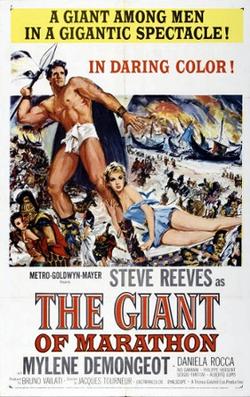
Starring Steeve Reeves, The Giant of Marathon is supposed to be based on the famous messenger Pheidippides/Philippides, who ran 26 miles from Marathon to Athens to announce the Greek victory over the Persians. I say supposed to, because there is NOTHING realistic about this movie. It mostly revolves around Pheidippides' love life; the Persian invasion is an after-thought. This movie is so bad it will make you want to face palm yourself. If you want a good laugh though, I recommend checking out the MST3000 commentary track for the movie on Hulu.
1) The 300 Spartans (1962)
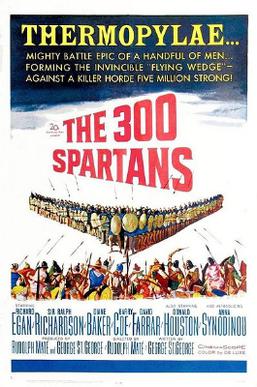
Before Zack Snyder's 300 there was The 300 Spartans (AKA Lion of Sparta), starring Richard Egan, David Farrar and Ralph Richardson. I have to admit that I own the movie but rarely watch it since it's so dated and the script is cheesy at best. I will say that it IS far more accurate than 300, but that's not saying a whole lot. Still, it has its moments and is a good one to rent.
7) The Trojan Women (1971)

If you're familiar with the play then you know that The Trojan Women isn't exactly an upbeat story. The movie stars Katharine Hepburn and Vanessa Redgrave among others, and while it's pretty slow it also has its moments where you're engrossed in the acting. I especially like the back and forth between Vanessa and Katherine--there's a lot of tension and emotion. Another good one to rent.
2) Clash of the Titans (1981)

This is still my favorite movie about Ancient Greece. It's got everything: dated claymation, Sir Laurence Olivier as Zeus, Maggie Smith as Thetis, and the sexy Harry Hamlin as Perseus. There's adventure and love and comedy in this movie. I admit the scenes with Medusa near the end scared me as a little girl, but for the most part this is something you can watch and enjoy with the whole family. So don't just rent it---OWN it!
10) Disney's Hercules (1997)

I LOVE this movie. It's so cute and uplifting! I love how Hercules starts off as an akward teenager in the beginning and turns into a true hero by the end. Of course the movie is made brilliant by the acting of James Woods as the smarmy Hades, Danny DeVito as the hard-nosed Satyr, Susan Egan as the cocky Megara, Paul Shaffer as the hip Hermes, and Bobcat Goldthwait as the dull-witted Pain. Not everything is accurate in terms of Greek Mythology (Hera is a loving mother to Hercules!?) but there's enough references to his 12 labors and a warm happy ending (also not exactly accurate) to make up for any faults.
9) Alexander (2004)
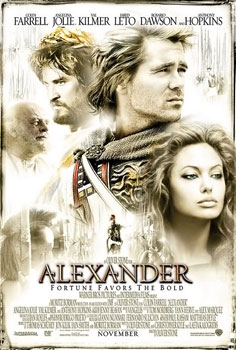
Ugh. This movie is NOT good. The acting is bad, the script is lame and parts of it are confusing at best. Still, I DID enjoy the climactic battle between Greece and Persia, (and Raz Degan is HOT as King Darius, am I right?) I admit there aren't enough movies about Ancient Greece so I should be happy with anything that comes out about it, but here's to hoping a better version of Alexander will be released in the future.
4) Troy (2004)

I'm not going to lie: Brad Pitt is about the LAST person I'd imagine to play the legendary hero Achilles. I wince a bit whenever he's on screen. Luckily there's a huge cast of great actors to make up for that. First and foremost is Peter O'Tool as Priam. He pretty much out-acts EVERYONE in this movie. You can feel Priam's denial as the Greeks are outside his walls. You can feel his pain as he is forced to watch his son's body be dragged behind the chariot of Achilles. You sympathize when he goes to beg for his son's body. And then there's Brian Cox as the ambitious and ever-scheming Agamemnon, and Brendan Gleeson as the jilted Menelaus. And of course the talented Eric Bana is always pleasing to the eye. This movie isn't exactly accurate in terms of story, but I was impressed with the research they did for the sets and costumes.
3) 300 (2006)

This silly, over-the-top and highly entertaining movie is based on a silly, over-the-top and highly entertaining comic book by Frank Miller. 300 is named of course for the 300 Spartans who famously defended the pass at Thermopylae against the Persian invaders. I enjoy this movie not for its authenticity (there's virtually NONE) but for its special effects and silly one liners (THIS. IS. SPARTAAAAA!) If you're looking for a movie that will educate you on the battle of Thermopylae look elsewhere. If you want to be endlessly entertained however, this is the movie for you.
8) Percy Jackson and the Lightning Thief (2010)
I actually listened to part of this as an audio book and I like the fusion of Greek Mythology and a gritty 21st century setting. I also like the main character Percy Jackson, who has a big heart and an old soul. I never read or watched anything Harry Potter, but I get the feeling I'll end up seeing this movie for both the interesting plot (Percy is the son of Poseidon charged with getting back Zeus' stolen lightning) and the awsome special effects.
5) Clash of the Titans (2010)

Is it me, or is Sam Worthington and his crew cut out of place in this movie? And where is Bobo? I'm not sure how I feel about the special effects in this (they look very expensive though) but I'll guess I'll have to see this to find out. Will it be as good as its 1981 predecessor? I'm going to say no, but here's to hoping...
Saturday, January 23, 2010
Athens, Attica and the Megarid.
Guess what, Gentle Readers? It's time for another (short) book report!
Athens, Attica and the Megarid: an Archaeological Guide is the result of intensive research on the part of Hans Rupprect Goette, who leaves no stone unturned (literally) in his detailed account of the Attican countryside.
The work is divided into seven sections: Athens and Piraeus, Sounion and the Mesogeia, Marathon and north-east Attica, the areas around the Thriasian plain, the Megarid, the islands of the Saronic Gulf, and finally the Appendices which include information on things like architecture, geography, flora and fauna. The divisions are wonderfully comprehensible, and Goette includes maps and sketches every few pages to give the reader an idea of the area he is covering.
To say the least this book is VERY detailed. It's over 350 pages of small print that's packed with information on every ancient shrine, palace, farmstead, cave, temple, fort, boundry stone, statue, monument, quarry, theatre, cemetery and wall ever built in Attica. There are fabulous details on rarely visited places like the forts at Eleutherai and Oinoe and the harbors at Lavrion and Porto Raphti. The author also takes the time to acknowledge the little things that are huge in importance: a boundry stone that seperated a coastal tritty from an inland one, an ancient quarrry road, a goatpen with architecutral furnishings for milking animals, a gaurd post in a small mountain pass. It's clear from reading this guide that Goette took on a Herculean task, but luckily for readers he manages to succeed and succeed very well.
Athens, Attica and the Megarid is not cheap. The book is $108 on Amazon. Yet such is the price for extensive research. If you are interested in the ruins of Attica, then this book is for you.
Athens, Attica and the Megarid: an Archaeological Guide is the result of intensive research on the part of Hans Rupprect Goette, who leaves no stone unturned (literally) in his detailed account of the Attican countryside.
The work is divided into seven sections: Athens and Piraeus, Sounion and the Mesogeia, Marathon and north-east Attica, the areas around the Thriasian plain, the Megarid, the islands of the Saronic Gulf, and finally the Appendices which include information on things like architecture, geography, flora and fauna. The divisions are wonderfully comprehensible, and Goette includes maps and sketches every few pages to give the reader an idea of the area he is covering.
To say the least this book is VERY detailed. It's over 350 pages of small print that's packed with information on every ancient shrine, palace, farmstead, cave, temple, fort, boundry stone, statue, monument, quarry, theatre, cemetery and wall ever built in Attica. There are fabulous details on rarely visited places like the forts at Eleutherai and Oinoe and the harbors at Lavrion and Porto Raphti. The author also takes the time to acknowledge the little things that are huge in importance: a boundry stone that seperated a coastal tritty from an inland one, an ancient quarrry road, a goatpen with architecutral furnishings for milking animals, a gaurd post in a small mountain pass. It's clear from reading this guide that Goette took on a Herculean task, but luckily for readers he manages to succeed and succeed very well.
Athens, Attica and the Megarid is not cheap. The book is $108 on Amazon. Yet such is the price for extensive research. If you are interested in the ruins of Attica, then this book is for you.
Thursday, January 21, 2010
Spartacus: Blood & Sand & Bleh
I poked my head out of my archeological dig on Anceient Greece long enough to watch a free episode of the new Spartacus series. Wish I hadn't.
This series has no redeeming qualities. Where Rome was over-the-top and gritty (with a solid cast of actors), this is just AWFUL. The script is terrible, the acting is flinch-inducing, the costumes are ridiculous and the green-screen is annoying. The latter worked in 300 because the movie was based on the comic book, which in and off itself is very stylized. This...this is just stupid.
I guess it's unfair of me to expect anything glamorous from the makers of Xena: Warrior Princess, but seriously...
This series has no redeeming qualities. Where Rome was over-the-top and gritty (with a solid cast of actors), this is just AWFUL. The script is terrible, the acting is flinch-inducing, the costumes are ridiculous and the green-screen is annoying. The latter worked in 300 because the movie was based on the comic book, which in and off itself is very stylized. This...this is just stupid.
I guess it's unfair of me to expect anything glamorous from the makers of Xena: Warrior Princess, but seriously...
Friday, January 08, 2010
Another Awesome Writing Contest!!
Once again the talented Jason Evans is having short fiction contest, and there's still time to enter! Go here for all the details, or just to read the fantastic stories. Below is my entry (notice I snuck in a couple of references to Ancient Greece). Enjoy!
The Crow and the Raven
"A crow. How funny."
"I don’t think that was a crow."
"Do you know the story of the White Crow, Phoenix?" Robin's black eyes were small and beady and full of anger.
"There are white crows?"
"A snow-white crow was left by the god Apollo to watch over his love, Coronis. But she cheated on him. Betrayed him. He could never forgive her. Never! So you know what he did? He turned the crow black."
"What did the crow have to do with it?"
"Did you know that a flock of crows is called a murder?" She laughed hoarsely, then reached into her purse. Out came a .44. Where had she gotten that?
"Crows are the spirits of revenge," she hissed at me as she pointed the gun at my forehead. It shook in her hand, the metal softly pulsing in the sun's dying rays. I did the obligatory reach for the sky, and tried to keep my voice reasonable. Calm.
"Robin, it wasn't a crow. Really."
"It doesn't matter, does it? You'll just come back. That's what the Phoenix does, right? It rises from the ashes.”
"You’re not threatening to burn me, you're threatening to shoot me."
"It doesn’t matter. When you come back, we can start again."
An explosion followed, so violent it knocked me on my back. My sight started to fade.
It wasn't a crow, was my last thought. It was a raven.
The Crow and the Raven
"A crow. How funny."
"I don’t think that was a crow."
"Do you know the story of the White Crow, Phoenix?" Robin's black eyes were small and beady and full of anger.
"There are white crows?"
"A snow-white crow was left by the god Apollo to watch over his love, Coronis. But she cheated on him. Betrayed him. He could never forgive her. Never! So you know what he did? He turned the crow black."
"What did the crow have to do with it?"
"Did you know that a flock of crows is called a murder?" She laughed hoarsely, then reached into her purse. Out came a .44. Where had she gotten that?
"Crows are the spirits of revenge," she hissed at me as she pointed the gun at my forehead. It shook in her hand, the metal softly pulsing in the sun's dying rays. I did the obligatory reach for the sky, and tried to keep my voice reasonable. Calm.
"Robin, it wasn't a crow. Really."
"It doesn't matter, does it? You'll just come back. That's what the Phoenix does, right? It rises from the ashes.”
"You’re not threatening to burn me, you're threatening to shoot me."
"It doesn’t matter. When you come back, we can start again."
An explosion followed, so violent it knocked me on my back. My sight started to fade.
It wasn't a crow, was my last thought. It was a raven.
Monday, January 04, 2010
Is Thucydides a Spin Doctor?
I stumbled upon this article on Thucydides while searching for archeological news on Ancient Greece and thought it might be of interest to my readers:
Was Ancient Historian One Of The First Spin Doctors?
Normally it's Herodotus who takes a brutal beating for spinning tales and composing stories (Thucydides himself once lead the charge), but Yale professor Dr. Donald Kagan dares to suggest that the pragmatic historian may have done some spinning of his own. His book Thucydides: The Reinvention of History tries to prove this point.
I haven't read the book (though I plan to), but it made me think: is history really always written by the winners? Is there any such thing as an un-biased historian? Can history really be re-invented? Or is it simply erased, glossed over by those who don't want the truth to come out?
Was Ancient Historian One Of The First Spin Doctors?
Normally it's Herodotus who takes a brutal beating for spinning tales and composing stories (Thucydides himself once lead the charge), but Yale professor Dr. Donald Kagan dares to suggest that the pragmatic historian may have done some spinning of his own. His book Thucydides: The Reinvention of History tries to prove this point.
I haven't read the book (though I plan to), but it made me think: is history really always written by the winners? Is there any such thing as an un-biased historian? Can history really be re-invented? Or is it simply erased, glossed over by those who don't want the truth to come out?
Sunday, January 03, 2010
Paul Cartledge strikes again (a short book review).
I love Paul Cartledge.
He's a brilliant professor of Greek history and has written several articles and books on the subject (Sparta especially). I often refer to these works when I'm working on my novel. So of course I was excited to learn that he has a new book out.
Ancient Greece: A History in Eleven Cities is somewhat of a beginner's guide to Ancient Greece, but still more advanced than say, Ancient Greece for Dummies. It's a good place to start for those with more than a fleeting interest in the subject.
In his latest work, Paul Cartledge attempts to condense the entire history of Ancient Greece into a few hundred pages; a herculean task if there ever was one. He starts from the beginning--literally--by introducing readers to the island culture of Cnossos around 3000 BCE, and ends with the rise and fall of Byzantion. His choice of cities may appear somewhat arbitrary at first (Massalia?), but as he explains in his introduction he actually picked each city carefully. Many of the smaller islands or lesser-known polis were home to many famous philosophers and powerful Greeks, as well locations for many historic battles.
It's a short book and will not be the most detailed thing you've ever read on Ancient Greece, but it is useful for those who want to brush up on their ancient history. Here's a list of cities covered in the book:
1) Cnossos
2) Mycenae
3) Argos
4) Miletus
5) Massalia
6) Sparta
7) Athens
8) Syracuse
9) Thebes
10) Alexandria
11) Byzantion
He's a brilliant professor of Greek history and has written several articles and books on the subject (Sparta especially). I often refer to these works when I'm working on my novel. So of course I was excited to learn that he has a new book out.
Ancient Greece: A History in Eleven Cities is somewhat of a beginner's guide to Ancient Greece, but still more advanced than say, Ancient Greece for Dummies. It's a good place to start for those with more than a fleeting interest in the subject.
In his latest work, Paul Cartledge attempts to condense the entire history of Ancient Greece into a few hundred pages; a herculean task if there ever was one. He starts from the beginning--literally--by introducing readers to the island culture of Cnossos around 3000 BCE, and ends with the rise and fall of Byzantion. His choice of cities may appear somewhat arbitrary at first (Massalia?), but as he explains in his introduction he actually picked each city carefully. Many of the smaller islands or lesser-known polis were home to many famous philosophers and powerful Greeks, as well locations for many historic battles.
It's a short book and will not be the most detailed thing you've ever read on Ancient Greece, but it is useful for those who want to brush up on their ancient history. Here's a list of cities covered in the book:
1) Cnossos
2) Mycenae
3) Argos
4) Miletus
5) Massalia
6) Sparta
7) Athens
8) Syracuse
9) Thebes
10) Alexandria
11) Byzantion
Thursday, December 31, 2009
Happy New Year!
Well, tomorrow is 2010, and just in case I don't get around to it...Happy New Year! Hopefully everyone will be responsible tonight and be careful on the road (or better yet don’t get on one if you can help it). I plan to stay at home, drink champagne, play video games, fiddle around on Facebook, and of course work on my novel. Which brings me to my New Year's resolutions:
1) Finish my Themistocles novel by February. Although I technically wrote "The End" months back, there's still a LOT of editing, adding and subtracting that needs to be done. I need to have something I can proudly show to an editor at the San Francisco Writer's Conference. Which means...
2) Write everyday. Don't just scribble notes, daydream or re-read Herodotus. I have to actually make progress in my novel.
3) Appreciate my health. I hate being or feeling sick and I felt bleh a lot at the end of this year. No more. I will take better care of myself and feel good about myself.
4) Maintain a healthy weight. This year I hit my goal weight and want to maintain it. That means sticking to diet soda (which I am convinced is key to weight loss) and eating roasted veggies instead of fries, etc. I actually prefer blackened green beans to thick fries now, and encourage anyone who doesn't like vegetables to try them well roasted with olive oil, salt and pepper. Delicious! To think I used to HATE brussel sprouts!
5) Be more social. I tend to be somewhat of a lone wolf and am looking to change that. I have a lot of friends and should appreciate them more. So it's time to party (responsibly, of course).
There you are. My five goals for 2010. Any resolutions of your own? Share below!
1) Finish my Themistocles novel by February. Although I technically wrote "The End" months back, there's still a LOT of editing, adding and subtracting that needs to be done. I need to have something I can proudly show to an editor at the San Francisco Writer's Conference. Which means...
2) Write everyday. Don't just scribble notes, daydream or re-read Herodotus. I have to actually make progress in my novel.
3) Appreciate my health. I hate being or feeling sick and I felt bleh a lot at the end of this year. No more. I will take better care of myself and feel good about myself.
4) Maintain a healthy weight. This year I hit my goal weight and want to maintain it. That means sticking to diet soda (which I am convinced is key to weight loss) and eating roasted veggies instead of fries, etc. I actually prefer blackened green beans to thick fries now, and encourage anyone who doesn't like vegetables to try them well roasted with olive oil, salt and pepper. Delicious! To think I used to HATE brussel sprouts!
5) Be more social. I tend to be somewhat of a lone wolf and am looking to change that. I have a lot of friends and should appreciate them more. So it's time to party (responsibly, of course).
There you are. My five goals for 2010. Any resolutions of your own? Share below!
Wednesday, December 23, 2009
Vacation Vows
Today was the start of my Christmas vacation, which means I have lots of free time to play video games, flip through fashion magazines, eat tons of junkfood like Oreos and candy, watch TV and play even more video games (I finally bought myself a Wii.) But most importantly, it's time to really buckle down and thread the pieces of my novel together.
It's not easy, of course. I'm still stuck in the same place I was weeks ago, and I'm still having trouble with the pacing. There is some good news though: I've managed to re-arrange a couple of chapters so that the story flows better, and I'm happy with the chapter on ships. Hopefully I'll find my Muse and really make some progress in the coming weeks!
It's not easy, of course. I'm still stuck in the same place I was weeks ago, and I'm still having trouble with the pacing. There is some good news though: I've managed to re-arrange a couple of chapters so that the story flows better, and I'm happy with the chapter on ships. Hopefully I'll find my Muse and really make some progress in the coming weeks!
Saturday, December 12, 2009
10 games about Ancient Greece
Ever since I was little I've loved Greek mythology. And I've also always loved video games. So it's no surprise that some of my earliest memories include playing titles like The Battle of Olympus and Kid Icarus. It's also no surprise that I am fanatical about the God of War series and played Rise of the Argonauts despite several people warning me not to.
Since I've been thinking about it a lot lately, I thought I would write up a list of video games that involve Ancient Hellas (Greece) in some way or another for my readers. Enjoy!
1) Kid Icarus (NES, 1987)
Almost 25 years before Kratos, there was Kid Icarus. This FRUSTRATING platformer stars a boy who must rescue the Goddess of Light from the evil Medusa. Although most of my memories involve BLOOD THIRSTY RAGE and a lot of cursing for a 9 year old, this game seems to have inspired a cult following among gamers. And there are some unmistakable references to Greek mythology. Obviously the title character is one of them and Medusa the other, but there are weapons and items that will remind you of Greece, even as you are falling off of things and cursing the whole way down...
2) Legendary Wings/Wings of Ares (NES, 1988)
This hilariously awful game is a shooter that takes place in the future but is infused with Greek mythology. It starts off like 1942 but quickly turns into Contra (that's not as cool as it sounds, btw). It's pretty laughable, but I have to admit the idea of a future involving Icarus wings and the slaying of dragons is an interesting concept. I didn't get very far in the game, and I don't think it accurately reflects Greece OR mythology, but if you really bend your brain you can kind of see some references.
3) The Battle of Olympus (NES, 1989)
Despite the odd slime, medieval knight (???) and its suspicious similarity to The Legend of Zelda: A Link to the Past, BoO is a pretty good game for what it is. It follows the story of Orpheus, who is attempting to rescue his beloved Eurydice from Hades after she is bitten by a poisonous snake. Along the way he receives the help of the gods who give him useful items likes sandals that allow him to walk on ceilings and an ocarina that summons a dolphin. Orpheus also battles everything from a large Hyrda to Gorgons. The constant backtracking in this game is a nightmare, and the music and backgrounds are bland at best, but the game still has some merits. Maybe we'll see this one on Wii VC?
4) Altered Beast (Genesis, 1989)
This game barely touches on Greek mythology, but it does so just enough to qualify it for this list. As a Centurion (which is actually a rank in the Roman army) you are called upon by Zeus to rescue his daughter Athena from an evil sorcerer named Neff. And that's about as Greek as it gets. You see, for whatever reason the game features gothic crosses, a Nosferatu-like boss and a variety of weird enemies not found in any mythology I know of. Still, there is the occasional ruin of a Doric column and the main character wears a tunic, so there you go. Also, the underlying concept of a man who can turn into different creatures does sort of remind players of stories from mythology, like how Zeus turned into different animals while in pursuit of various women. The gameplay is messy at times and the music is silly, but no matter how many people say they don't like it everyone loves "Wise from your gwave." If you have [i]Sega Genesis Collection [/i] it's a good way to play the Altered Beast without having to actually pay too much for it.
5)Zeus: Master of Olympus (PC, 2000)
This ten year-old game got an impressive 9.1 from IGN which makes me want to find a copy so I can try it out. Here's a description right from the review: "[In the game] you need to build vineyards and wineries, olive orchards and presses, colleges and podiums, theatres and drama schools. You'll need to set up farms and fisheries to feed people, allocate pasture land to provide fleece, mine bronze, silver and marble to produce armor, coins and temples." It actually sounds really fun, and is apparently a very in-depth game with good sandbox elements. Good times.
6) God of War (PS2, 2005)
It's no secret I LOVE this game...in fact I love the whole series! It's not just because of Kratos, the Spartan who once served the God of War Ares and is now on a path of destruction that will eventually lead to another Clash of the Titans. It's because the game offers fantastic action, interesting puzzles, amazing music, awesome graphics and a solid storyline. The mythological references in God of War are actually fairly accurate for the most part(although one could nitpick about the historical aspects of the game) and the developers manage to come up with some clever ideas based on these ancient stories. If you haven't played GoW I or II, I suggest getting the new PS3 compilation in HD. It's worth it.
7) Rise of the Argonauts(PS3, 2008)
WOW, this game is awful. Period. No redeeming value what-so-ever. It's so unfinished and terrible it baffles me. The only reason I'm including it in this list is to warn people to stay away from it. I mean, I wish I could say it's accurate in terms of mythology or history---or ANYTHING, but it has too many issues. Scary issues. Like clunky gameplay, half-assed graphics and cringe-inducing voice acting. My advice? Skip it. Yes, it's about Jason and the Argonauts and that SOUNDS cool, but when I say this game is terrible, I mean it. How the developers thought this would rival God of War is beyond me. Jason deserved better; hopefully some game studio someday will due him justice.
8) Heroes of Hellas (PC, 2008)
This puzzle game is a PC download where you must help Zeus get back his stolen scepter by solving levels full of sparkling elements that need to be eliminated from a honeycombed game board. Along the way you will have help from famous heroes, earn trophies, collect wallpaper and learn about the more famous stories from Greek mythology (a pretty cool feature). Gameplay revolves around linking different tiles and jewels together to make a chain with three or more links. You can link as many elements as you want so long as they make a cohesive, unbroken chain. Heroes of Hellas is pretty addictive and if you're not willing to scoop out $9.99 for it you can at least play the demo for free and see how far you get in an hour's time.
9) 300: March to Glory (PSP, 2008)
This game got a 5.7 from IGN and I think I know why: it turns the story of the heroic 300 Spartan warriors and their stand at Thermopylae into a mess. The imposing Spartan phalanx turns into a conga line and the gameplay seems clunky, cheap and pointless. To be fair I haven't played it, but I can only imagine that Greg Miller is telling the truth when he says it's a mediocre action title. Still, if you enjoyed the movie and don't mind stealth attacks that don't really work and a game with visual flair that only appears outside of gameplay...enjoy?
10) Hero of Sparta (iPhone, 2009)
A 9/10 for an iPhone game? It happened with Hero of Sparta. Sure, it looks like a little-known title called God of War, but considering that there are no Gow games available on the iPhone (at least for now) it's forgivable. Although I have to wonder: would the Spartans really accept a king named Argos!?
Other games with Ancient Greek references in them:
Athena (NES, 1987)
Ancient Wars: Sparta (PC)
Invictus: Shadow of Olympus
Hero of Hellas 2: Olympia
Zeus -- Official Expansion: Poseidon (PC, 2001)
Glory of Heracles/Hercules no Eikou (DS, 2010)
Hercules: The Legendary Journeys (Nintendo 64, 2000)
Hades Challenge (PC, 1998)
Rome: Total War -- Alexander (PC, 2006)
Gates of Troy (PC, 2004)
...and there's plenty more.
Since I've been thinking about it a lot lately, I thought I would write up a list of video games that involve Ancient Hellas (Greece) in some way or another for my readers. Enjoy!
1) Kid Icarus (NES, 1987)
Almost 25 years before Kratos, there was Kid Icarus. This FRUSTRATING platformer stars a boy who must rescue the Goddess of Light from the evil Medusa. Although most of my memories involve BLOOD THIRSTY RAGE and a lot of cursing for a 9 year old, this game seems to have inspired a cult following among gamers. And there are some unmistakable references to Greek mythology. Obviously the title character is one of them and Medusa the other, but there are weapons and items that will remind you of Greece, even as you are falling off of things and cursing the whole way down...
2) Legendary Wings/Wings of Ares (NES, 1988)
This hilariously awful game is a shooter that takes place in the future but is infused with Greek mythology. It starts off like 1942 but quickly turns into Contra (that's not as cool as it sounds, btw). It's pretty laughable, but I have to admit the idea of a future involving Icarus wings and the slaying of dragons is an interesting concept. I didn't get very far in the game, and I don't think it accurately reflects Greece OR mythology, but if you really bend your brain you can kind of see some references.
3) The Battle of Olympus (NES, 1989)
Despite the odd slime, medieval knight (???) and its suspicious similarity to The Legend of Zelda: A Link to the Past, BoO is a pretty good game for what it is. It follows the story of Orpheus, who is attempting to rescue his beloved Eurydice from Hades after she is bitten by a poisonous snake. Along the way he receives the help of the gods who give him useful items likes sandals that allow him to walk on ceilings and an ocarina that summons a dolphin. Orpheus also battles everything from a large Hyrda to Gorgons. The constant backtracking in this game is a nightmare, and the music and backgrounds are bland at best, but the game still has some merits. Maybe we'll see this one on Wii VC?
4) Altered Beast (Genesis, 1989)
This game barely touches on Greek mythology, but it does so just enough to qualify it for this list. As a Centurion (which is actually a rank in the Roman army) you are called upon by Zeus to rescue his daughter Athena from an evil sorcerer named Neff. And that's about as Greek as it gets. You see, for whatever reason the game features gothic crosses, a Nosferatu-like boss and a variety of weird enemies not found in any mythology I know of. Still, there is the occasional ruin of a Doric column and the main character wears a tunic, so there you go. Also, the underlying concept of a man who can turn into different creatures does sort of remind players of stories from mythology, like how Zeus turned into different animals while in pursuit of various women. The gameplay is messy at times and the music is silly, but no matter how many people say they don't like it everyone loves "Wise from your gwave." If you have [i]Sega Genesis Collection [/i] it's a good way to play the Altered Beast without having to actually pay too much for it.
5)Zeus: Master of Olympus (PC, 2000)
This ten year-old game got an impressive 9.1 from IGN which makes me want to find a copy so I can try it out. Here's a description right from the review: "[In the game] you need to build vineyards and wineries, olive orchards and presses, colleges and podiums, theatres and drama schools. You'll need to set up farms and fisheries to feed people, allocate pasture land to provide fleece, mine bronze, silver and marble to produce armor, coins and temples." It actually sounds really fun, and is apparently a very in-depth game with good sandbox elements. Good times.
6) God of War (PS2, 2005)
It's no secret I LOVE this game...in fact I love the whole series! It's not just because of Kratos, the Spartan who once served the God of War Ares and is now on a path of destruction that will eventually lead to another Clash of the Titans. It's because the game offers fantastic action, interesting puzzles, amazing music, awesome graphics and a solid storyline. The mythological references in God of War are actually fairly accurate for the most part(although one could nitpick about the historical aspects of the game) and the developers manage to come up with some clever ideas based on these ancient stories. If you haven't played GoW I or II, I suggest getting the new PS3 compilation in HD. It's worth it.
7) Rise of the Argonauts(PS3, 2008)
WOW, this game is awful. Period. No redeeming value what-so-ever. It's so unfinished and terrible it baffles me. The only reason I'm including it in this list is to warn people to stay away from it. I mean, I wish I could say it's accurate in terms of mythology or history---or ANYTHING, but it has too many issues. Scary issues. Like clunky gameplay, half-assed graphics and cringe-inducing voice acting. My advice? Skip it. Yes, it's about Jason and the Argonauts and that SOUNDS cool, but when I say this game is terrible, I mean it. How the developers thought this would rival God of War is beyond me. Jason deserved better; hopefully some game studio someday will due him justice.
8) Heroes of Hellas (PC, 2008)
This puzzle game is a PC download where you must help Zeus get back his stolen scepter by solving levels full of sparkling elements that need to be eliminated from a honeycombed game board. Along the way you will have help from famous heroes, earn trophies, collect wallpaper and learn about the more famous stories from Greek mythology (a pretty cool feature). Gameplay revolves around linking different tiles and jewels together to make a chain with three or more links. You can link as many elements as you want so long as they make a cohesive, unbroken chain. Heroes of Hellas is pretty addictive and if you're not willing to scoop out $9.99 for it you can at least play the demo for free and see how far you get in an hour's time.
9) 300: March to Glory (PSP, 2008)
This game got a 5.7 from IGN and I think I know why: it turns the story of the heroic 300 Spartan warriors and their stand at Thermopylae into a mess. The imposing Spartan phalanx turns into a conga line and the gameplay seems clunky, cheap and pointless. To be fair I haven't played it, but I can only imagine that Greg Miller is telling the truth when he says it's a mediocre action title. Still, if you enjoyed the movie and don't mind stealth attacks that don't really work and a game with visual flair that only appears outside of gameplay...enjoy?
10) Hero of Sparta (iPhone, 2009)
A 9/10 for an iPhone game? It happened with Hero of Sparta. Sure, it looks like a little-known title called God of War, but considering that there are no Gow games available on the iPhone (at least for now) it's forgivable. Although I have to wonder: would the Spartans really accept a king named Argos!?
Other games with Ancient Greek references in them:
Athena (NES, 1987)
Ancient Wars: Sparta (PC)
Invictus: Shadow of Olympus
Hero of Hellas 2: Olympia
Zeus -- Official Expansion: Poseidon (PC, 2001)
Glory of Heracles/Hercules no Eikou (DS, 2010)
Hercules: The Legendary Journeys (Nintendo 64, 2000)
Hades Challenge (PC, 1998)
Rome: Total War -- Alexander (PC, 2006)
Gates of Troy (PC, 2004)
...and there's plenty more.
Sunday, November 22, 2009
Winter is coming.
...Or so the Starks are always telling us.* And it's true: even in California the temperature has dropped enough so that I am sitting in front of a warm, cozy fire as I type this. Winter is a good time to write, because the days are dark and I spend so much more time inside. This year is proving to be a bit stressful, however. I have a little over two months to make my Themistocles novel presentable to an agent/editor, and although that sounds like a lot of time, anybody who writes knows that it's getting down to the wire.
Technically I have a finished story. A story that is held together with string, paper clips, glue and scotch tape. It's just BARELY there. And over the past few months I've been struggling to make just the first THIRD decent. It's proven to be somewhat of a nightmare. The beginning of Themistocles' life coincides with a crucial period in the development of Athens. The problem is trying to shoehorn Themistocles into the picture without it seeming forced. There's also the problem of pacing. I don't want the story to drag nor do I want it to feel rushed. It's a precarious balancing act that has me writing, deleting, writing deleting and writing again. To say that I sometimes feel way over my head is an understatement.
At any rate, hopefully I'll be able to tame this monster idea before February, when the writer's conference in San Francisco takes place. Meanwhile I'm also tinkering with a shorter, more current story idea (taken from short pieces I've been writing for Jason Evans' writing contests), so if all else fails I have that (though I WON'T give up on Themistocles!!!)
I hope my readers are having luck with their work! :)
*George RR Martin
Technically I have a finished story. A story that is held together with string, paper clips, glue and scotch tape. It's just BARELY there. And over the past few months I've been struggling to make just the first THIRD decent. It's proven to be somewhat of a nightmare. The beginning of Themistocles' life coincides with a crucial period in the development of Athens. The problem is trying to shoehorn Themistocles into the picture without it seeming forced. There's also the problem of pacing. I don't want the story to drag nor do I want it to feel rushed. It's a precarious balancing act that has me writing, deleting, writing deleting and writing again. To say that I sometimes feel way over my head is an understatement.
At any rate, hopefully I'll be able to tame this monster idea before February, when the writer's conference in San Francisco takes place. Meanwhile I'm also tinkering with a shorter, more current story idea (taken from short pieces I've been writing for Jason Evans' writing contests), so if all else fails I have that (though I WON'T give up on Themistocles!!!)
I hope my readers are having luck with their work! :)
*George RR Martin
Sunday, November 01, 2009
Ancient Athens on 5 Drachmas a Day

As much as I love big, thick history books bursting with facts and details, it's always good to return to the basics. Which is why I enjoy Phillip Matyszak's "Ancient Athens on 5 Drachmas a Day".
Divided into IX sections, the book teaches history through the guise of a travel log. You'll read about the best way to get to Athens(thus learning about ancient roadways and destinations), where to stay (which discusses dwellings and lifestyles), what to do (a good way of introducing readers to ancient entertainment like the symposium), who to meet (which features men like Pericles and Thucydides) and what to buy (which covers everything from the local monetary system to what items can be found in the Agora). There are even maps of the city, pictures of famous people and sightseeing recommendations.
I really enjoy Matyszak approach. Instead of weighing you down with a myriad of facts all at once, he takes his cue from modern travel books and presents information in bite-size pieces. He also includes amusing stories to make sure the reader is engaged. The book is a bit stiff in price (it's nearly $20) but the upside is that it's easy to navigate and provides a few fun gems that can be mined from its pages. Here are a few fun facts right from the source:
1) The word economy comes from the word oikos nomos or "the organization of the household"
2)The famous Academy was originally a hero shrine
3) In prehistoric times the Piraeus was an island
If you are looking for a fun way to be introduced to or get re-acquainted with Ancient Athens, I highly recommend this book.
Friday, October 09, 2009
SF Writer's Conference
FYI, I'll be attending the San Francisco Writers Conference February 12 - 14, 2010. I would love to meet and greet some of my favorite writers/bloggers. Anyone else going? If you want to go, sign up here: SFWC.
Thursday, October 01, 2009
Memorable quotes from around the office.
In order to work where I do (IGN), you must be somewhat crazy. Whether you say crazy things, participate in crazy hijinks, or play crazy games, non compos mentis is a requirement here. Which might explain why I have nearly 10 sticky notes worth of memorable (see off-color) quotes from IGN and Rotten Tomatoes co-workers stuck to my computer. I thought some of these were quite poignant, actually, as well as amusing. I also thought that some of my blog readers would appreciate these. Here are my top 5 so far:
5) "A friend is just a stranger you haven't fought yet."
4)"Whatever didn't kill me...didn't finish the job."
3) "You can't blame the devil when dumb people die."
2) "There is no narrative arc in stripping."
1) "Dude! Who just teabagged me!?"
Honorable mentions include "hope bothers me", and "D-bags have s*** for brains."
5) "A friend is just a stranger you haven't fought yet."
4)"Whatever didn't kill me...didn't finish the job."
3) "You can't blame the devil when dumb people die."
2) "There is no narrative arc in stripping."
1) "Dude! Who just teabagged me!?"
Honorable mentions include "hope bothers me", and "D-bags have s*** for brains."
Saturday, September 26, 2009
Model Pics!
After weeks of waiting I finally received some of my modeling pics back. As I explained in a previous post, I wanted to celebrate my 30th birthday by doing something fun. That something was to look like a Cover Girl. I admit it has nothing to do with Ancient Greece, but at least it's fun to share. Enjoy!


Thursday, September 17, 2009
A Short Book Report: Lords of the Sea
It's amazing how sometimes when we really need something it just suddenly appears.
A few weeks ago I was lucky enough to come across a new book on the Athenian navy. I say lucky because I've been in the process of editing my novel and needed more detail and insight into this very subject. And that is exactly what I got with John R. Hale's Lords of the Sea: The Epic Story of the Athenian Navy and the Birth of Democracy.

Hale breaks the book down into five sections: Freedom, Democracy, Empire, Catastrophe, and Rebirth. Part one focuses on the founding of the Athenian navy through the workings of (who else!) Themistocles. Hale goes into detail about how the navy was built (literally--there is some great detail to be found here), how naval tactics changed during the late Archaic period and thus made it possible for the Greeks to achieve victory over the Persian fleet, and how acquiring a navy laid the foundations for Athens' future empire.
The second part of the book (Democracy) explores Athens' Golden Age. It was at this time that the Athenian navy was at the peak of its power, bringing wealth, culture and knowledge from abroad into the city. There are some fun details here, but things really get interesting in the section called "Empire", which deals with both Athens' struggle to maintain control over its neighbors and its war(s) with Sparta. The conflict is not an easy thing to break down considering how LONG it lasted (over 30 years). Still, Hale manages to successfully convey how rapidly naval tactics and technology changed and how that affected the outcome of the conflict.
The last two sections deal with the Athenian navy's fall after being defeated by Sparta, it's brief comeback and eventual capitulation to Macedonia. It charts the events from 397 BCE to 324 BCE and covers everything from the Second Maritime League to the last battle at Amorgos. Hale does a good job summarizing the events without getting too convoluted but still feeding us relevant and interesting nuggets of information. Most readers will probably feel satisfied with his explanations.
In short, I really enjoyed this book and feel that it's an asset to anyone who is writing about or even interested in Hellenic history between the late Archaic age and the start of Alexander's great empire. It's well-paced, well-written and well-researched. And well...I like that!
A few weeks ago I was lucky enough to come across a new book on the Athenian navy. I say lucky because I've been in the process of editing my novel and needed more detail and insight into this very subject. And that is exactly what I got with John R. Hale's Lords of the Sea: The Epic Story of the Athenian Navy and the Birth of Democracy.

Hale breaks the book down into five sections: Freedom, Democracy, Empire, Catastrophe, and Rebirth. Part one focuses on the founding of the Athenian navy through the workings of (who else!) Themistocles. Hale goes into detail about how the navy was built (literally--there is some great detail to be found here), how naval tactics changed during the late Archaic period and thus made it possible for the Greeks to achieve victory over the Persian fleet, and how acquiring a navy laid the foundations for Athens' future empire.
The second part of the book (Democracy) explores Athens' Golden Age. It was at this time that the Athenian navy was at the peak of its power, bringing wealth, culture and knowledge from abroad into the city. There are some fun details here, but things really get interesting in the section called "Empire", which deals with both Athens' struggle to maintain control over its neighbors and its war(s) with Sparta. The conflict is not an easy thing to break down considering how LONG it lasted (over 30 years). Still, Hale manages to successfully convey how rapidly naval tactics and technology changed and how that affected the outcome of the conflict.
The last two sections deal with the Athenian navy's fall after being defeated by Sparta, it's brief comeback and eventual capitulation to Macedonia. It charts the events from 397 BCE to 324 BCE and covers everything from the Second Maritime League to the last battle at Amorgos. Hale does a good job summarizing the events without getting too convoluted but still feeding us relevant and interesting nuggets of information. Most readers will probably feel satisfied with his explanations.
In short, I really enjoyed this book and feel that it's an asset to anyone who is writing about or even interested in Hellenic history between the late Archaic age and the start of Alexander's great empire. It's well-paced, well-written and well-researched. And well...I like that!
Thursday, September 03, 2009
Just A Quick Check-In
I'm a bit stuck right now in the editing process so there hasn't been a whole lot to report. You see, I'm really struggling with the pacing of my novel and on top of that discovering errors that need to be corrected along the way. It's frustrating having to rewrite entire chapters because you realize that the scenario is jarringly inaccurate.
For example, originally I had Themistocles attend the Eleusinian Mysteries at the age of 11, but it turns that only adults were initiated. I also have to rewrite (or at least reconsider) the whole story about Harmodius and Aristogeiton. Ancient authors can't seem to agree on exactly what led to the murder of Hipparchus (the brother of Athens' tyrant Hippias), and although I tend to side with one version, I can't dismiss other authors out of hand.
At any rate my goal this holiday weekend is to get at least the first few chapters of my novel polished up and ready for an agent to look at. It will take hours of dicipline and concentration but I know I can do this. I just need my motivation back. And with the exciting announcement that Scott Oden is working on a novel in the same time period, I'd better bring my AAA game!!!
*Fun fact: If you type 21 letters of Themistocles into Google, yours truly is the top link!!
For example, originally I had Themistocles attend the Eleusinian Mysteries at the age of 11, but it turns that only adults were initiated. I also have to rewrite (or at least reconsider) the whole story about Harmodius and Aristogeiton. Ancient authors can't seem to agree on exactly what led to the murder of Hipparchus (the brother of Athens' tyrant Hippias), and although I tend to side with one version, I can't dismiss other authors out of hand.
At any rate my goal this holiday weekend is to get at least the first few chapters of my novel polished up and ready for an agent to look at. It will take hours of dicipline and concentration but I know I can do this. I just need my motivation back. And with the exciting announcement that Scott Oden is working on a novel in the same time period, I'd better bring my AAA game!!!
*Fun fact: If you type 21 letters of Themistocles into Google, yours truly is the top link!!
Sunday, August 16, 2009
I just flew in from LA, and boy are my arms tired!
If it seems like it's been all quiet on the western front, it's because I've been in L.A. all week for my 30th birthday. I wanted to celebrate this milestone by doing something really cool and fun, and what better way to feel thirty, flirty and thriving than to do a photo shoot with make-up artist to the stars Alexis Vogel?
My L.A. adventure got off to a rocky start when I got to the airport and was told that I had scheduled my flight for the next day (I decided to stay in L.A. for an extra day at the last minute but forgot to update my flight plans). Luckily the nice ladies at the ticket counter helped me get on a noon flight and I was able to get to Los Angeles with no problem. After I arrived in SoCal however I learned that the hotel I was staying at had NO air conditioning and NO room service. Worse, the room was small and the furniture ugly; not fit for a photo shoot at all. So, after a guilt-tinged and exhausting conversation with the manager I cancelled my reservation and walked my bags down the street to the uber-posh Fairmont hotel. This was not only a better place to shoot pictures but I was MUCH happier (yay for room service!)
While waiting for my room I celebrated my new environment by drinking a rum & Coke and watching koi and turtles splash around a waterfall-laced pond in the hotel's outside cafe. I then called the shoot's photographer Isaiah to thank him for helping me find a room at the Fairmont at the last possible minute. Once my room was ready I dropped my things off and wandered down to the beach to watch the sunset. After that I had dinner, ate gummy bears in the bath and fell asleep watching Entertainment Tonight and Family Guy.
 Me chilling on my balcony at the Fairmont.
At around noon the next day Alexis, Isaiah and their assistant Brie came up to my room and set up camp. Camp gear included lights, camera, make-up and accessories. Figuring they would shoot me in whatever clothes I had with me I only brought one suitcase of outfits and shoes. Unfortunately that's not how it works. There was much clucking of tongue over not bringing enough clothes and jewelry and a LOT of grumbling over not having my eyebrows properly done and having too blunt of a hair cut(I rock the Egyptian look with straight bangs and long, straight hair). I admit the complaints weren't making me very happy, especially since they was repeated over and over (and over) again, but I at least got some suggestions on what kind of hair and look I should get ( indeed I will have my hair done in layers and let my bangs grow out as suggested).
On the positive side, I was told I was better looking in my natural state than some stars (a wonderful plus), I had good skin, good cheekbones and good teeth--I was even asked if they were really my teeth or caps! I've NEVER had anyone ask me that so I was flattered.
After two hours of hair and make-up I then did a lot of countoured poses (like you see in high-fashion ads) and learned that being a model--even for a day--is not easy. People are tugging at your clothes, making you hold uncomfortable poses for a long time and trying to get you to turn your face in every direction. The hard work was worth it however as the pictures are fantastic (I swear I look like I could be in a Dolce & Gabbana ad in some of these pics!)
At one point we stopped for lunch, and I learned how to eat food without ruining my make-up (a good thing to know). What I wasn't prepared for however was being stuck with both the food and the valet bill for their car(supposedly this was in the "cheat sheet" they sent me but I informed them it wasn't in MINE--and I didn't expect to pay for it either as it was VERY expensive). Obviously there was an assumption I would know the rules. I didn't, but I do now.
At any rate, the shoot went very well. We even did an extra set of photos since it was moving along at such a smooth pace and I have to say the pictures are amazing. Alexis did an wonderful job with my make-up and hair, and Isaiah took great pictures and was fun to work with. Brie was helpful and gave me a sample of lip gloss to help with touch-ups after eating (another lesson learned: just because I'm getting a make-over doesn't mean NOT to bring my own make-up).
All-in-all a fun and memorable birthday, albeit somewhat of a roller coaster ride. I can't wait to get my DVD with the photos on it so I can show them to you.
Oh, and yes. I am still working on my Themistocles novel. Being away for a week has allowed me to look at the story with fresh eyes and editing is going really well. Can't wait to start looking for an agent and hopefully putting up some tidbits for everyone to read. :D
My L.A. adventure got off to a rocky start when I got to the airport and was told that I had scheduled my flight for the next day (I decided to stay in L.A. for an extra day at the last minute but forgot to update my flight plans). Luckily the nice ladies at the ticket counter helped me get on a noon flight and I was able to get to Los Angeles with no problem. After I arrived in SoCal however I learned that the hotel I was staying at had NO air conditioning and NO room service. Worse, the room was small and the furniture ugly; not fit for a photo shoot at all. So, after a guilt-tinged and exhausting conversation with the manager I cancelled my reservation and walked my bags down the street to the uber-posh Fairmont hotel. This was not only a better place to shoot pictures but I was MUCH happier (yay for room service!)
While waiting for my room I celebrated my new environment by drinking a rum & Coke and watching koi and turtles splash around a waterfall-laced pond in the hotel's outside cafe. I then called the shoot's photographer Isaiah to thank him for helping me find a room at the Fairmont at the last possible minute. Once my room was ready I dropped my things off and wandered down to the beach to watch the sunset. After that I had dinner, ate gummy bears in the bath and fell asleep watching Entertainment Tonight and Family Guy.
 Me chilling on my balcony at the Fairmont.
At around noon the next day Alexis, Isaiah and their assistant Brie came up to my room and set up camp. Camp gear included lights, camera, make-up and accessories. Figuring they would shoot me in whatever clothes I had with me I only brought one suitcase of outfits and shoes. Unfortunately that's not how it works. There was much clucking of tongue over not bringing enough clothes and jewelry and a LOT of grumbling over not having my eyebrows properly done and having too blunt of a hair cut(I rock the Egyptian look with straight bangs and long, straight hair). I admit the complaints weren't making me very happy, especially since they was repeated over and over (and over) again, but I at least got some suggestions on what kind of hair and look I should get ( indeed I will have my hair done in layers and let my bangs grow out as suggested).
On the positive side, I was told I was better looking in my natural state than some stars (a wonderful plus), I had good skin, good cheekbones and good teeth--I was even asked if they were really my teeth or caps! I've NEVER had anyone ask me that so I was flattered.
After two hours of hair and make-up I then did a lot of countoured poses (like you see in high-fashion ads) and learned that being a model--even for a day--is not easy. People are tugging at your clothes, making you hold uncomfortable poses for a long time and trying to get you to turn your face in every direction. The hard work was worth it however as the pictures are fantastic (I swear I look like I could be in a Dolce & Gabbana ad in some of these pics!)
At one point we stopped for lunch, and I learned how to eat food without ruining my make-up (a good thing to know). What I wasn't prepared for however was being stuck with both the food and the valet bill for their car(supposedly this was in the "cheat sheet" they sent me but I informed them it wasn't in MINE--and I didn't expect to pay for it either as it was VERY expensive). Obviously there was an assumption I would know the rules. I didn't, but I do now.
At any rate, the shoot went very well. We even did an extra set of photos since it was moving along at such a smooth pace and I have to say the pictures are amazing. Alexis did an wonderful job with my make-up and hair, and Isaiah took great pictures and was fun to work with. Brie was helpful and gave me a sample of lip gloss to help with touch-ups after eating (another lesson learned: just because I'm getting a make-over doesn't mean NOT to bring my own make-up).
All-in-all a fun and memorable birthday, albeit somewhat of a roller coaster ride. I can't wait to get my DVD with the photos on it so I can show them to you.
Oh, and yes. I am still working on my Themistocles novel. Being away for a week has allowed me to look at the story with fresh eyes and editing is going really well. Can't wait to start looking for an agent and hopefully putting up some tidbits for everyone to read. :D
Wednesday, July 29, 2009
Isagoras vs. Cleisthenes & The Birth of Athenian Democracy
Currently I am struggling over how to tackle one of the more confusing and dense passages in The Histories. It's an important passage too: how Athens became the world's first democracy.
It started in 514 BCE. Two men by the names of Harmodius and Aristogeiton murdered the brother of the ruling tyrant Hippias over a lover's quarrel. This resulted in their deaths and the tyrant clamping down hard on the citizens of Athens. Taking advantage of the unstable atmosphere in the city, an exiled family by the name of Alcmaeonid attempted to overthrow the government that same year, but the coup failed. The family then decided to swell their ranks by bringing the famed Spartan warriors over to their cause. Using their connections and influence, they managed to bribe the Pythia of Delphi into convincing the Spartans to help get rid of Hippias and his family. In 510 BCE The Spartans finally sent a small contingent to help the Alcmaeonid, but this second attack on Athens also ended in a route. Angry at the humiliation, the Spartan king Cleomenes personally led an army into Attica (possibly around 508 BCE?), crushing the Athenian tyrant's forces and chasing out his allies. This left the Athenians free to choose a new leader for their polis.
There were two eligible candidates for a new tyrant: Isagoras, a distinguished Athenian noble, and Cleisthenes, grandson to a tyrant himself (the tyrant of Sicyon) and the possible architect behind the bribing of the Pythia. Perhaps not trusting the Alcmaeonid's ambitions, the people favored Isagoras as their new leader in the upcoming election. Realizing he would lose the vote if he didn't do something fast, the clever Cleisthenes decided to defuse people's suspicions by offering them unprecedented freedoms (as well as stressing the role of rotating leadership positions to ensure one man did not have all the power). This proved to be so popular that Cleisthenes won by a landslide, thus resulting in the world's first real democracy.
Furious at having lost, Isagoras went to Sparta and demanded Cleoemenes get rid of this new democracy and its too clever leader. Recognizing a possible danger to his kingship (what if the helots or non-Spartiates wanted rights of their own?) Cleomenes lead a small army of about 300 Spartans back to Athens and kicked Cleisthenes out on the flimsy pretext of a family curse. He then installed Isagoras and his allies as leaders of the city's new government. The people refused to accept this. They besieged the Spartans and Isagoras on the Acropolis until Cleomenes was forced to admit defeat and march home, taking Isagoras with him. The Alcmaeonid returned to the city and all seemed well... until a vengeful Cleomenes showed up for a third time in Attica, along with the entire Peloponnesian League! The new democracy might have ended right then and there, but luckily the Corinthians had doubts about Cleomenes' intentions and decided to return home. Cleomenes' co-king Demaratus also had doubts about the Agiad king's intentions and left with his half of the army. Alone and humiliated yet again, Cleomenes was forced to disband the rest of the army and returned to Sparta to plot revenge (this time on his unlucky co-king). Sparta would not march into Attica again until well into the next century.
Themistocles is around seven in 514 BCE (or at least in my novel) and about fifteen by the time Cleomenes is thwarted for the third and final time (remember he didn't march to Attica in the first attack). Clearly this is a crucial period in Themis' life. The problem is how to pace these events. How much does Themistocles personally witness? How much does he contribute? I have some ideas, but putting them in order has proven to be daunting. I had a couple of inspirations last night, but I'm still struggling a bit. Any suggestions on how I can achieve more inspirations?
It started in 514 BCE. Two men by the names of Harmodius and Aristogeiton murdered the brother of the ruling tyrant Hippias over a lover's quarrel. This resulted in their deaths and the tyrant clamping down hard on the citizens of Athens. Taking advantage of the unstable atmosphere in the city, an exiled family by the name of Alcmaeonid attempted to overthrow the government that same year, but the coup failed. The family then decided to swell their ranks by bringing the famed Spartan warriors over to their cause. Using their connections and influence, they managed to bribe the Pythia of Delphi into convincing the Spartans to help get rid of Hippias and his family. In 510 BCE The Spartans finally sent a small contingent to help the Alcmaeonid, but this second attack on Athens also ended in a route. Angry at the humiliation, the Spartan king Cleomenes personally led an army into Attica (possibly around 508 BCE?), crushing the Athenian tyrant's forces and chasing out his allies. This left the Athenians free to choose a new leader for their polis.
There were two eligible candidates for a new tyrant: Isagoras, a distinguished Athenian noble, and Cleisthenes, grandson to a tyrant himself (the tyrant of Sicyon) and the possible architect behind the bribing of the Pythia. Perhaps not trusting the Alcmaeonid's ambitions, the people favored Isagoras as their new leader in the upcoming election. Realizing he would lose the vote if he didn't do something fast, the clever Cleisthenes decided to defuse people's suspicions by offering them unprecedented freedoms (as well as stressing the role of rotating leadership positions to ensure one man did not have all the power). This proved to be so popular that Cleisthenes won by a landslide, thus resulting in the world's first real democracy.
Furious at having lost, Isagoras went to Sparta and demanded Cleoemenes get rid of this new democracy and its too clever leader. Recognizing a possible danger to his kingship (what if the helots or non-Spartiates wanted rights of their own?) Cleomenes lead a small army of about 300 Spartans back to Athens and kicked Cleisthenes out on the flimsy pretext of a family curse. He then installed Isagoras and his allies as leaders of the city's new government. The people refused to accept this. They besieged the Spartans and Isagoras on the Acropolis until Cleomenes was forced to admit defeat and march home, taking Isagoras with him. The Alcmaeonid returned to the city and all seemed well... until a vengeful Cleomenes showed up for a third time in Attica, along with the entire Peloponnesian League! The new democracy might have ended right then and there, but luckily the Corinthians had doubts about Cleomenes' intentions and decided to return home. Cleomenes' co-king Demaratus also had doubts about the Agiad king's intentions and left with his half of the army. Alone and humiliated yet again, Cleomenes was forced to disband the rest of the army and returned to Sparta to plot revenge (this time on his unlucky co-king). Sparta would not march into Attica again until well into the next century.
Themistocles is around seven in 514 BCE (or at least in my novel) and about fifteen by the time Cleomenes is thwarted for the third and final time (remember he didn't march to Attica in the first attack). Clearly this is a crucial period in Themis' life. The problem is how to pace these events. How much does Themistocles personally witness? How much does he contribute? I have some ideas, but putting them in order has proven to be daunting. I had a couple of inspirations last night, but I'm still struggling a bit. Any suggestions on how I can achieve more inspirations?
Tuesday, July 21, 2009
Quick Update
I just wanted to drop in real fast and comment that the editing process is actually tons of fun. I feel better about how the novel is coming together and am excited to show off the first few chapters to friends, family and hopefully....an agent! Wish me luck. (^_^)
Saturday, July 04, 2009
TRIUMPH!!!
At exactly 5:00 PM on July 4, 2009 I saved my my novel I, Themistokles in its first complete form on my computer after spending weeks typing up 5 notebooks worth of writing. I can now finally begin the process of editing my novel.
WHOO-HOO!!!
*It should be noted that I also have it saved on 2 USB drives so that (hopefully!) I never have to worry about losing it.
WHOO-HOO!!!
*It should be noted that I also have it saved on 2 USB drives so that (hopefully!) I never have to worry about losing it.
Tuesday, June 30, 2009
Notebook 5 FINALLY complete!
YAY! The final notebook containing my Themistocles novel has been typed up! That one was the hardest to get through as there was so much of it. I'm feeling really good about getting that out of the way.
Unfortunately it doesn't look like I'll be able to recover the 38,000 words of my novel from my first USB drive that I lost (I have the rest of the novel saved on two new USB drives and my hard drive). I'm hoping to re-type it by this weekend. I also need to type up a bunch of loose-leaf notes I have scattered all over the place. Once I do all this I can FINALLY get down to the business of editing it and shaping it into something like a real book!
Unfortunately it doesn't look like I'll be able to recover the 38,000 words of my novel from my first USB drive that I lost (I have the rest of the novel saved on two new USB drives and my hard drive). I'm hoping to re-type it by this weekend. I also need to type up a bunch of loose-leaf notes I have scattered all over the place. Once I do all this I can FINALLY get down to the business of editing it and shaping it into something like a real book!
Monday, June 29, 2009
New Acropolis Museum
Judith Weingarten has a Youtube video tour of the New Acropolis Museum in Athens up on her site. Since I enjoyed it so much I thought I'd link it here as well:
New Acropolis Museum
I'm hoping to see it myself one day and really enjoyed a close-up look at some of the priceless artifacts. I also thought the news that an entire neighborhood was excavated during the building of the museum was super interesting. Hopefully it will shed even more light on the Ancient Greeks!
New Acropolis Museum
I'm hoping to see it myself one day and really enjoyed a close-up look at some of the priceless artifacts. I also thought the news that an entire neighborhood was excavated during the building of the museum was super interesting. Hopefully it will shed even more light on the Ancient Greeks!
Thursday, June 18, 2009
Drudge work...so...boring...
UUUUUUUUUuuuuuuuuuuuuuuuuuuuuuuuuuuughhhhhhhhhhhhhhHHHHHHHHHH.
This whole typing up my novel thing is sooooo tedious! I'm on my last notebook but this is taking foreeeveeeer........I just wanna finish so I can edit my story and give it to an agent. ::Bangs head on desk::: Why can't I type faster???
This whole typing up my novel thing is sooooo tedious! I'm on my last notebook but this is taking foreeeveeeer........I just wanna finish so I can edit my story and give it to an agent. ::Bangs head on desk::: Why can't I type faster???
Thursday, June 11, 2009
More Ancient Greek Reading Adventures!
Who gets excited about a book like "Pastoral Politics: Animals, Agriculture and Society in Ancient Greece"? I do!!
...Man, I am such a square.
...Man, I am such a square.
Saturday, June 06, 2009
More Progress!
Notebooks 3 and 4 are now complete! Just one more left before I can start editing my novel and looking for an agent!
Go Themistocles!
Go Themistocles!
Saturday, May 23, 2009
Notebook 2 Complete!
Despite a mix-up that may have resulted in a few pages gone missing, notebook 2 has now been typed out! I'm excited because I think notebook 3 is relatively short which will put me at the halfway point of finishing all the drudge work!
After that I have to edit the darn thing (yikes) but that will enable me to put together something I can hand over to an editor/agent. I'm that much closer to finishing my novel for real! Yay!
After that I have to edit the darn thing (yikes) but that will enable me to put together something I can hand over to an editor/agent. I'm that much closer to finishing my novel for real! Yay!
Monday, May 18, 2009
Etymology Fun!
I love knowing the origins of certain words and expressions. To me, it connects us to our past; to a people, time and place that are now beyond our reach.
Many of our modern day expressions come from very old sources, specifically from Ancient Greece and Rome.
Here are some of my favorites that I found around the Internet.
ETYMOLOGY OF...
Abacus : "Comes from the Greek word abax, which means 'sand tray'. Originally, columns of pebbles were laid out on the sand for purposes of counting."
Allegory:
"From Greek allos meaning 'other' and agora meaning 'gathering place'. Some of the topics discussed in the agora were clandestine and when people spoke about them they would speak indirectly. That is to say, they would speak about one thing in such a way as to intimate the actual information to the listener."
Barbarian:
"From the Greek "barbaroi, meaning 'babblers,'; from the sound that the Greeks thought they were making: 'bar bar bar bar...'"
Chaos and Chasm
"From the Greek 'chainein,' meaning, 'to yawn'; chaos was thus the 'original yawning abyss' outside of the ordered universe we know."
Museum, Mosaic
"Both from the Greek Muse (museum is Latin for 'Place inhabited by the Muses'; mosaic is from the Greek mouseios, 'related to the Muses'"
Nemesis
"From the Greek of the same, originally meant, 'the act of distributing or apportioning' and later became, '(divine) wrath and retribution, righteous indignation at the breach of rules.' Nemesis was a deity who restores a balance. Were a bunch of shipmakers to launch a vessel without saluting the gods, for instance, this act of hubris might call forth a counter-reaction, as we saw with the Titanic. There was no judgmentalism or divine punishment involved, simply a response from the other world to lapses occurring in this one."
Planet:
"From the Greek 'Planasthai' for 'to wander.'"
Risk: "Originally a nautical expression. The Latin word meant 'cliff', which came from an ancient Greek word for 'root'. The term is cited in Homer's Odyssey, when Odysseus saves himself from Charybdee at the cliffs of Scylla by grabbing the roots of a wild fig tree."
Sardonic smile/laugh: "Another term first used in The Odyssey ('Odysseus smiled in his anger a very sardonic smile'), it refers to bitter or mocking laughter. On the island of Sardinia condemned criminals were forced to ingest a plant that caused their facial muscles to spaz and perhaps wheez due to the toxic effects on their respatory system. This ritual was known through out the ancient world."
Sycophant:
"From the Greek 'sykon,' meaning 'fig'; a sycophant was thus originally someone who makes figs appear. There are a few suggested etymologies: fig smuggling was illegal in ancient Greece, so a sycophant could have been a telltale for a reward; or, it could be from the shaking of a fig-tree, which moved the figs from the hidden heights to the ground where all could see it; or, it could be from 'the sign of the fig,' which is the gesture of making a fist with the thumb in-between the index and middle fingers, which represented female genitalia;--this gesture was used to indicate an accusation of wrong-doing."
Utopia :
"Greek for 'no where.'"
Many of our modern day expressions come from very old sources, specifically from Ancient Greece and Rome.
Here are some of my favorites that I found around the Internet.
ETYMOLOGY OF...
Abacus : "Comes from the Greek word abax, which means 'sand tray'. Originally, columns of pebbles were laid out on the sand for purposes of counting."
Allegory:
"From Greek allos meaning 'other' and agora meaning 'gathering place'. Some of the topics discussed in the agora were clandestine and when people spoke about them they would speak indirectly. That is to say, they would speak about one thing in such a way as to intimate the actual information to the listener."
Barbarian:
"From the Greek "barbaroi, meaning 'babblers,'; from the sound that the Greeks thought they were making: 'bar bar bar bar...'"
Chaos and Chasm
"From the Greek 'chainein,' meaning, 'to yawn'; chaos was thus the 'original yawning abyss' outside of the ordered universe we know."
Museum, Mosaic
"Both from the Greek Muse (museum is Latin for 'Place inhabited by the Muses'; mosaic is from the Greek mouseios, 'related to the Muses'"
Nemesis
"From the Greek of the same, originally meant, 'the act of distributing or apportioning' and later became, '(divine) wrath and retribution, righteous indignation at the breach of rules.' Nemesis was a deity who restores a balance. Were a bunch of shipmakers to launch a vessel without saluting the gods, for instance, this act of hubris might call forth a counter-reaction, as we saw with the Titanic. There was no judgmentalism or divine punishment involved, simply a response from the other world to lapses occurring in this one."
Planet:
"From the Greek 'Planasthai' for 'to wander.'"
Risk: "Originally a nautical expression. The Latin word meant 'cliff', which came from an ancient Greek word for 'root'. The term is cited in Homer's Odyssey, when Odysseus saves himself from Charybdee at the cliffs of Scylla by grabbing the roots of a wild fig tree."
Sardonic smile/laugh: "Another term first used in The Odyssey ('Odysseus smiled in his anger a very sardonic smile'), it refers to bitter or mocking laughter. On the island of Sardinia condemned criminals were forced to ingest a plant that caused their facial muscles to spaz and perhaps wheez due to the toxic effects on their respatory system. This ritual was known through out the ancient world."
Sycophant:
"From the Greek 'sykon,' meaning 'fig'; a sycophant was thus originally someone who makes figs appear. There are a few suggested etymologies: fig smuggling was illegal in ancient Greece, so a sycophant could have been a telltale for a reward; or, it could be from the shaking of a fig-tree, which moved the figs from the hidden heights to the ground where all could see it; or, it could be from 'the sign of the fig,' which is the gesture of making a fist with the thumb in-between the index and middle fingers, which represented female genitalia;--this gesture was used to indicate an accusation of wrong-doing."
Utopia :
"Greek for 'no where.'"
Monday, May 11, 2009
Must Stay Focused!
Even with 35,000 words possibly lost forever in the Twighlight Zone, I'm still upbeat about my novel. I've finished typing up my first notebook and have already started on the second.
Meanwhile, I've signed up for voice acting classes (something I've always wanted to do), and will soon start seeing a private tutor to brush up on my Japanese. The problem these latter two events may interfear with my writing. I can't let that happen. I'm soooo close now! All I have to do is finish typing up my 5 notebooks and then edit my work before hoping and praying some agent/editor wants to take things to the next level.
Help! How can I do other things that I love while staying true to my passion?
Meanwhile, I've signed up for voice acting classes (something I've always wanted to do), and will soon start seeing a private tutor to brush up on my Japanese. The problem these latter two events may interfear with my writing. I can't let that happen. I'm soooo close now! All I have to do is finish typing up my 5 notebooks and then edit my work before hoping and praying some agent/editor wants to take things to the next level.
Help! How can I do other things that I love while staying true to my passion?
Saturday, May 02, 2009
Gone.
All of it.
I was just reaching 40,000 words in my novel when I tried to update my save. My flash drive reported some weird error. It wanted to know if I wanted to save my story as a temp file. "No," I thought. "I just saved it with no problems 10 minutes ago."
Confused I took the flash drive out and put it back in.
Nothing.
I, Themistocles was nowhere to be found.
I'm so upset I don't know what to say. It took me hours upon hours just to get 40,000words typed up (and that's only one notebook of work I have to do). I have one copy on my desktop but the last point I saved it at was about 5000 words or so. I was relying on my flashdrive to save the day should anything go wrong. It ate my novel instead.
I know nothing of flashdrives. I know I kept getting an "Internet" eror message but I figured that wasn't going to hurt my novel. I was wrong, because SOMETHING went amiss. Now I might have to start typing my novel up all over again. It's so frustrating I want to cry.
Is there anyway to recover my story? Why after I saved it so many times would it want me to save my story as a temp, and then when I refuse take my saved file away?? It's an EP Memory if that helps.
I was just reaching 40,000 words in my novel when I tried to update my save. My flash drive reported some weird error. It wanted to know if I wanted to save my story as a temp file. "No," I thought. "I just saved it with no problems 10 minutes ago."
Confused I took the flash drive out and put it back in.
Nothing.
I, Themistocles was nowhere to be found.
I'm so upset I don't know what to say. It took me hours upon hours just to get 40,000words typed up (and that's only one notebook of work I have to do). I have one copy on my desktop but the last point I saved it at was about 5000 words or so. I was relying on my flashdrive to save the day should anything go wrong. It ate my novel instead.
I know nothing of flashdrives. I know I kept getting an "Internet" eror message but I figured that wasn't going to hurt my novel. I was wrong, because SOMETHING went amiss. Now I might have to start typing my novel up all over again. It's so frustrating I want to cry.
Is there anyway to recover my story? Why after I saved it so many times would it want me to save my story as a temp, and then when I refuse take my saved file away?? It's an EP Memory if that helps.
Tuesday, April 28, 2009
And now a word from our sponser...
We interrupt Meghan's regularly scheduled updates on her novel to bring your news from her other job. Recently, the popular online gaming site IGN did a spoof on Final Fantasy XIII, involving an English "dubbed" version of the demo disc. In it you can hear Meghan's first attempt at voice acting as the blonde vixen who not only looks good but carries a "big" gun.
Already this video has received nearly 40,000 hits on Youtube and has received over 800 5-star rankings. This video is rated M for Mature.* Please enjoy.
Final Fantasy XIII Dub
*Language used in video may not be suitable for children.
Already this video has received nearly 40,000 hits on Youtube and has received over 800 5-star rankings. This video is rated M for Mature.* Please enjoy.
Final Fantasy XIII Dub
*Language used in video may not be suitable for children.
Sunday, April 26, 2009
This is going to take forever...
According to Microsoft Word, I typed out a little over 10,000 words today. It took hours. I still have one more section of my notebook to copy onto my computer. Then it's four more notebooks to go.
Bleh.
Bleh.
Saturday, April 11, 2009
THE END.
Last night, I wrote out those very words.
It was a clumsy, crummy ending with lots of [ADD DETAILS HERE!!11] and muttering about how unhappy I was with it (too many sentences like "...then Themistocles talked to this person and got an idea. Then he did the idea and then went back to Magnesia.")
STILL, I have SOMETHING like a first draft written down, clusmy and clunky as it may be. And now that my Sony Vaio is FINALLY working again I can take all 5 notebooks containing my novel and type them up on the computer. After that a LOT of adding and subtracting until I actually have a decent piece of work fit to pass along to a willing agent and or editor.
And now Meghan is going to start typing up her novel. :D
It was a clumsy, crummy ending with lots of [ADD DETAILS HERE!!11] and muttering about how unhappy I was with it (too many sentences like "...then Themistocles talked to this person and got an idea. Then he did the idea and then went back to Magnesia.")
STILL, I have SOMETHING like a first draft written down, clusmy and clunky as it may be. And now that my Sony Vaio is FINALLY working again I can take all 5 notebooks containing my novel and type them up on the computer. After that a LOT of adding and subtracting until I actually have a decent piece of work fit to pass along to a willing agent and or editor.
And now Meghan is going to start typing up her novel. :D
Thursday, April 02, 2009
Ancient Greek still spoken in the Peloponnese!?

Could it be that a form of archaic Greek still exists in the world?
According to Wikipedia, a dialect derived from ancient Doric is still spoken by a small group of people in the Peloponnese. This language, known as Tsakonian (Τσακωνικά), preserves archaic forms of Greek and is not always intelligible with the modern language spoken in Greece today. Tsakonian is divided into three dialects: Northern Tsakonian, Southern Tsakonian and Propontis Tsakonian. The core vocabulary remains recognizably Doric, though it's hard to say how much of it contains true Doricisms.
Naturally yours truly was excited to learn that a descendant of the language used by the Spartans still exists (though obviously much changed since ancient times), so of course I headed over to Youtube to see if anybody had uploaded a video featuring a native speaker. Sure enough I came across the following links:
Τραγούδια Τσακώνικα
I Told You Mother, Give Me in Marriage
The first song is in (Southern?) Tsakonian and is sung by someone in Leonidio. The second tune also has a dance that accompanies it, which is said to be derived from the Crane Dance of Theseus.
I have to say I love the sound of Tsakonian. It's crisp, clear and easy on the ears. What do you think?
Monday, March 30, 2009
The 21 Letters of Themistocles
As anyone who's tried to research Themistocles knows, there aren't a whole lot of ancient sources on the Athenian navarch. The earliest we know of is Herodotus, and shortly after a few words from Thucydides. From there the sources get pretty dubious due the increasing time lapse between his death and later authors.
But one of the most dubious sources is also one of the most interesting: 21 letters accredited to the political powerhouse that follow his adventures from Argos, where he was exiled sometime after 478 BC, to his triumphant escape to Persia in the mid 460s. These letters are addressed to everyone from King Pausanias of Sparta to Themistocles' personal banker, and go from petulant to proud, angry to contrite. Modern scholars are pretty sure they were written around the first century A.D., so it's safe to say they probably aren't Themsitocles' personal letters (though could there have been an earlier source...?).
That being said, I was still intrigued and decided to read them for myself, but getting my hands on a copy was HARD. No matter what I Googled or where I looked online I couldn't seem to find these phantom letters! Luckily Amazon came to my rescue by bringing up Patricia A. Rosenmeyer's "Ancient Greek Literary Letters", which has all 21 in tact for my reading enjoyment!
The letters are fairly short, and unfortunately they don't shed a whole lot of new information on Themistocles; they just re-hash what earlier sources have already reported. What's really weird about them though is their contradictory nature. They make Themistocles look downright schizophrenic!
For example, in one letter Themistocles thanks Aristeides for helping take care of things back in Athens for him. Yet in another correspondence Themistocles has only childish spite for "The Just" one:
"I hope the victory statue set up at Salamis will fall down and crush you; it's stone you know, large and plenty heavy[!]"
And:
"So Aristeides, son of Lysimachas can go hang himself, and the rest of you [Athenians] can go hang yourselves too."
I have to admit out of all 21 letters, this is by far my favorite. It's just so hilariously immature! I can't help imagining Themistocles standing in the direction of Athens and sticking his tongue out.
As for the I, Themistocles itself...I'm SOOO close to finishing my first draft! Themis is in Aeolia right now, trying to get an audience with the Persian king. I think Themistocles should be involved in one last good ruse before I write "The End", but I'm still not sure what that should be. Does he help the Athenians at the battle of Eurymedon? Is he involved in Artabanus' court intrigues in Susa? Does he create more mischief for Sparta while abroad? Can't seem to decide...
Oh. before I forget, there's something I want to ask readers: what do you think of the title I, Themistocles? I like it, and the words even appear in a "letter" to Artaxerxes according to Thucydides, but it's far from original (I, Claudius, I Elizabeth, etc.). What do you think of these alternative titles?
1) King of the Sailing/Floating/Windswept/Briney Walls
2) King of The Winedark Sea
3) Teaching Cattle to Walk Backwards: The Life and Times of Themistocles
4) Odysseus in Athens
5) A Victory Wreath for Foxes
I'm really liking Teaching Cattle to Walk Backwards (a shout-out and 1000 points to anyone who gets the reference!, King of The Briney Walls, or Odysseus in Athens. Let me know what you think in the comments section (and feel free to make your own suggestions).
But one of the most dubious sources is also one of the most interesting: 21 letters accredited to the political powerhouse that follow his adventures from Argos, where he was exiled sometime after 478 BC, to his triumphant escape to Persia in the mid 460s. These letters are addressed to everyone from King Pausanias of Sparta to Themistocles' personal banker, and go from petulant to proud, angry to contrite. Modern scholars are pretty sure they were written around the first century A.D., so it's safe to say they probably aren't Themsitocles' personal letters (though could there have been an earlier source...?).
That being said, I was still intrigued and decided to read them for myself, but getting my hands on a copy was HARD. No matter what I Googled or where I looked online I couldn't seem to find these phantom letters! Luckily Amazon came to my rescue by bringing up Patricia A. Rosenmeyer's "Ancient Greek Literary Letters", which has all 21 in tact for my reading enjoyment!
The letters are fairly short, and unfortunately they don't shed a whole lot of new information on Themistocles; they just re-hash what earlier sources have already reported. What's really weird about them though is their contradictory nature. They make Themistocles look downright schizophrenic!
For example, in one letter Themistocles thanks Aristeides for helping take care of things back in Athens for him. Yet in another correspondence Themistocles has only childish spite for "The Just" one:
"I hope the victory statue set up at Salamis will fall down and crush you; it's stone you know, large and plenty heavy[!]"
And:
"So Aristeides, son of Lysimachas can go hang himself, and the rest of you [Athenians] can go hang yourselves too."
I have to admit out of all 21 letters, this is by far my favorite. It's just so hilariously immature! I can't help imagining Themistocles standing in the direction of Athens and sticking his tongue out.
As for the I, Themistocles itself...I'm SOOO close to finishing my first draft! Themis is in Aeolia right now, trying to get an audience with the Persian king. I think Themistocles should be involved in one last good ruse before I write "The End", but I'm still not sure what that should be. Does he help the Athenians at the battle of Eurymedon? Is he involved in Artabanus' court intrigues in Susa? Does he create more mischief for Sparta while abroad? Can't seem to decide...
Oh. before I forget, there's something I want to ask readers: what do you think of the title I, Themistocles? I like it, and the words even appear in a "letter" to Artaxerxes according to Thucydides, but it's far from original (I, Claudius, I Elizabeth, etc.). What do you think of these alternative titles?
1) King of the Sailing/Floating/Windswept/Briney Walls
2) King of The Winedark Sea
3) Teaching Cattle to Walk Backwards: The Life and Times of Themistocles
4) Odysseus in Athens
5) A Victory Wreath for Foxes
I'm really liking Teaching Cattle to Walk Backwards (a shout-out and 1000 points to anyone who gets the reference!, King of The Briney Walls, or Odysseus in Athens. Let me know what you think in the comments section (and feel free to make your own suggestions).
Wednesday, March 25, 2009
My Blog is Fabulous!

According to Carla, that is! Awesome. Now I just have to name 5 things I love/can't get enough of and 5 people who deserve this award.
1) Writing (duh)
2) Reading (double duh)
3) Studying languages
4) Dining out
5) Shoes
And the following awesome sites deserve an award too:
The Writing Greek
Jason Pinter
Helena Schrader
Jason Evans
de praeter tempore
Yay! My blog is fabulous!
Thursday, March 19, 2009
Here We Go Again!
"Wretched ones why sit you here? Flee and begone to remotest Ends of earth..."
--Delphic Oracle to Athenians 480 BCE
So I've finally got Themistocles on the run (he's been implemented in a conspiracy and his enemies in Athens want to pass a death sentence on him), but the problem is I don't know how to write this part of Themistocles' saga. Ancient authors agreed Themistocles ran around in circles before ending up in Magnesia, but WHERE and HOW he got to his destination is a matter of dispute.
And there are little details that elude me. Like, did he take his family with him into ostracism? Or if he snuck them out of Athens while on the run how did they know where to meet him? What route is the most realistic if he goes first to Corcyra then Sicily then to Ionia? Is the story about running to the king of Molossi in Epirus true? And why run at all? Why not just go to Athens, make a speech and remind people that somebody who is dealing with the Persians would go to PERSIA, not Argos. Why not point out the Spartans merely hate him for stirring up democratic sympathies in their territory? Or was he afraid of meeting an assassin before he got the chance? It's not unheard of (see Hipparchus and Ephialtes).
It's an exciting and interesting part of Themistocles' history to write about and it's full of space for me to fill in, but it's got me banging my head against a wall because I don't know how to tackle it. Ugh.
--Delphic Oracle to Athenians 480 BCE
So I've finally got Themistocles on the run (he's been implemented in a conspiracy and his enemies in Athens want to pass a death sentence on him), but the problem is I don't know how to write this part of Themistocles' saga. Ancient authors agreed Themistocles ran around in circles before ending up in Magnesia, but WHERE and HOW he got to his destination is a matter of dispute.
And there are little details that elude me. Like, did he take his family with him into ostracism? Or if he snuck them out of Athens while on the run how did they know where to meet him? What route is the most realistic if he goes first to Corcyra then Sicily then to Ionia? Is the story about running to the king of Molossi in Epirus true? And why run at all? Why not just go to Athens, make a speech and remind people that somebody who is dealing with the Persians would go to PERSIA, not Argos. Why not point out the Spartans merely hate him for stirring up democratic sympathies in their territory? Or was he afraid of meeting an assassin before he got the chance? It's not unheard of (see Hipparchus and Ephialtes).
It's an exciting and interesting part of Themistocles' history to write about and it's full of space for me to fill in, but it's got me banging my head against a wall because I don't know how to tackle it. Ugh.
Monday, March 09, 2009
Themistocles: The Ancient Greek Churchill?

Or to be more chronologically correct, is Churchill the British Themistocles?

These mens' lives are a near perfect mirror image of each other. Both saved their respected cities from aggressive conquerers, both were stubborn and difficult to get along with, both were unperturbed in the face of danger, both were voted out of office after a smashing victory, and both were known to have a sharp wit and a sharper tounge. The more I read about Churchhill, the more struck I am by how much he and Themsitocles are alike. Which leads me to a question for my blog readers:
Should I give my novel a Churchillian flavor?
I LOVE WC's writing, but worry about my novel looking like I took a copy of My Early Life and simply crossed out the word Winston and wrote Themistocles above it. I don't want any accusations of plagiarism or unoriginal voice. Still, I think it would be neat if the style was reminiscent of the witty Prime Minister. Or is that just lazy/lame/annoying?
There's also the problem I'm having finding my own voice. Right now the tone of my novel changes depending on which of my favorite authors I'm currently reading. I have yet to establish my own unique voice and it's driving me crazy.
What do you think? Any suggestions would be helpful.
BTW, I'm getting closer to writing THE END for my first draft. I'm so excited!
Monday, February 23, 2009
Good news!
After thumbing through Herodotus for the millionth time last week, I came across a passage I hadn't paid much attention to. It involves part of the Spartan marching (sneaking?) off in the middle of the night in order to help their allies up north before the battle of Plataea. This passage suddenly sparked an idea for my story, and my writer's block has been removed! I am now on the last stretch of the novel, and hope to finish it by mid-March at the latest. It's all hand-written, which means I'll have to type it up at some point, as well as add/subtract chapters and do lots of editing. But just writing out "The End" will be an awesome milestone!
Tuesday, February 17, 2009
To Keep Themistocles Waiting...
...Is a bad idea to be sure.
Argh.
I'm on the last 1/3 of the race, and my energy is flagging. My Themistoc/kles novel is soooo close to being finished and yet I haven't felt the urge to write. That might be because my work and social calender have gotten a lot more full, and life in general has gotten a lot more stressful. Still, it's not fair to Thems or myself to make him just sit there in Attica, waiting for a final showdown with Xerxes (the battle of Salamis is done, but there's still a wall to build, an Assembly to manipulate and a Spartan army to prod along!)
Has anyone had this happen? How does one gather inner energy to make it through the final lap in the race?
Argh.
I'm on the last 1/3 of the race, and my energy is flagging. My Themistoc/kles novel is soooo close to being finished and yet I haven't felt the urge to write. That might be because my work and social calender have gotten a lot more full, and life in general has gotten a lot more stressful. Still, it's not fair to Thems or myself to make him just sit there in Attica, waiting for a final showdown with Xerxes (the battle of Salamis is done, but there's still a wall to build, an Assembly to manipulate and a Spartan army to prod along!)
Has anyone had this happen? How does one gather inner energy to make it through the final lap in the race?
Thursday, February 05, 2009
Because I have nothing better to blog about...
This was going around the office blogs where I work, so I thought I'd post it here, too! I never get tired of these stupid things...I tag Scott, Jason, Gabriele, Carla and Wynn!
1. What is your occupation right now?
Database Editor at IGN.
2. What color are your socks right now?
White.
3. What are you listening to right now?
Mantra-Away (Todd Edwards remix).
4. What was the last thing that you ate?
Chicken strips from Hitachi.
5. Can you drive a stick shift?
No.
6. Last person you spoke to on the phone?
Can't remember.
7. Do you like the person who sent this to you?
Nobody sent it; I STOLE it!!
8. How old are you today?
29.
9. What is your favorite sport to watch on TV?
Football.
10. What is your favorite drink?
Tie: Coca-cola/Calistoga mineral water.
11. Have you ever dyed your hair?
Yes. I dyed it blonde for a year then changed it back to brown with red highlights.
12. Favorite food?
Pizza.
13. What is the last movie you watched?
Uh...I watched part of Bride of Chucky in Spanish the other day. Does that count?
14. Favorite day of the year?
August 9th.
15. How do you vent anger?
By hitting and kicking my poor Playstation 2 console.
16. What was your favorite toy as a child?
My collection of Barbie dolls (which I still have, btw).
17. What is your favorite season?
Summer.
18. Cherries or Blueberries?
Blackberries, please.
19. Do you want your friends to e-mail you back?
Friends? The hell are those?
20. Who is the most likely to respond?
Nobody.
21. Who is least likely to respond?
Somebody.
22. Living arrangements?
Rent-free!
23. When was the last time you cried?
A week ago but I can't remember exactly why. (^_^);
24. What is on the floor of your closet?
Clothes and shoes.
25. Who is the friend you have had the longest that you are sending to?
There's that "friend" word again! What IS that!?
26. What did you DO last night?
Went out to dinner with the parents.
27. What are you most afraid of?
Something bad happening to me or someone I care about.
28. Plain, cheese, or spicy hamburgers?
Karai, onegai!
29. Favorite dog breed?
Pekingese.
30. Favorite day of the week?
Saturday.
31. How many states have you lived in?
I've always been a California girl!
32. Diamonds or pearls?
Both, please.
33. What is your favorite flower?
Roses. Roses draped in diamonds are best, though...what?
1. What is your occupation right now?
Database Editor at IGN.
2. What color are your socks right now?
White.
3. What are you listening to right now?
Mantra-Away (Todd Edwards remix).
4. What was the last thing that you ate?
Chicken strips from Hitachi.
5. Can you drive a stick shift?
No.
6. Last person you spoke to on the phone?
Can't remember.
7. Do you like the person who sent this to you?
Nobody sent it; I STOLE it!!
8. How old are you today?
29.
9. What is your favorite sport to watch on TV?
Football.
10. What is your favorite drink?
Tie: Coca-cola/Calistoga mineral water.
11. Have you ever dyed your hair?
Yes. I dyed it blonde for a year then changed it back to brown with red highlights.
12. Favorite food?
Pizza.
13. What is the last movie you watched?
Uh...I watched part of Bride of Chucky in Spanish the other day. Does that count?
14. Favorite day of the year?
August 9th.
15. How do you vent anger?
By hitting and kicking my poor Playstation 2 console.
16. What was your favorite toy as a child?
My collection of Barbie dolls (which I still have, btw).
17. What is your favorite season?
Summer.
18. Cherries or Blueberries?
Blackberries, please.
19. Do you want your friends to e-mail you back?
Friends? The hell are those?
20. Who is the most likely to respond?
Nobody.
21. Who is least likely to respond?
Somebody.
22. Living arrangements?
Rent-free!
23. When was the last time you cried?
A week ago but I can't remember exactly why. (^_^);
24. What is on the floor of your closet?
Clothes and shoes.
25. Who is the friend you have had the longest that you are sending to?
There's that "friend" word again! What IS that!?
26. What did you DO last night?
Went out to dinner with the parents.
27. What are you most afraid of?
Something bad happening to me or someone I care about.
28. Plain, cheese, or spicy hamburgers?
Karai, onegai!
29. Favorite dog breed?
Pekingese.
30. Favorite day of the week?
Saturday.
31. How many states have you lived in?
I've always been a California girl!
32. Diamonds or pearls?
Both, please.
33. What is your favorite flower?
Roses. Roses draped in diamonds are best, though...what?
Thursday, January 15, 2009
Pick Me! Pick Me!
Yesterday I entered one of Jason Evan's awesome writing contests, and I have to see it was a great experience. There's a lot of talent that participated in this competition, but I hope you'll vote my story as one of the winners. Even if I don't win however, I'm honored to be in such great company.
Here's my story. Enjoy!
The Long Ride Up
Meghan Sullivan
I hoped the escalator ride would never end.
When you’re on an escalator, it’s like being in limbo. Up you go, the world falling away, your destination hazy and distant. As long as you stay on it, nothing is expected of you. Maybe that’s why I wanted the escalator to just keep going, to rise endlessly so that I didn’t have to do anything.
As we ascended I looked down at the stair in front of me, its metal lines of destiny glowing like pale moonlight. How could something as mundane as an escalator stair be so otherworldly? I tried to ponder that mystery, but my eyes drifted to Kanji’s heels instead. I watched as he shifted his weight from right to left, the metal creaking underneath his leather boots. Was he uneasy? Was he bored? Did he not want to be there? With me?
What if I did take his hand? But suddenly I could hear his voice, harsh and full of alarm. “The hell are you doing!?” And like that our friendship would end. I loved him too much to risk that. Which is strange. I mean, there is something ironic about losing someone you love just because you make the mistake of saying “I love you.” So I kept my hands to myself and stayed silent, and prayed our journey would never end.<
Here's my story. Enjoy!
The Long Ride Up
Meghan Sullivan
I hoped the escalator ride would never end.
When you’re on an escalator, it’s like being in limbo. Up you go, the world falling away, your destination hazy and distant. As long as you stay on it, nothing is expected of you. Maybe that’s why I wanted the escalator to just keep going, to rise endlessly so that I didn’t have to do anything.
As we ascended I looked down at the stair in front of me, its metal lines of destiny glowing like pale moonlight. How could something as mundane as an escalator stair be so otherworldly? I tried to ponder that mystery, but my eyes drifted to Kanji’s heels instead. I watched as he shifted his weight from right to left, the metal creaking underneath his leather boots. Was he uneasy? Was he bored? Did he not want to be there? With me?
What if I did take his hand? But suddenly I could hear his voice, harsh and full of alarm. “The hell are you doing!?” And like that our friendship would end. I loved him too much to risk that. Which is strange. I mean, there is something ironic about losing someone you love just because you make the mistake of saying “I love you.” So I kept my hands to myself and stayed silent, and prayed our journey would never end.<
Subscribe to:
Posts (Atom)